
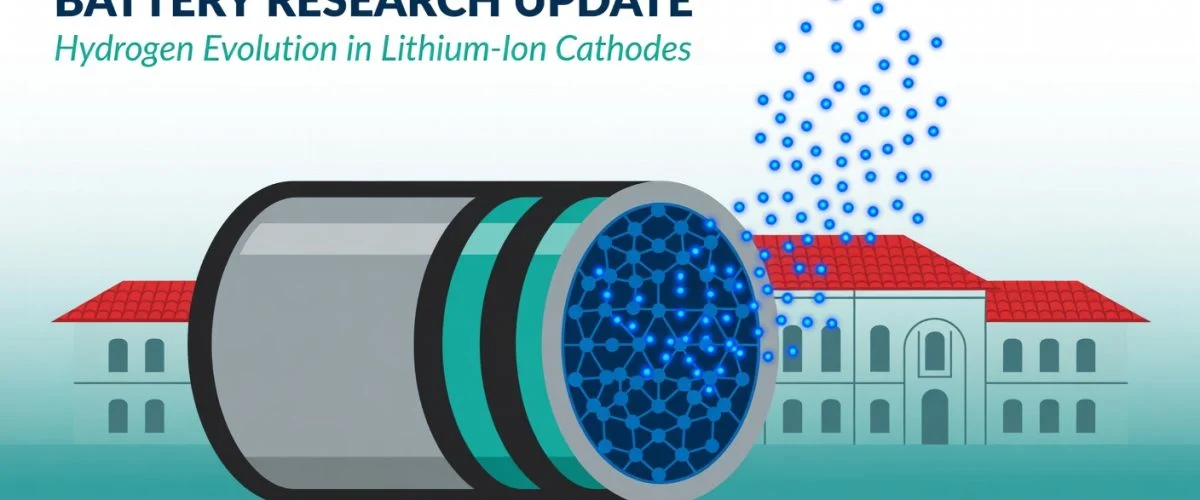

For decades, scientists blamed lithium for the slow death of phone and laptop batteries. A new Stanford-led study reveals that hydrogen — not lithium — is the real battery degradation mechanism behind the capacity loss you notice after two years of use. The finding, published in Science in September 2025, doesn’t just rewrite battery textbooks. It gives everyday users a clear path to protect the devices they already own.
Stanford Battery Degradation Study: Hydrogen as the Real Culprit
When a lithium-ion battery loses capacity, scientists call it “self-discharge.” Even when your phone is powered off, internal chemical reactions slowly consume active ingredients in the cathode. For years, researchers assumed lithium ions moving between electrodes caused the structural damage.
The Stanford-SLAC-CU Boulder team proved otherwise. Their experiments show that hydrogen emerging from the electrolyte — the chemical solution that lets lithium ions flow — is what really drives degradation at the molecular level.
Here’s how it works. The electrolyte in a lithium-ion battery is a mixture of lithium salts and organic solvents. Over time, these solvents break down and release hydrogen. That hydrogen doesn’t stay put. It migrates into the cathode material, where it displaces lithium atoms and distorts the crystal structure. Each displaced atom is a tiny crack. After hundreds of cycles, those cracks add up to measurable capacity loss.
Michael Toney, senior author and professor at the University of Colorado-Boulder, put it this way: “We are helping to advance lithium-ion batteries by figuring out the molecular level processes involved in their degradation. Having a better battery is very important in shifting our energy infrastructure away from fossil fuels to more renewable energy sources.”
The research was published in Science (DOI: 10.1126/science.adg4687) and represents a fundamental reframing of how batteries age.
The Second Surprise: How You Use the Battery Matters More Than Expected
In a companion study published in Nature Energy on December 9, 2024, the same Stanford-SLAC group discovered something equally surprising: real-world usage patterns make EV batteries last up to 40% longer than lab tests predicted.
Traditional battery testing cycles cells at a constant discharge rate in controlled lab conditions. But in the real world, batteries experience:
- Stop-and-go traffic — frequent acceleration and regenerative braking
- Rest periods — hours parked while you sleep, work, or shop
- Variable loads — short city trips mixed with highway cruising
The study tested 92 commercial lithium-ion batteries over two years using four different discharge profiles. The closer the test matched real-world driving behavior, the longer the batteries lasted.
Simona Onori, senior author and associate professor at Stanford, was direct: “We’ve not been testing EV batteries the right way. To our surprise, real driving with frequent acceleration, braking that charges the batteries a bit, stopping to pop into a store, and letting the batteries rest for hours at a time helps batteries last longer than we had thought.”
Your Phone Faces the Same Chemistry
EVs aren’t the only devices using lithium-ion batteries. The same chemistry powers your smartphone, laptop, tablet, and wireless earbuds. And the same degradation mechanisms apply.
The key insight from both studies is this: how you charge matters as much as what you charge with.
Stanford’s research shows that batteries benefit from three specific behaviors:
- Rest periods — not keeping the battery at maximum voltage continuously
- Variable states of charge — avoiding the habit of staying locked at 100%
- Lower average voltage — the less time spent at high voltage, the slower hydrogen-driven degradation proceeds
How Chargie Applies This Research
Chargie was built on a simple premise: the easiest way to extend battery life is to stop charging before the voltage gets destructive. The Stanford studies now give us the molecular explanation for why this works.
When you set Chargie to stop charging at 80%, you are:
- Reducing electrolyte exposure to high voltage — the condition that accelerates hydrogen-driven degradation
- Creating natural rest periods — letting the battery chemistry stabilize instead of sitting at maximum stress all night
- Keeping average voltage in the optimal zone — where lithium-ion cells experience the least molecular wear
This is not a coincidence. The science caught up to the product.
The 80% Rule Is Now Science, Not Superstition
For years, the “charge to 80%” advice has been dismissed by some as overly cautious. But the Stanford-SLAC research suggests it’s more than a rule of thumb — it’s a way to operate your battery in the voltage window where hydrogen-driven degradation is minimized.
The battery industry is now working on next-generation electrolytes that resist hydrogen damage. That work is important, but it will take years to commercialize. In the meantime, you can apply the user-side solution today — by simply not letting your battery sit at 100% for hours on end.
What Comes Next
The Stanford-led team is clear about the implications. Better understanding of degradation means better battery design — which means EVs that drive farther, phones that last longer between replacements, and energy storage systems that don’t need swapping out every few years.
But even the best future battery chemistry will still benefit from smart charging habits. The physics of lithium-ion cells — voltage stress, thermal effects, chemical stability — doesn’t disappear with a new electrolyte formula. It just gets better.
The most impactful thing you can do for your current devices is to treat them the way the Stanford research suggests: give them rest, avoid maximum voltage lock-in, and charge smarter.
Shop Chargie to automatically limit charging and extend battery lifespan by up to 4×.
Sources: Stanford Doerr School of Sustainability — “Discovery may lead to longer-lasting, longer-range EV batteries” / Science — DOI: 10.1126/science.adg4687 / Nature Energy — s41560-024-01675-8 / Electrek — “EV batteries may last up to 40% longer than expected”
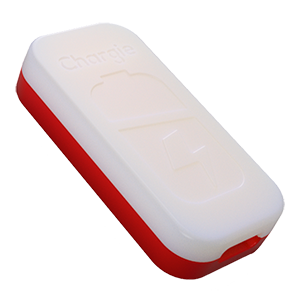
USB-C charge limiter that stops at your set battery level, so your battery never sits at 100% overnight. Extends battery lifespan by years. Works with any USB-C charger.
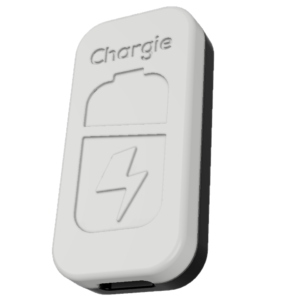
Limit your laptop charge to 80% via USB-C. Works with MacBooks, Dell, HP, Lenovo and most USB-C laptops up to 100W.
Protect Your Battery with Chargie
The world's first hardware charge limiter. Set a charge limit on any phone, tablet, or laptop — extend battery life by up to 4x.