
The greenest battery is the one you never replace
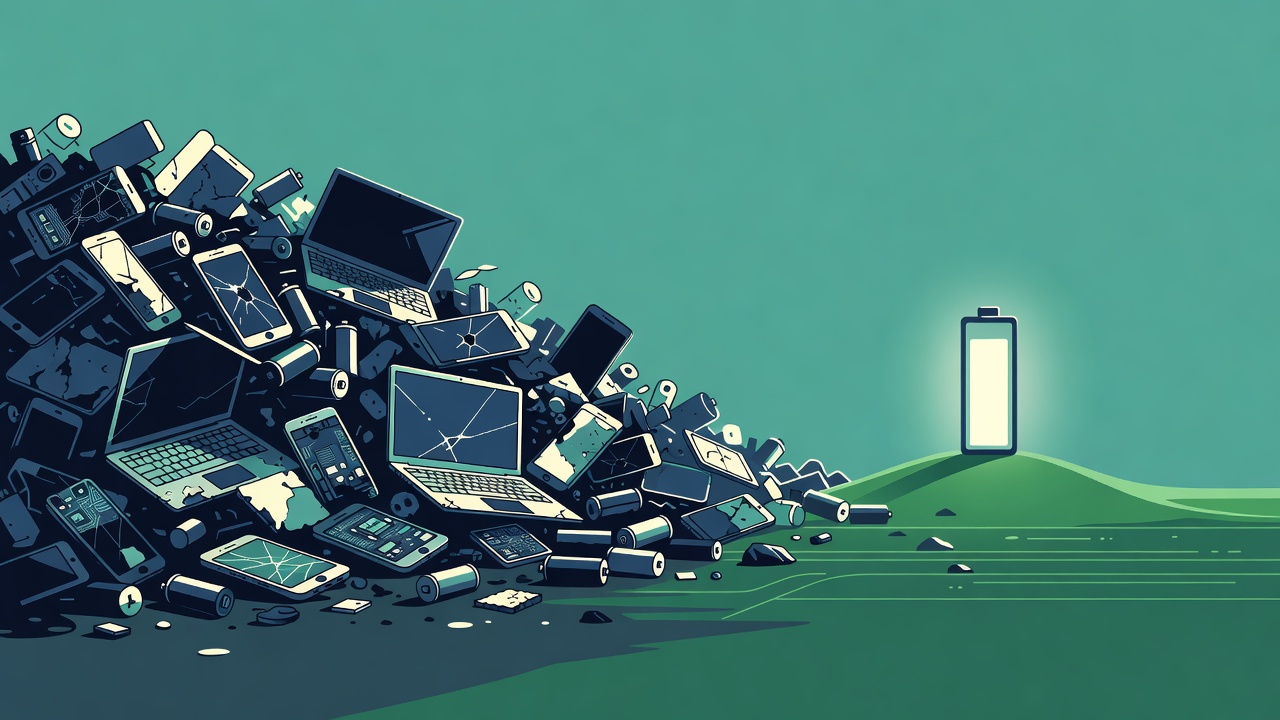
Most of the e-waste conversation starts after a device dies — recycling it, or (better) repairing it. But there’s an upstream lever almost nobody talks about: how long the battery lasts in the first place. A battery that survives 3–4 years instead of 1.5–2 is one fewer cell mined, manufactured, shipped, and eventually thrown away. Below are the numbers — every figure sourced.
Part 1 — The e-waste problem, in numbers
| Metric | Figure | Year | Source |
|---|---|---|---|
| Global e-waste generated | 62 million tonnes | 2022 | UN Global E-waste Monitor 2024 (ITU/UNITAR) |
| Growth since 2010 | +82% | 2010→2022 | GEM 2024 |
| Projected by 2030 | 82 million tonnes (+33%) | 2030 (proj.) | GEM 2024 |
| Annual increase | ~2.6 million tonnes / year | 2024 | GEM 2024 |
| Formally collected & recycled | just 22.3% | 2022 | GEM 2024 |
| Recycling rate trend | projected to fall to 20% by 2030 | 2030 (proj.) | GEM 2024 |
| Value of unrecovered resources | US $62 billion | 2022 | GEM 2024 |
The UN defines e-waste as “any discarded product with a plug or battery.” Among the drivers the report names for the widening gap: “limited repair options” and “shorter product life cycles.” In other words — the harder it is to keep a device (and its battery) alive, the faster the e-waste pile grows.
Source: Global E-waste Monitor 2024, ITU & UNITAR, 20 March 2024 (globalewaste.org).
Part 2 — Why batteries are the weak link
A device is often retired not because the screen broke or the chip got slow, but because the battery no longer holds a useful charge. Manufacturers typically rate consumer lithium-ion for just 300–500 charge cycles before noticeable capacity loss (Battery University, BU-808). For a phone charged daily, that’s roughly 1.5–2 years to meaningful degradation.
The thing that wears a lithium-ion battery out fastest isn’t just how many times you charge it — it’s keeping it pinned at a high state of charge.
| Storage condition (1 year, 25°C) | Capacity remaining |
|---|---|
| Stored at 40% charge | 96% |
| Stored at 100% charge | 80% |
Holding a cell full and warm for a year costs ~16 percentage points of capacity versus keeping it partially charged. That’s the degradation a charge-limiter is designed to prevent.
Part 3 — The charge-limiting science
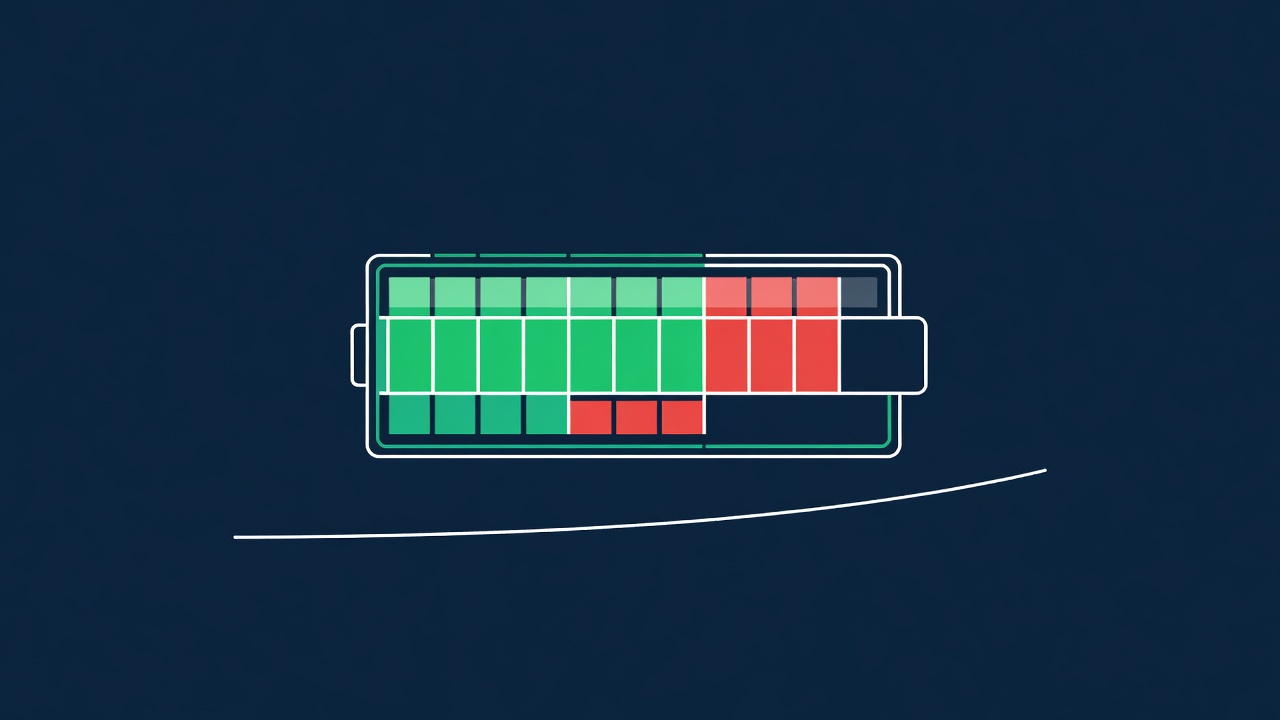
Lithium-ion cells degrade as a function of the peak voltage they’re charged to. Charge to less than 100%, and you trade a little runtime for dramatically more cycles:
| Charge level (V/cell) | Approx. % full | Discharge cycles |
|---|---|---|
| 4.20 V | 100% | 300–500 |
| 4.10 V | ~90% | 600–1,000 |
| 4.06 V | ~90% | 600–1,000 |
| 4.00 V | ~81% | 850–1,500 |
| 3.92 V | ~73% | 1,200–2,000 |
The rule of thumb from the same source: every 0.10 V reduction in peak charge voltage roughly doubles cycle life. Capping a typical phone or laptop around 80% instead of 100% can take a battery from ~300–500 cycles toward ~1,000+ — turning a ~2-year battery into a 3–4-year one.
This isn’t only lab theory. Chalmers University of Technology (Sweden) found that limiting an EV lithium-ion battery to a 50% state-of-charge ceiling increased lifetime expectancy by 44–130%.
How Chargie applies this: Chargie is a hardware USB charge-limiter that caps charging at a user-set level (e.g. 80%), so the battery spends far less time at the high-voltage, high-stress state the data above identifies as the main ager.
Part 3b — Regulators now mandate battery longevity
Battery durability is no longer just a best practice — it’s becoming law. On 16 June 2023 the EU adopted new Ecodesign and energy-labelling requirements for smartphones and tablets (Regulation (EU) 2023/1670), which apply from 20 June 2025. Among the mandatory minimum requirements: a battery-durability rating, a minimum of 5 years of operating-system security updates, repairability scoring, and resistance to drops and to dust/water.
| EU Ecodesign requirement (smartphones & tablets) | Detail |
|---|---|
| Regulation | (EU) 2023/1670, adopted 16 June 2023 |
| Applies from | 20 June 2025 |
| Battery durability | Rechargeable batteries must meet a mandatory minimum endurance requirement — batteries are rated and labelled for the capacity they retain after a defined number of full charge/discharge cycles (exact threshold per Regulation (EU) 2023/1670, Annex II) |
| OS support | ≥5 years of security updates |
The regulatory direction of travel is clear: make devices last longer so fewer end up as e-waste. A charge-limiter is a consumer-side tool that pushes a battery well past these mandated minimums — turning a regulatory floor into a much longer real-world lifespan.
Part 4 — Connecting the dots: longevity is an e-waste strategy
The circular-economy hierarchy is usually drawn as Reduce → Reuse → Recycle. Battery longevity sits at the very top — Reduce — and it’s the most overlooked rung:
- E-waste is growing 5× faster than it’s being recycled (GEM 2024). Recycling alone is not keeping up — and the recycling rate is projected to fall.
- The UN names limited repair options and shorter product life cycles as direct drivers of the problem.
- Extending battery life attacks the problem before the device ever enters the waste stream — prevention, not just cleanup.
- It also makes “repairable” devices worth repairing: a phone whose battery still holds charge is a phone worth keeping. See how battery longevity helps the right-to-repair movement.
Fewer replacements = less e-waste. That’s the whole equation — and the data above is the proof.
Sources (full list)
- Global E-waste Monitor 2024, ITU & UNITAR, 20 March 2024 — globalewaste.org / unitar.org press release.
- Battery University, BU-808: How to Prolong Lithium-based Batteries — batteryuniversity.com (Tables 3 & 4; Chalmers University 50% SoC experiment).
- WHO, Electronic Waste (e-waste) factsheet — who.int (62 Mt 2022; “less than a quarter” recycled; “one of the fastest growing solid waste streams”).
- Regulation (EU) 2023/1670 — Ecodesign requirements for smartphones, mobile phones, cordless phones and tablets, adopted 16 June 2023, applicable from 20 June 2025 (battery-durability and 5-year OS-support requirements). European Commission press release IP/23/3199.
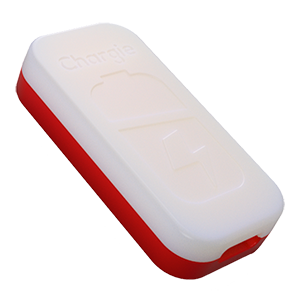
USB-C charge limiter that stops at your set battery level, so your battery never sits at 100% overnight. Extends battery lifespan by years. Works with any USB-C charger.
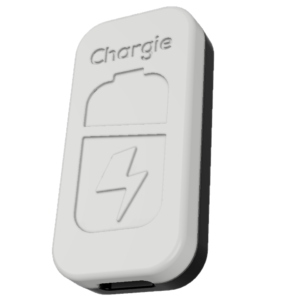
Limit your laptop charge to 80% via USB-C. Works with MacBooks, Dell, HP, Lenovo and most USB-C laptops up to 100W.
Protect Your Battery with Chargie
The world's first hardware charge limiter. Set a charge limit on any phone, tablet, or laptop — extend battery life by up to 4x.