
Solid-State Battery Phones: Why You Still Have to Protect the Battery You Own
Every year brings a fresh wave of headlines promising that solid state battery phones are just around the corner — devices that charge in minutes, last for days, and barely degrade over time. And every year, the technology slips further down the road. The latest setbacks in mid-2026 are a useful reminder of an uncomfortable truth: the miracle battery isn’t coming soon, and the lithium-ion cell already in your pocket is the one you’ll be living with for years.
This article explains what solid-state batteries actually promise, why they keep getting delayed, and — most importantly — what to do about the battery you own right now instead of waiting for one that may not ship until the next decade.
What are solid-state batteries, and why is everyone excited?
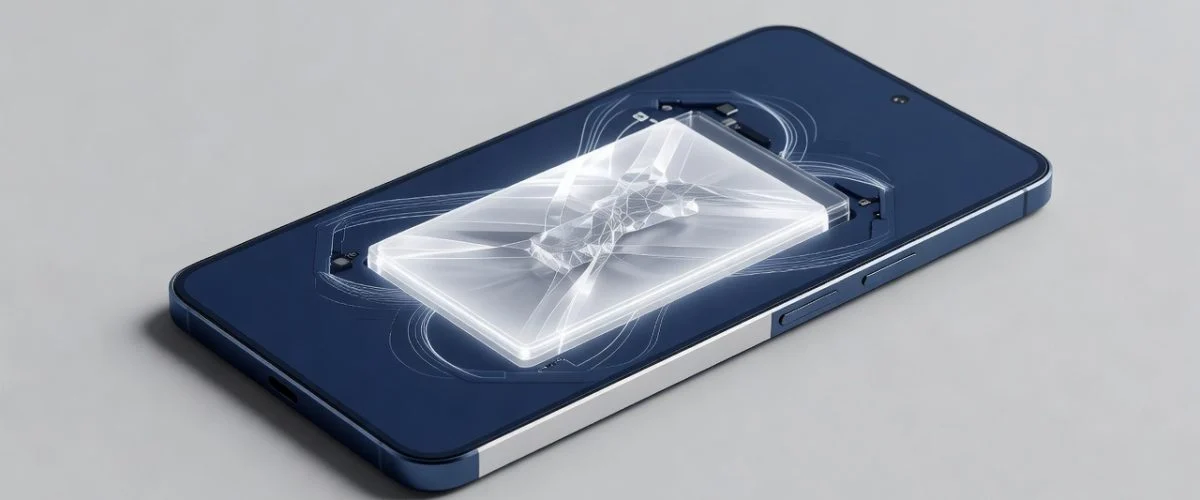
A conventional lithium-ion battery — the kind in every phone, laptop, and EV today — moves lithium ions through a liquid electrolyte between two electrodes. A solid-state battery replaces that liquid with a solid electrolyte. According to the technical overview on solid-state batteries, that single change theoretically unlocks several big wins:
- Higher energy density — potentially much more capacity in the same space, meaning longer runtime or thinner devices.
- Better safety — solid electrolytes are far less flammable than the liquid ones, which can leak or catch fire.
- Longer cycle life — lab figures suggest solid-state cells could endure tens of thousands of charge cycles, versus a few hundred to around a thousand for typical Li-ion.
- Wider temperature tolerance — some designs operate across a much broader range than today’s cells.
On paper, it’s the battery everyone wants. The problem is moving it off paper.
To put the promise in perspective: a typical modern smartphone packs a lithium-ion cell rated for roughly 500 to 1,000 full charge cycles before it falls to about 80% of its original capacity. A solid-state cell that genuinely delivered tens of thousands of cycles wouldn’t just last longer — it would change how we think about phones entirely. Battery health would stop being a reason to upgrade, and a five- or six-year-old handset could still hold a full day’s charge. That is the future the headlines keep selling. It is also the future that keeps refusing to arrive.
Why solid-state battery phones keep getting delayed
The technology has been “five years away” for well over a decade. As the same reference bluntly summarizes, as of 2026 “the solid-state battery market has yet to reach scalability and commercialization.” Mid-2026 brought another round of setback headlines across the tech press, with reports that the solid-state smartphone dream had suffered another major blow as timelines slipped again.
The reasons are stubborn and physical, not just a matter of investment:
- Manufacturing at scale is brutally hard. Producing solid electrolytes that stay in perfect contact with the electrodes, across millions of defect-free units, has resisted every attempt at cheap mass production.
- Cost. The materials and processes remain far more expensive than mature lithium-ion lines that have had 30 years of optimization.
- Durability and interface problems. Solid electrolytes can crack, and the boundary between the solid electrolyte and the electrodes can degrade, undermining the very longevity that makes them attractive.
- Phones are last in line. Most serious solid-state effort targets electric vehicles first, where the payoff is biggest. Even optimistic roadmaps put automotive use ahead of consumer phones — so handsets are at the back of the queue.
Translation: even in the best case, a mainstream solid-state phone you can actually buy is years away, and the conservative case stretches well into the 2030s.
It helps to remember how often this story has repeated. Concept demos, investor announcements, and “breakthrough” press releases appear almost every year, and they are real research — but a working sample in a lab is separated from a phone on a shelf by the single hardest problem in manufacturing: doing the same thing perfectly, millions of times, cheaply. A lithium-ion gigafactory represents three decades of accumulated process engineering. Solid-state production lines are, by comparison, starting close to zero. That gap doesn’t close because the demand is obvious; it closes one slow, expensive yield improvement at a time.
The battery you own is the only one that matters right now
Here’s the practical conclusion. If you’re tempted to abuse your current phone’s battery — charging to 100% constantly, leaving it plugged in hot overnight, fast-charging at every opportunity — on the theory that a magical solid-state replacement is imminent, you’re making a bad bet. The phone you buy in 2026 will almost certainly still use conventional lithium-ion, and so will its replacement.
That means the rules of lithium-ion care still govern your daily life, and they will for years. The good news: those rules are well understood, and following them can dramatically extend the life of the battery you already have. Our complete guide to lithium-ion battery degradation lays out the full picture, but the essentials are simple.
How conventional lithium-ion actually wears out
Three forces age a lithium-ion battery, and all three are within your control:
| Stressor | What it does | How to reduce it |
|---|---|---|
| High state of charge | Sitting at 100% keeps the cell under elevated voltage stress, accelerating chemical aging. | Cap charging around 80%. |
| Heat | The single biggest lifespan killer; high temperatures permanently cut cycle life. | Keep the phone cool; avoid hot charging. |
| Fast charging & deep cycles | High currents and repeated 0–100% swings add wear. | Charge gently; avoid full discharges. |
Notice that solid-state batteries are exciting precisely because they would relax these constraints. Until they arrive, the constraints are real — so you manage them instead of ignoring them.
It’s worth being concrete about what “aging” looks like in practice, because it rarely announces itself. A battery doesn’t fail on a Tuesday; it fades. In the first year you might lose a few percent of capacity and never notice. By year two, the phone that once cruised to bedtime now needs a top-up by mid-afternoon. By year three, you’re carrying a cable or a power bank everywhere and treating a wall socket like a destination. None of that is a dramatic event — it’s the quiet, compounding result of those three stressors doing their work, charge after charge, day after day. The point of managing them isn’t to chase a perfect number; it’s to push that fade out by a year or two, which for most people is the difference between keeping a phone they like and replacing one that let them down.
A real-world example: two identical phones, two different lives
Imagine two people buy the same phone on the same day. The first treats it the way most of us do by default: plugs in overnight every night, leaves it on the charger at the desk all day, tops up in a hot car on a summer commute, and never thinks about it. The second does nothing exotic — just keeps the phone out of direct heat, charges in shorter windows rather than living on the cable, and avoids leaving it pinned at a full charge for hours on end.
After two years, the difference is usually visible in the one number that matters: maximum capacity. The first phone might be sitting in the low-to-mid 80s of its original capacity; the second often holds noticeably more. That’s not a manufacturing defect or bad luck — it’s the cumulative dividend of gentler treatment. Neither person waited for a magic battery. One simply stopped working against the chemistry they already owned. That is the entire premise of caring about battery health in the solid-state era: the breakthrough you’re waiting for is years out, but the cell in your hand responds to better habits today.
The highest-impact habit: cap your charge
Of the three stressors, the easiest single win is keeping your battery off 100%. A lithium-ion cell held at full charge ages noticeably faster than one kept around 80%. The reasoning — voltage stress, heat, and the chemistry of the electrodes — is explained in our piece on why charging to 80% extends battery life.
The catch is consistency. Most charging happens overnight, unattended, which is exactly when it’s hardest to “just unplug at 80%.” Some phones offer software charge limits, but they vary by brand, get reset by updates, and don’t exist on many devices at all.
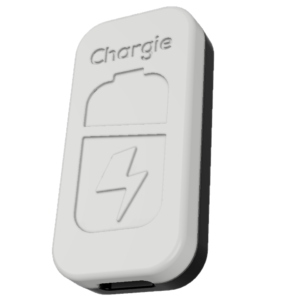
A hardware USB charge limiter solves this cleanly: it sits between your charger and phone and physically stops the charge at the level you pick, on any device, every night, without an app. It’s the most reliable way to get the solid-state-style “gentle on the battery” benefit from the conventional battery you own today.
Don’t forget heat — in any season
Even a perfectly charge-limited battery suffers if it cooks. Heat is the number-one accelerant of degradation, which is why we devote a whole summer heat protection guide to it. And at the other extreme, charging a phone that’s below freezing causes permanent damage of its own — covered in our cold weather winter battery guide. Conventional lithium-ion is sensitive at both ends of the thermometer; solid-state’s wider temperature tolerance is one more reason it’s so anticipated — and one more reason you have to actively manage the cell you currently carry.
This is where the gap between the promise and the present becomes most tangible. A solid-state phone, if it ever ships at scale, might shrug off a freezing pocket or a baking dashboard. The phone you own does not. Leave it on a car mount in direct July sun, or plug it in straight after a sub-freezing walk, and you pay a real, permanent price in capacity — the exact penalty solid-state is supposed to eliminate. Until that day, the thermometer is a constraint you work around, not one you’ve outgrown.
What about the phone you’ll buy next?
A reasonable objection: “Fine, my current phone is lithium-ion — but I’ll upgrade in a year or two, so why invest effort now?” The answer is that your next phone is overwhelmingly likely to be lithium-ion as well. With solid-state still uncommercialized as of 2026 and the first serious deployments aimed at electric vehicles, the 2027 and 2028 flagship phones will almost certainly ship with the same fundamental chemistry as today’s. Good battery habits aren’t a stopgap until the breakthrough lands; they’re the operating manual for every phone you’ll own this decade. The habits transfer device to device, and so does the payoff.
Frequently asked questions
Are solid state battery phones available yet?
No. As of 2026, solid-state batteries have not reached commercial scalability, and no mainstream smartphone ships with one. Most development is focused on electric vehicles first, with consumer phones expected later — likely years away at best.
When will solid-state batteries be in phones?
There’s no reliable date. Timelines have repeatedly slipped, and 2026 brought fresh delays. Optimistic roadmaps target EVs in the late 2020s, which puts mainstream phones later still — quite possibly into the 2030s.
Why are solid-state batteries taking so long?
Mass-producing defect-free solid electrolytes is extremely difficult and expensive, and the solid electrolyte–electrode interface can crack or degrade. These manufacturing and durability hurdles, not a lack of interest, are what keep delaying commercialization.
Should I wait for a solid-state phone before caring about battery health?
No. The phone you own — and the next one you buy — will almost certainly use conventional lithium-ion. Protecting that battery now (cap charge near 80%, avoid heat, charge gently) pays off for years before solid-state becomes a real option.
Will solid-state batteries really last longer?
In the lab, solid-state cells show much higher cycle durability than today’s Li-ion. But lab performance and affordable, mass-produced reliability are different things — which is exactly why commercialization keeps slipping.
The bottom line
Solid-state battery phones are genuinely promising — and genuinely not here. Every delay reinforces the same lesson: don’t wait for a battery breakthrough to start treating your battery well. Cap your charge around 80%, keep your phone cool, and charge it gently, and the conventional lithium-ion cell you own will outlast the hype cycle by years.
Want the gentle-on-the-battery benefit today, without waiting for solid-state? Chargie’s hardware charge limiter caps your charge automatically every night, on any phone.
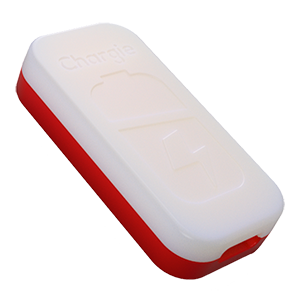
USB-C charge limiter that stops at your set battery level, so your battery never sits at 100% overnight. Extends battery lifespan by years. Works with any USB-C charger.
Limit your laptop charge to 80% via USB-C. Works with MacBooks, Dell, HP, Lenovo and most USB-C laptops up to 100W.
Protect Your Battery with Chargie
The world's first hardware charge limiter. Set a charge limit on any phone, tablet, or laptop — extend battery life by up to 4x.