
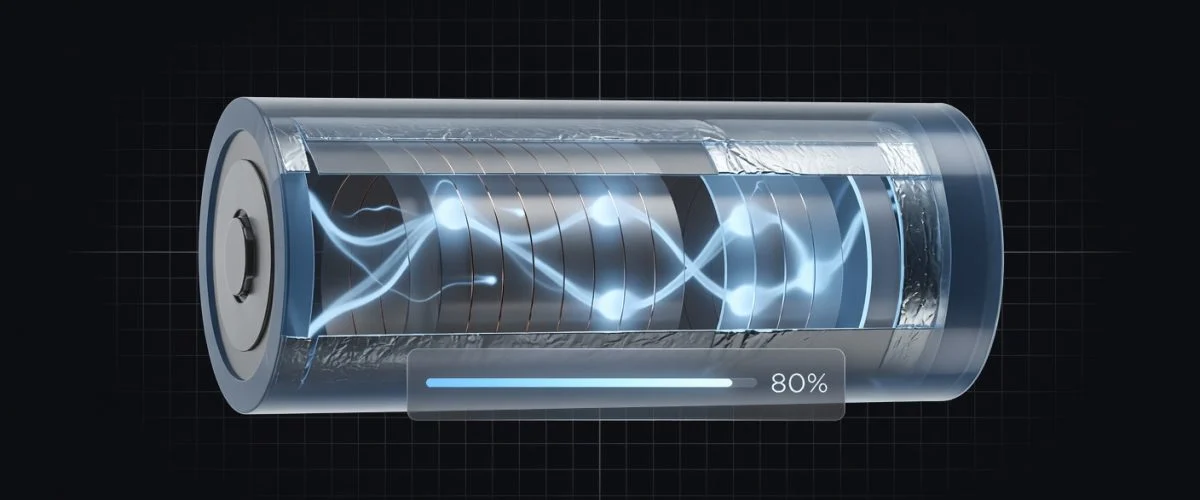

For years, the advice has been the same: charge your phone to 80% and stop. The reasoning felt intuitive — staying below full must reduce stress somehow — but the full electrochemical picture is more precise than most people realize. Charging to 80% is not just “better.” It shifts your battery into a voltage window where the dominant degradation mechanisms slow down dramatically.
This article explains the science in plain English, cites the research that backs it, and shows why the 80% rule works at the molecular level.
The Voltage Curve: Where the Damage Lives
A lithium-ion battery charges by pushing lithium ions from the cathode (usually lithium cobalt oxide) into the graphite anode. The force that drives this migration is voltage. At low charge levels — 0% to 50% — the voltage is relatively low, around 3.6 to 3.9 volts. The ions move easily, the anode absorbs them without strain, and the SEI (solid electrolyte interphase) layer stays stable.
Above 80%, the situation changes. The voltage climbs toward 4.2 to 4.35 volts, depending on the cell chemistry. At this level, three problems accelerate:
- Electrolyte oxidation: The liquid electrolyte that carries ions between electrodes chemically breaks down at high voltage. The byproducts include gases and resistive compounds that permanently raise internal resistance.
- Lithium plating: The anode cannot absorb ions as fast as the cathode supplies them. Excess ions deposit as metallic lithium on the anode surface instead of embedding into the graphite. This plated lithium is electrically dead — it cannot be cycled back.
- SEI thickening: The protective layer on the anode grows unevenly under high-voltage stress. Once it thickens past a critical point, it physically blocks fresh ions from reaching the graphite. Capacity drops permanently.
The inflection point where all three mechanisms worsen is not gradual. Research shows a sharp increase in degradation rate above roughly 4.1 volts — which corresponds to about 80% state of charge in typical phone cells.
What the Research Says
Tesla / Jeff Dahn (Dalhousie University, 2019–2020)
Jeff Dahn’s group at Dalhousie, in collaboration with Tesla, published multiple papers on single-crystal NMC cathodes and their degradation behavior. A key finding: cells held at 4.2V (100%) degraded measurably faster than cells held at 4.05V (roughly 70–80%). The difference in cycle life was not marginal — it was 2× or greater. The mechanism was electrolyte oxidation and transition-metal dissolution, both voltage-driven.
Reference: Dahn et al., Journal of The Electrochemical Society, 2020.
Battery University (Cadex Electronics)
Cadex’s long-running Battery University resource summarizes decades of lithium-ion testing. Their recommendation is explicit: “For longest life, keep the battery at a moderate temperature and at 40–80% charge.” The reasoning is not empirical folklore; it comes from controlled cycle testing on commercial cells.
Reference: BU-808: How to Prolong Lithium-based Batteries.
Stanford / SLAC National Accelerator Laboratory (2025)
In a study published in Science (DOI: 10.1126/science.adg4687), a Stanford-led team identified hydrogen-driven cathode degradation as a previously overlooked mechanism. The finding reframes how voltage and time interact: the longer a battery sits at high voltage, the more hydrogen migrates into the cathode structure, displacing lithium and creating irreversible damage.
This matters because it means the 80% rule is not just about avoiding the top voltage spike — it is about reducing the total time the battery spends in the voltage window where hydrogen-driven degradation is active.
What This Means for Overnight Charging
The most common way a phone ends up sitting at 100% is overnight charging. You plug in at bedtime, the battery reaches full within a couple of hours, and then it stays near the top of its voltage range until you unplug it in the morning. Because the ageing described above depends on both voltage and time, those hours at full charge add up across months and years.
Heat makes it worse. Battery University’s guidance pairs moderate charge levels with moderate temperature for the longest life, and a phone charging under a pillow, in a warm room or on a hot wireless pad spends those hours at both high voltage and elevated temperature.
The exact gain from stopping at 80% depends on the cell chemistry, temperature, charging speed and how deeply you discharge each day, so no single figure applies to every phone. The direction of the effect, however, is consistent across the research above: less time at high voltage and heat means slower capacity loss.
Practical habits that follow from this:
- Stop charging around 80% when you do not need a full battery the next day.
- Keep the phone somewhere cool and ventilated while it charges; avoid bedding and direct sun.
- Charge to 100% when you genuinely need the range, such as a long travel day. The occasional full charge is not the problem; spending every night there is.
Why Manufacturers Do Not Enforce It
If 80% charging is so clearly better, why do phones still ship with “charge to 100%” as the default? The answer is user satisfaction metrics. Consumers notice battery percentage more than battery lifespan. A phone that reports 80% at 10 AM feels deficient, even if the underlying cell will last twice as long.
Apple, Samsung, Google and others now offer charging-protection features, such as optimized or adaptive charging and, on some models, a fixed charge cap. They are worth turning on. Availability and thresholds vary by model and software version, some features are off by default, and each one protects only the device it runs on. It does not help your laptop, your tablet, or your second phone.
What a Charge Limiter Does at 80%
A hardware USB charge limiter physically interrupts power flow when the battery reaches the threshold you set. It does not ask the phone to cooperate. It does not depend on an app running in the background. It simply opens the circuit.
The result is that the battery stops charging and the cell rests at a lower voltage. Overnight, that means the hours after the limit is reached are spent near 80% instead of at full charge.
The cumulative effect is what matters. One night at 80% is a small win. Three years of nights at 80% is the difference between a phone you replace and a phone you keep.
Bottom Line
Charging to 80% is not a superstition or a battery-life hack. It is a way to keep your lithium-ion cell in the voltage window where electrolyte oxidation, lithium plating, and hydrogen-driven cathode damage are minimized. The research is consistent across university labs, industry research groups, and decades of cell testing.
The question is not whether the 80% rule works. It is whether you can stick to it without help. If you can, the habits alone are enough. If life gets in the way, a hardware charge limiter makes the discipline automatic — and the science says the payoff is real.
For a step-by-step setup guide on any device, read our complete walkthrough on how to limit battery charge to 80%.
More ways to keep your battery healthy for longer
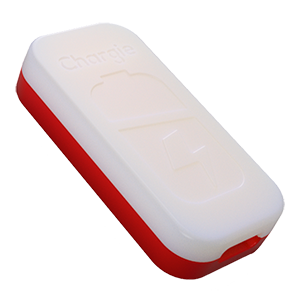
USB-C charge limiter that stops at your set battery level, so your battery never sits at 100% overnight. Extends battery lifespan by years. Works with any USB-C charger.
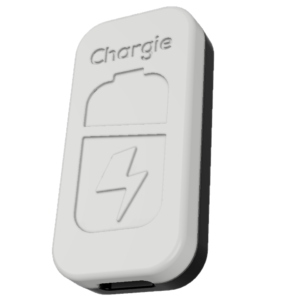
Limit your laptop charge to 80% via USB-C. Works with MacBooks, Dell, HP, Lenovo and most USB-C laptops up to 100W.
Protect Your Battery with Chargie
The world's first hardware charge limiter. Set a charge limit on any phone, tablet, or laptop — extend battery life by up to 4x.