
The Chemistry Shift Nobody’s Talking About
For a decade, every flagship smartphone ran on essentially the same battery: a lithium-ion cell with an NMC cathode and a graphite anode. Apple, Samsung, Google — same underlying chemistry, different packaging. That’s changing fast.
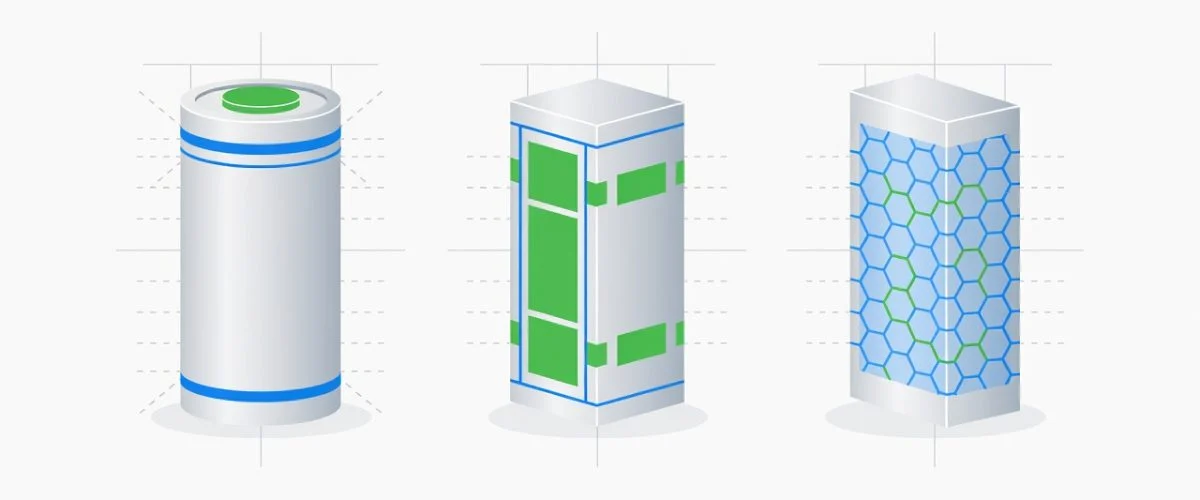
In 2026, three distinct chemistries power your phone, and they behave differently under the same charging conditions. A strategy that extends the life of an LFP battery — like regular full charges for calibration — actively hurts an NMC battery. And silicon-carbon, the newcomer taking over Chinese flagships, introduces longevity questions that early adopters are about to discover the hard way.
NMC: The Workhorse With a Voltage Problem
If your phone is from Apple, Samsung, or Google, it almost certainly has an NMC battery. This chemistry operates at a nominal voltage of 3.6–3.7V per cell, peaking at 4.2V when fully charged.
Here’s the problem: research from Battery University and the U.S. Department of Energy consistently shows that every 0.1V increase above the nominal cell voltage roughly doubles the rate of capacity loss. At 4.2V — 100% charge — your NMC battery is degrading faster than at any other point in its operating range.
This is why charge limiting matters so much for NMC batteries. Dropping your limit from 100% (4.2V) to 80% (roughly 4.0V) doesn’t just reduce wear by 20% — it can extend cycle life by 2–4x. The relationship between voltage and degradation is exponential, not linear.
NMC batteries also exhibit a steep voltage curve, meaning your phone’s software can estimate state of charge fairly accurately without needing a full charge. This makes them ideal candidates for hardware charge limiting: set it to 80%, forget about it, and let the chemistry’s characteristics work in your favor.
LFP: Long Life, Flat Curve, Hidden Calibration Trap
LFP batteries are gaining ground. Apple uses them in some iPhone models, and they’re increasingly common in Chinese smartphones and electric vehicles. Their selling points: lower cost (no cobalt), better thermal stability, and longer cycle life — often rated for 2,000–3,000 cycles versus NMC’s 500–800.
But LFP has a quirk most phone owners don’t know about: its voltage curve is nearly flat between 15% and 95% state of charge. Unlike NMC, where voltage drops predictably as the battery discharges, LFP’s voltage barely moves. This makes software-based state-of-charge estimation unreliable.
In practice, this means your phone’s battery percentage reading on an LFP device can drift over time if you never charge to 100%. The Battery Management System (BMS) needs periodic full charges to recalibrate. Without them, you might see your phone shut down at “15%” because the BMS lost track of the actual charge level.
Charge limiting strategy for LFP: Keep your limit at 80–85% for daily use, but charge to 100% once every 1–2 weeks to recalibrate. A hardware limiter like Chargie makes this easy — keep your daily limit, then override it manually for calibration days.
Silicon-Carbon: More Capacity, Shorter Life?
The OnePlus 13, Xiaomi 15 Ultra, Honor Magic 7 Pro, OPPO Find X8, and vivo X200 series all ship with silicon-carbon (Si/C) batteries in 2026. The technology replaces part of the traditional graphite anode with silicon, which can theoretically store 10x more lithium ions per gram (4,200 mAh/g vs. 372 mAh/g for graphite).
The result: 6,000mAh batteries in the same physical space that used to hold 5,000mAh. That’s a genuine 20% capacity boost without a thicker phone.
The catch: pure silicon anodes swell by up to 300% during charging, which mechanically destroys the battery over time. The “carbon” in silicon-carbon is the fix — a carbon matrix that cages the silicon nanostructures and limits expansion to 10–20%. But that’s still ~2x the expansion of a pure graphite anode.
Android Authority’s deep dive into the technology confirms the worry: “Silicon is a hop-forward for capacity but a step back for longevity.” Si/C batteries may not last as long as traditional graphite-anode cells, especially when paired with fast charging. The expansion-contraction cycle physically stresses the SEI (Solid Electrolyte Interphase) layer, leading to faster lithium loss over time.
Charge limiting strategy for silicon-carbon: This chemistry benefits most from charge limiting because the expansion problem is voltage-dependent. At 100% charge, silicon expansion is at its maximum. Limiting to 80% reduces both the voltage stress and the mechanical stress simultaneously. The good news: with 6,000mAh to play with, you can comfortably cap at 80% and still get more usable runtime than a 5,000mAh NMC battery at 100%.
How Chargie Works Across All Three Chemistries
This is where hardware charge limiting earns its value. Your phone’s built-in charge limit — if it even has one — is programmed around assumptions that may be wrong for your battery chemistry. Apple’s 80% Limit was designed for NMC cells. Samsung’s Protect Battery (85%) was designed for their specific NMC variant.
A hardware limiter like Chargie C Basic doesn’t care what chemistry is inside your phone. It reads the actual battery level and cuts power at your set percentage. Want 80% for your NMC iPhone? 85% plus weekly calibration charges for your LFP device? 75% for your silicon-carbon OnePlus 13 to minimize expansion stress? You decide — the hardware enforces it.
The device-chemistry table for 2026 looks like this:
| Phone Series | Chemistry | Optimal Daily Limit | Calibration Needed? |
|---|---|---|---|
| iPhone 15/16 | NMC (some LFP in base models) | 80% | LFP only: every 2 weeks |
| Samsung Galaxy S25 | NMC | 80% | No |
| Google Pixel 9 | NMC | 80% | No |
| OnePlus 13 | Silicon-carbon (NMC cathode) | 75–80% | No |
| Xiaomi 15 Ultra | Silicon-carbon (NMC cathode) | 75–80% | No |
| Honor Magic 7 Pro | Silicon-carbon (NMC cathode) | 75–80% | No |
| OPPO Find X8 | Silicon-carbon (NMC cathode) | 75–80% | No |
| Most mid-range/budget phones | NMC | 80% | No |
Silicon-carbon devices are the standout: their larger base capacities make 80% limiting painless, and reducing the voltage-dependent expansion directly addresses the chemistry’s biggest weakness.
Bottom Line: Chemistry Matters, Hardware Wins
Software charge limits built into phones were designed for NMC chemistry and can’t adapt to LFP’s calibration needs or silicon-carbon’s expansion concerns. More importantly, they’re locked to the device — your tablet, earbuds, and power bank don’t get the same protection.
Understanding your phone’s battery chemistry tells you what to do. A hardware charge limiter like Chargie C Basic or Chargie for Laptops is how you actually do it — across every device, every chemistry, every time.
FAQ
How do I know which battery chemistry my phone uses?
Check your phone’s specifications on GSMArena or the manufacturer’s tech specs page. NMC is the default for most phones from Apple, Samsung, and Google. Silicon-carbon is explicitly marketed — look for it in OnePlus, Xiaomi, Honor, OPPO, and vivo flagship specs. LFP appears in some iPhone base models and is rarely advertised on Android.
Does LFP really need to be charged to 100% sometimes?
Yes. Because LFP’s voltage barely changes between 15% and 95% charge, the battery management chip loses track of the actual state of charge over time. A full charge once every 1–2 weeks recalibrates the system and prevents inaccurate percentage readings.
Will silicon-carbon batteries get better with time?
Almost certainly. The current generation is a compromise — modest silicon content (likely 5–10%) to keep expansion manageable while still gaining ~15% capacity. As manufacturing techniques improve, the silicon ratio and lifespan should both increase. Charge limiting helps bridge the gap until then.
Does Chargie work with silicon-carbon batteries?
Yes. Chargie operates at the USB level — it doesn’t interact with the battery chemistry directly. It reads the charge percentage from your phone and cuts power at your set limit. The silicon-carbon battery inside your OnePlus 13 or Xiaomi 15 Ultra doesn’t know or care what stopped the charging — it just benefits from not sitting at 100% voltage.
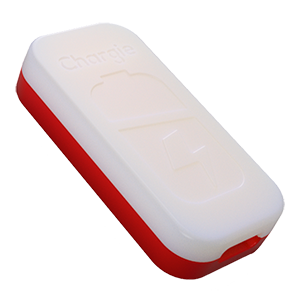
USB-C charge limiter that stops at your set battery level, so your battery never sits at 100% overnight. Extends battery lifespan by years. Works with any USB-C charger.
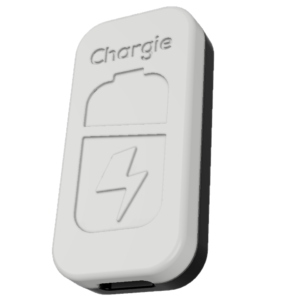
Limit your laptop charge to 80% via USB-C. Works with MacBooks, Dell, HP, Lenovo and most USB-C laptops up to 100W.
Protect Your Battery with Chargie
The world's first hardware charge limiter. Set a charge limit on any phone, tablet, or laptop — extend battery life by up to 4x.