
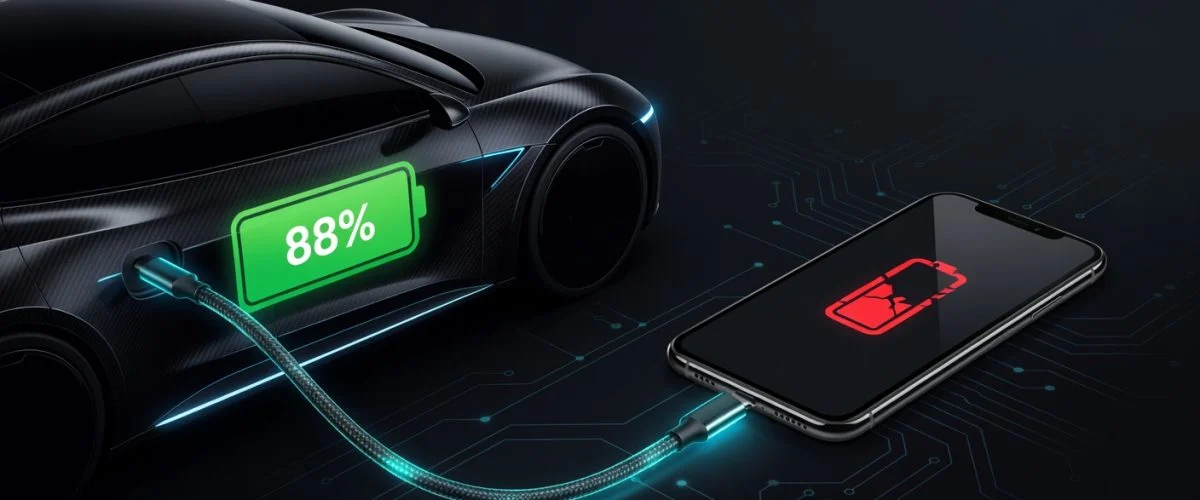

Electric vehicles and smartphones share the same battery chemistry — lithium-ion. But there’s a critical difference: EVs have sophisticated battery management systems (BMS) that actively cool, regulate, and protect their cells. Your phone doesn’t.
A massive 2025 study from Geotab, which analyzed over 22,700 electric vehicles across 21 models, just confirmed what battery scientists have warned about for years. And the data has direct, uncomfortable implications for how you charge your phone.
The EV data that should worry every phone owner
Geotab’s latest analysis split vehicles into groups based on how often they used DC fast charging (the EV equivalent of your 65W or 120W phone charger). The results were stark:
| Charging Pattern | Annual Battery Degradation |
|---|---|
| Low fast-charging frequency (<12% of sessions) | 1.5% |
| High fast-charging frequency (>12% of sessions) | 2.5% |
But it gets worse when you factor in power level:
| Charging Pattern | High-Power Sessions | Annual Degradation |
|---|---|---|
| Low frequency, any power | N/A | 1.5% |
| High frequency, mostly low power | <40% above 100kW | 2.2% |
| High frequency, mostly high power | >40% above 100kW | 3.0% |
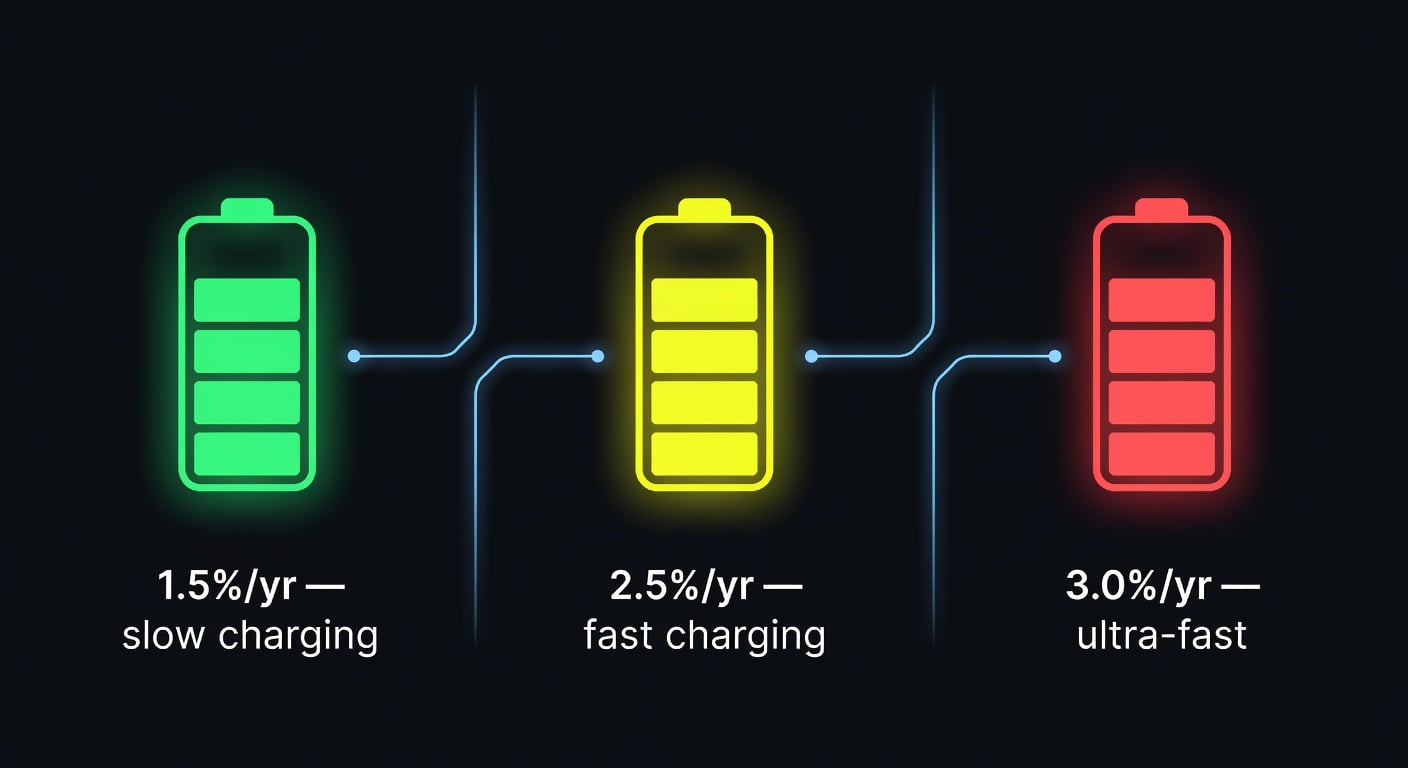
After eight years, a vehicle in the worst group retains only 76% of its original battery capacity — versus 88% in the best group. That’s a 12 percentage point difference, purely from charging habits.
Your phone has it worse — much worse
1. No active cooling
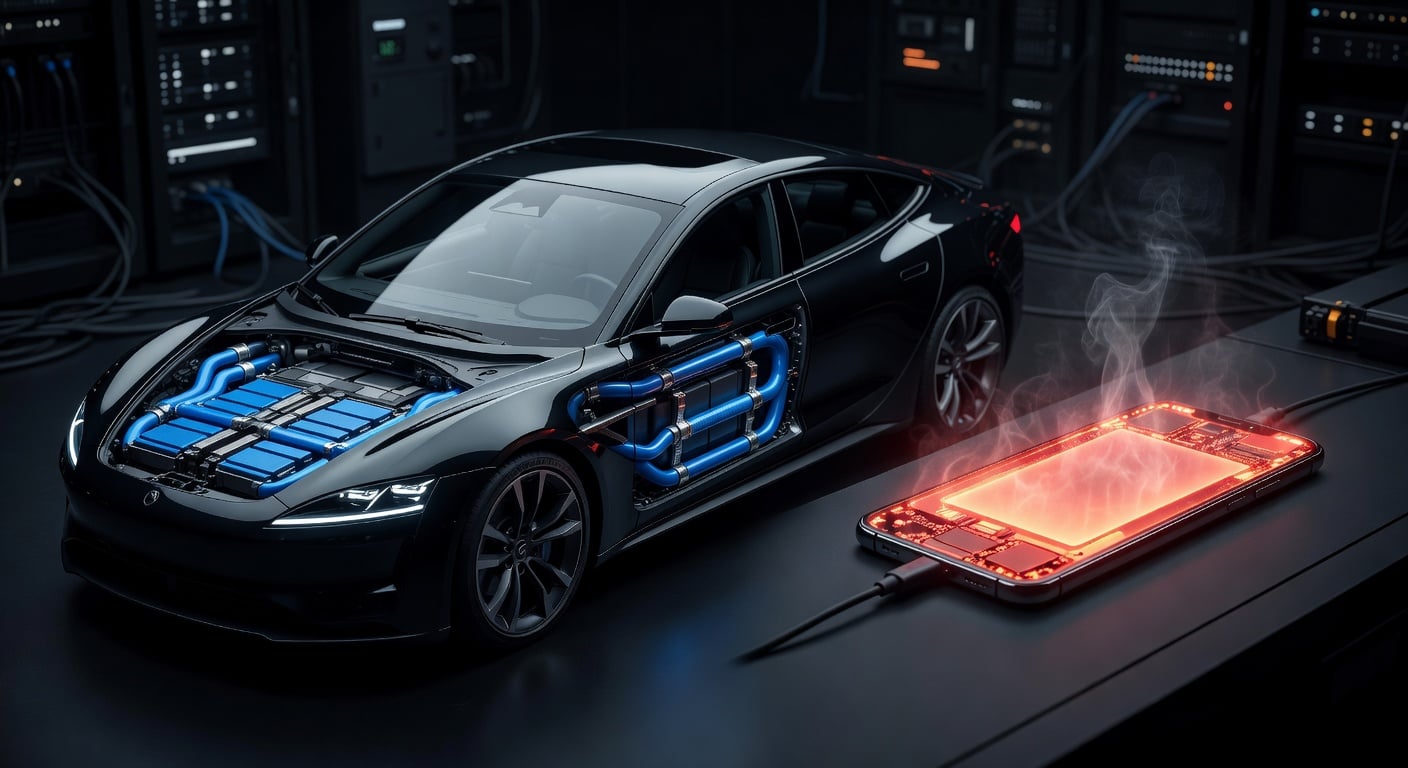
EVs pump liquid coolant through their battery packs during fast charging. Your phone passively radiates heat through its chassis — or worse, through a case that insulates it. The Geotab study found that vehicles in hot climates degrade 0.4% faster per year. Now imagine your phone sitting at 40°C (104°F) on a nightstand, fast-charging for an hour, with zero active cooling.
2. No charge rate regulation
EVs taper charging speed dramatically as the battery fills up. Your phone charger delivers a flat high wattage until the phone battery hits about 80%, then drops only slightly. The constant high-voltage state from 0% to 80% is exactly the usage pattern Geotab identified as most damaging.
3. Fast charging is your default
Geotab found that EV fast-charging frequency nearly tripled from under 10% to about 25% of all sessions. For phone users, fast charging is often 100% of sessions — because the charger that came in the box (if you got one) is fast by design, and even budget Android phones now ship with 25W+ chargers.
4. No battery health dashboard
Every EV shows you real-time battery state of health and gives you tools to limit charging. Your phone? Apple shows a percentage. Android barely shows anything without third-party apps. And neither gives you hardware-level control over when charging stops.
What this means in real numbers
Phone batteries are smaller and run hotter than EV batteries. A conservative estimate based on the Geotab patterns plus the additional stress of no active cooling:
| Charging Habit | Estimated Phone Battery at 2 Years |
|---|---|
| Slow charging, 80% limit, cool environment | ~92% capacity |
| Fast charging, 100% every night | ~78% capacity |
| 120W+ ultra-fast charging, hot environment | ~70% capacity |
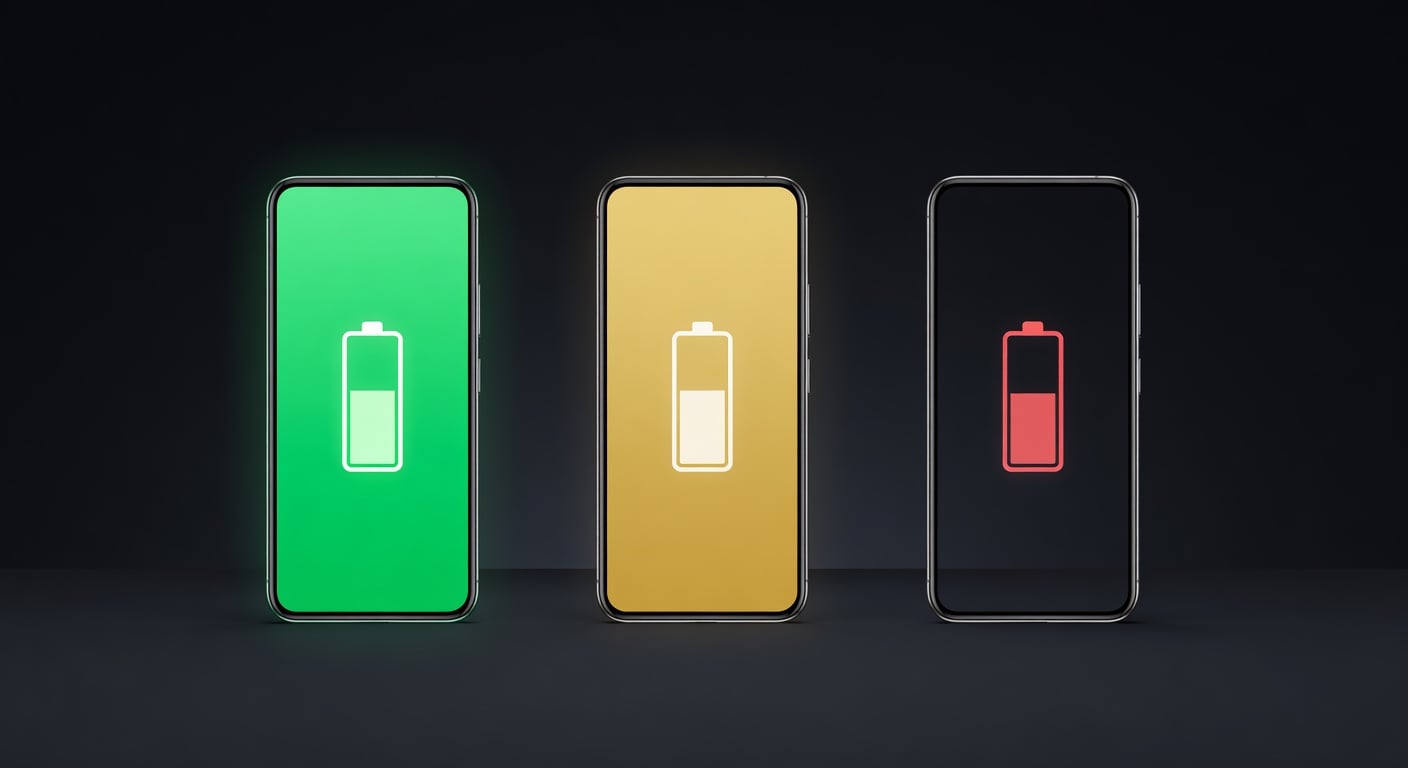
That’s the difference between a phone that still lasts all day at year two — and one you’re already shopping to replace.
The fix: hardware charge limiting
EV manufacturers spend billions on battery management because they know the battery is the single most expensive component to replace. But they also give drivers a tool EV owners use constantly: a charge limit setting.
Most EV owners set their car to stop charging at 80% for daily driving. It’s a single setting. It’s built in. And Geotab’s data proves it works.
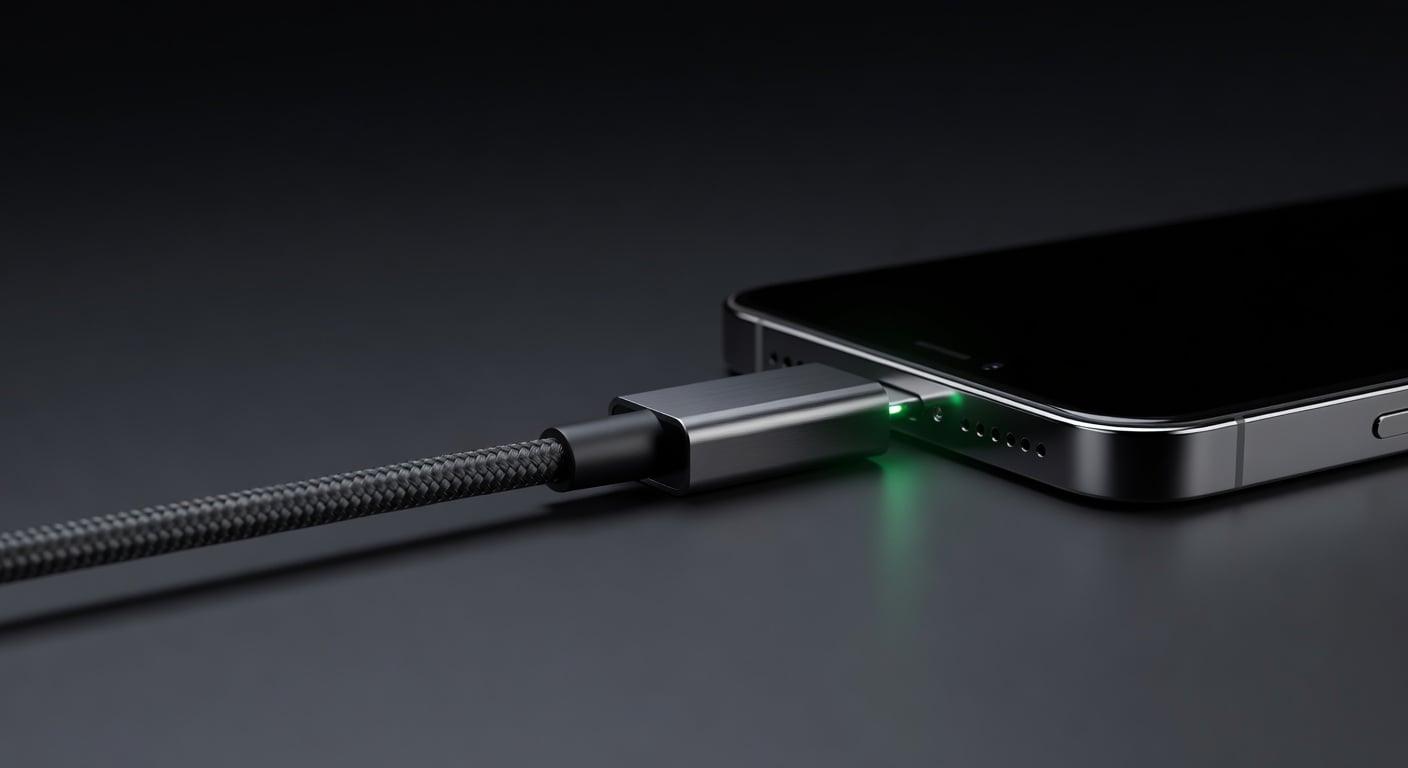
Your phone doesn’t have this. Apple’s “Optimized Battery Charging” learns your routine and sometimes delays the final 20% — but it’s software, not hardware. It guesses. It can be wrong. And on Android, unless you have a Samsung with the “Protect battery” toggle (which also caps at 85% and offers no customization), you have no built-in option at all.
Chargie is the EV-style charge limiter your phone never shipped with. It’s a physical USB device that sits between your charger and your phone. It monitors the battery level via Bluetooth and cuts power at whatever percentage you set — 80%, 70%, whatever you choose. It reconnects when the battery dips below your chosen floor. No software. No guessing. No “learning your routine.”
For a deeper dive into how EV battery management principles apply to everyday smartphone habits — including state-of-charge distribution, optimal storage levels, and the science behind charge tapering — read our companion piece: EV Battery Degradation Data: The Smartphone Charging Lessons Nobody Talks About.
The bottom line
Geotab’s 2025 study of 22,700 EVs confirms what battery science has said for years: charging speed and charging ceiling are the two biggest levers you control. The EV industry spent billions learning this lesson. Phone manufacturers, incentivized to sell you a new device every two to three years, are in no hurry to share it.
Your phone already has the same lithium-ion chemistry as a $50,000 EV. It deserves the same level of battery protection. Chargie gives it that — for less than the cost of a single battery replacement.
Sources: Geotab 2025 EV Battery Health Study (22,700 vehicles, 21 models); US National Renewable Energy Laboratory battery aging literature; Dahn et al. on voltage stress and calendar aging.
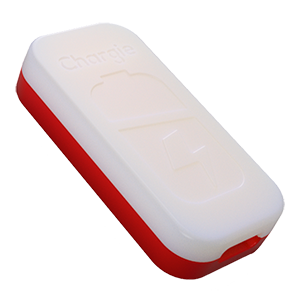
USB-C charge limiter that stops at your set battery level, so your battery never sits at 100% overnight. Extends battery lifespan by years. Works with any USB-C charger.
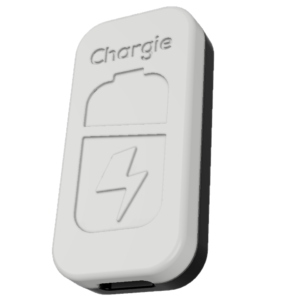
Limit your laptop charge to 80% via USB-C. Works with MacBooks, Dell, HP, Lenovo and most USB-C laptops up to 100W.
Protect Your Battery with Chargie
The world's first hardware charge limiter. Set a charge limit on any phone, tablet, or laptop — extend battery life by up to 4x.