


Walk through almost any airport in 2026 and you’ll see the same sign at the gate: power banks out of checked bags, into the cabin, and don’t charge them mid-flight. Cabin crews now read it out before pushback. Airlines have spent the last year tightening what you can do with a battery on a plane — and most travelers assume it’s bureaucracy.
It isn’t. A lithium battery is most dangerous when it’s full and hot. That single fact explains every one of the new power bank airline rules rolling out in 2026 — and it points to one charging habit that lowers your risk on the ground and in the air at the same time. Here’s what the rules actually say, the physics behind them in plain English, and the setting that does the most to keep you safe.
What the 2026 power bank rules actually changed
The power bank airline rules for 2026 boil down to one idea: spare lithium batteries belong in the cabin, never in checked luggage, and several carriers now restrict using or charging them in your seat. The thresholds most travelers trip over haven’t moved much, but enforcement has — gate agents are checking, and a non-compliant pack gets left behind.
- Carry-on only. Power banks and spare batteries must travel in the cabin where a problem can be seen and dealt with fast. Per FAA and TSA regulations, spare lithium ion batteries — including all power banks — are prohibited in checked luggage. If your carry-on gets gate-checked, the power bank must come out and travel with you in the cabin.
- In-flight charging limits. A number of airlines — including several major carriers in Asia and the UK — now ask you not to charge power banks (or charge from them) during the flight. Check your specific carrier before boarding; policies vary.
- Watt-hour caps. The familiar limits still apply: up to 100 Wh with no approval needed, and 101–160 Wh only with airline sign-off (max two batteries per person). Above 160 Wh, it doesn’t fly — full stop.
Read the list again and a pattern jumps out. Every rule is about access, heat, and being able to respond in seconds — not about banning batteries outright. That’s the tell for what’s really going on.
What is thermal runaway? (in plain English)
The reason behind the rules has a name: thermal runaway. It’s a self-feeding heat loop inside a lithium cell. If a cell is damaged, overheated, or pushed past its limits, it starts generating heat faster than it can shed it. That heat triggers more reactions, which make more heat, and the loop accelerates until the cell vents, smokes, or catches fire.
What makes it genuinely dangerous on a plane is that a lithium fire makes its own oxygen as it burns. You can’t smother it the way you’d smother a normal fire, and once it’s going in a confined space it spreads to neighboring cells in a chain reaction. That’s why the rules force batteries into the cabin: crew can spot a swelling, hissing, or smoking pack and act on it in seconds — with a containment bag and water — not discover it in the hold at 38,000 feet where no one can reach it.
Most runaways don’t start out of nowhere. The usual triggers are a physical knock that damages a cell, a manufacturing defect, overcharging, and — critically — heat. A battery baking in a sun-warmed bag or a hot cargo hold is already closer to its limit before anything else goes wrong. Stack a high charge on top of that heat and you’ve assembled both ingredients at once.
Two ingredients make thermal runaway far more likely: heat and a high state of charge. Picture a fully charged battery in a hot bag as a full fuel tank sitting next to a pilot light. The fuel isn’t a problem on its own — until the conditions line up.
Why a full battery is the risky battery
Here’s the part nobody connects for you. A battery at 100% isn’t just “more charged” — it’s storing the maximum amount of energy at the highest internal voltage the cell will sit at. That’s the worst possible starting point if something goes wrong. More stored energy means more to release; higher voltage means a lower threshold for the reactions that kick off a runaway.
And it’s the same physics that quietly ages your battery. Holding a lithium cell at a high state of charge keeps it under constant high-voltage stress, which speeds up the chemical wear that drains its capacity over months. So a full battery is doing two unwelcome things at once: it’s the most volatile under heat or damage, and it’s wearing out fastest.
That’s why this isn’t a niche aviation concern. The industry already treats high charge as a hazard: lithium cells are meant to be stored part-charged, and shipping regulations require them to travel well below full for exactly this reason. Manufacturers even ship new devices part-charged on purpose — it’s no accident the battery in the box is never at 100%.
So the airline’s risk math and your battery’s lifespan point the same way: the charge level that makes a cell most likely to fail under stress is the same level that wears it out fastest in normal use. Same root cause, two consequences — and, conveniently, one fix.
The one setting that cuts both risks: 20–80%
If a full, hot battery is the problem, the answer is to stop living at 100%. Keeping your everyday charge in the 20–80% band lowers the energy and voltage your cell sits at — which reduces thermal-runaway risk when a device gets hot or knocked around in transit, and dramatically slows long-term degradation. One habit, two payoffs.
Most phones can do part of this for you, though the controls are scattered and inconsistent:
iPhone
Turn on Optimized Battery Charging, or set the 80% limit on supported models, under Settings > Battery > Charging. It learns your routine and holds the battery back from a full charge. (More in our guide to iPhone battery cycle count and health.)
Samsung
Switch on Protect Battery in Maximum mode to cap charging — on One UI 7 you can pick 80%, 85%, 90%, or 95%. Full walkthrough in our Samsung Galaxy battery health guide.
Other Android
Many Androids hide a charge-limit or “adaptive charging” toggle in battery settings; combine it with power saving mode when you’re stretching a charge. Coverage varies a lot by brand and age.
The catch: those software caps are missing entirely on most power banks and plenty of older phones — which are exactly the batteries you take traveling.
Where a hardware charge limiter fits
This is the honest gap. Software limits help when your device happens to offer one, but they don’t exist on the power bank in your carry-on, and they’re spotty on older hardware. If the whole point is to travel with batteries that aren’t sitting full and stressed, you need something that works on any device.
That’s what a Chargie does. It sits between the wall and your cable and stops charging at the percentage you choose — on basically any phone, tablet, or USB device — and a software update can’t undo it. You set the limit once and it just runs. Same single action as the 20–80% habit above, applied to the gear that has no built-in cap: lower fire risk in transit, longer battery life at home.
Traveler’s lithium-battery checklist
Before your next flight, run down this list:
- Power banks in the cabin, never checked. Always.
- Don’t travel at 100%. Aim for ~80% or lower — top up at your destination.
- Keep batteries cool. Out of hot cars, direct sun, and tightly packed bags.
- Inspect before you pack. A swollen, dented, or hissing battery doesn’t fly — replace it.
- Know your watt-hours. Check the printed Wh rating or do the quick math: Wh = mAh ÷ 1000 × voltage (usually 3.7V).
FAQ
Can I bring a power bank on a plane in 2026?
Yes — in your carry-on, not checked luggage. Airlines allow power banks up to 100 Wh without special approval; 101–160 Wh packs need airline sign-off (max two per person). Always keep spare batteries in the cabin where crew can react fast if something goes wrong.
Why are power banks banned from checked luggage?
Because a lithium fire needs to be spotted and tackled immediately. In the cabin, crew can act on a swelling or smoking battery in seconds. In the cargo hold, a thermal-runaway fire could spread undetected — so spare batteries must travel with you.
What’s the 100Wh power bank limit?
It’s the watt-hour ceiling airlines allow without approval. To find yours: Wh = mAh ÷ 1000 × voltage (usually 3.7V). A 27,000mAh pack is roughly 100Wh. Our TSA power-bank Wh guide walks through the math. [Link to companion article #2 once live]
Does charging to 80% really reduce fire risk?
Yes. A battery at 80% stores less energy and sits at a lower internal voltage than one at 100%, so there’s less to release and a higher threshold before thermal runaway can start. It’s a meaningful safety margin, especially in heat.
What is thermal runaway?
It’s a self-feeding heat loop inside a lithium cell: heat triggers reactions that create more heat, accelerating until the cell vents or catches fire. Lithium fires make their own oxygen, so they can’t be smothered normally — which is why airlines manage charged batteries so carefully.
Does a charge limit hurt my battery or phone?
No — it does the opposite. Capping charge at 80% reduces the high-voltage stress that ages lithium cells, so your battery keeps more of its capacity for longer. You lose a little runtime per charge and gain years of healthier battery life.
The bottom line
The 2026 rules aren’t airlines being difficult. They exist because a lithium battery that’s full and hot is the one that fails dangerously — so the rules keep charged batteries in the cabin, cool, and within reach. The same logic gives you an easy win at home: cap your everyday charge around 80% and you lower fire risk and slow battery wear with one setting. One habit, two payoffs — on the plane and off it.
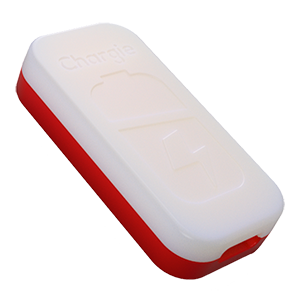
USB-C charge limiter that stops at your set battery level, so your battery never sits at 100% overnight. Extends battery lifespan by years. Works with any USB-C charger.
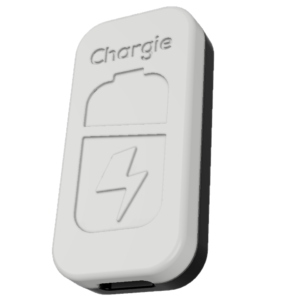
Limit your laptop charge to 80% via USB-C. Works with MacBooks, Dell, HP, Lenovo and most USB-C laptops up to 100W.
Protect Your Battery with Chargie
The world's first hardware charge limiter. Set a charge limit on any phone, tablet, or laptop — extend battery life by up to 4x.