
You’ve had the same Anker sitting in your bag for three years. It’s saved you more than once — airports, festivals, long commutes. But somewhere along the way, someone told you that using a power bank “wrecks your battery.” Now you’re not sure whether that rescue charge was actually a slow-motion punishment.
The short answer: using a power bank does not inherently damage your phone battery — but how you use it absolutely can. The details matter, and the people who say “power banks are fine” and the people who say “avoid them” are each half-right.
Let’s go through the science, the real risks, and the simple habits that protect both your phone and your power bank.
What Your Phone Battery Actually Cares About
Before talking about power banks specifically, you need to understand the two main enemies of a lithium-ion battery:
1. High voltage stress — Lithium-ion cells are most stable between about 20% and 80% charge. At 100% (4.2V per cell), the cathode material becomes chemically stressed. The longer a battery sits fully charged, the faster it degrades. BatteryUniversity — one of the most cited battery science references used by engineers — states plainly: “It is better not to fully charge [Li-ion] because a high voltage stresses the battery.” (BU-409)
2. Heat during charging — A 5°C rise in temperature during charging is normal. Anything beyond 10°C above ambient is a stress signal. Heat accelerates electrolyte breakdown and increases internal resistance over time.
Power banks interact with both of these factors. Here’s how.
The Real Risk: Repeated Top-Ups to 100%
Most power banks work in a simple way: they charge your phone until it hits 100%, then stop. If you fall asleep with your phone plugged into a power bank, your phone reaches 100%… and the power bank keeps trying to maintain that voltage because it doesn’t have the smart trickle-management that a good wall charger has.
This is the “topping up” problem — your phone bounces between 98% and 100% all night, spending hours at peak voltage stress. It’s the same behaviour BatteryUniversity warns about with “mini-cycles” at the high-voltage threshold.
The risk is essentially identical to sleeping with your phone on a cheap wall charger overnight — except with a power bank, people do it carelessly, in situations where they’d normally unplug.
Power Bank Charging Scenarios Ranked by Battery Impact
| Scenario | Risk to phone battery | Why |
|---|---|---|
| Single top-up (40% → 80%) while commuting | Very low | Stays in the safe voltage window |
| Charging 0% → 100% during a flight | Moderate | Full cycle, high-voltage dwell at the end |
| Sleeping with phone on power bank all night | High | Hours at 100% with micro-charging cycles |
| Using power bank with Chargie to stop at 80% | Negligible | Identical to a well-calibrated wall charger |
| Repeated full charges, every day for 2 years | High cumulative | Same as wall charging to 100% every night |
Does the Power Bank “Pass” Bad Power to Your Phone?
This is a common fear, and it’s mostly unfounded. The vast majority of power banks from reputable brands (Anker, Baseus, Belkin, RAVPower, Mophie) output regulated 5V or USB-PD power with appropriate voltage and current negotiation. Your phone’s built-in Battery Management System (BMS) regulates what actually enters the battery — it limits current and cuts off charging at full capacity regardless of what the charger sends.
What can cause problems:
- Very cheap, unbranded power banks — Knockoffs sometimes output unstable voltage or fail to comply with USB-PD specifications. This can trigger your phone’s protection circuits repeatedly, which isn’t great for longevity.
- Excessive charging speed — Some high-wattage power banks push 45W or 65W into phones designed for 18W–30W. Your phone’s BMS should negotiate down to its rated speed, but the heat generated still has a cost. See our guide on why extreme fast charging hurts battery life.
- Charging while the phone runs hot — Using your phone heavily while it charges from a power bank in a warm pocket is a real risk. Heat is additive. See summer heat phone battery protection guide.
How Power Bank Charging Compares to Wall Charging
Here’s something most people don’t realize: a good power bank charging your phone is chemically identical to a wall charger charging your phone. The lithium-ion cell inside your phone doesn’t know or care where the electrons came from.
The real difference is behavioral:
- Wall chargers stay in one place — people tend to charge and walk away.
- Power banks travel with you — people tend to keep the phone active while charging, creating heat.
- Power banks often end up running all night in a bag, creating the overnight top-up problem.
If you charged your phone to 80% from a power bank then unplugged it, you’d have done less battery damage than charging to 100% from a premium wall charger.
Does a Power Bank Degrade Faster Than It Used To?
Yes — and that’s worth knowing. The power bank itself contains a lithium-ion battery subject to the same degradation rules as your phone battery. Power banks often spend a lot of time at 100% (stored on a shelf between trips), which damages their own capacity over time.
Tips for keeping your power bank healthy:
- Don’t store it at 100% for weeks at a time. Recharge it to around 50–70% for long-term storage.
- Keep it away from heat (gloveboxes, direct sunlight).
- Use it at least once a month to prevent deep discharge.
If your old power bank seems to have “less capacity than it used to,” that’s battery degradation — not a defect. The same degradation curve affects it that affects your phone. See our detailed guide to lithium-ion battery degradation for the full science.
The One Habit That Eliminates Almost All the Risk
The biggest battery health risk from power banks isn’t the hardware — it’s charging to 100% repeatedly. Whether you’re at home or on the road, the battery degradation curve accelerates sharply above 80%.
The fix is simple: stop at 80%.
On a wall charger at home, iPhone users can use the built-in Optimized Battery Charging. Samsung users can enable “Protect Battery” in settings (full guide here). Pixel phones have a “Limit to 80%” option in Battery Health settings.
But when you’re using a power bank? Your phone’s software-based charge limit often doesn’t apply reliably — the power bank is just a dumb power source, and your phone may override its built-in limits when it detects “low” battery during a commute.
This is where Chargie fills a genuine gap. Chargie is a small USB-C or USB-A dongle that sits between your cable and your device — including between a power bank and your phone. It communicates with the Chargie app via Bluetooth and cuts power when your battery reaches your set limit — typically 80%. It works regardless of whether you’re plugged into a wall outlet or a power bank.
Charging Speed: Does It Matter?
Modern power banks come in a wide range of wattages: 10W (basic), 18W (USB-PD), 30W, 45W, 65W, even 100W+. Whether this matters for battery health depends on your phone’s supported charging speed:
- If your phone supports 18W and you use a 65W power bank: your phone negotiates down to 18W. No problem — though the power bank will run warmer than a matched charger.
- If your phone supports 45W and you use a 45W bank: the heat generated is the same as wall charging at 45W. Manageable if the phone isn’t in a case.
- Overnight + high-wattage = worst case: A 65W bank charges your phone to 100% in 40 minutes, then spends 7 hours holding it at 100% in a warm pocket. This is the scenario to avoid.
Our guide on fast charging and Android battery health goes deeper on the wattage-versus-degradation tradeoff.
What About Wireless Power Banks?
Wireless power banks (Qi, Qi2, or MagSafe-compatible) are increasingly popular. They add one extra heat variable: wireless charging generates more heat than wired charging — typically 5–10°C more at the coil. For occasional use this is fine; for overnight wireless top-ups in a closed case, heat accumulates.
If you use a wireless power bank, prefer Qi2 (better efficiency and temperature regulation), and avoid keeping the phone face-down on it in warm environments. See our detailed look at wireless charging and battery health.
Frequently Asked Questions
Does using a power bank every day damage your battery?
Not inherently. The key is whether you repeatedly charge to 100% or create excess heat. If you use a power bank to top up from 40% to 70% during your commute, the impact is minimal. If you plug in overnight and wake up to a hot phone at 100%, that’s the habit to change.
Are cheap power banks dangerous for phone batteries?
Unbranded, ultra-cheap power banks can output unstable voltages that stress your phone’s protection circuitry. Stick to brands that certify USB-PD or USB-IF compliance. The risk isn’t fire — modern phones have solid over-voltage protection — it’s long-term wear from repeated protection-circuit interventions.
Does a power bank charge slower than a wall charger?
It depends on the power bank’s wattage rating. A 10W power bank will charge slower than an 18W wall charger. A 65W power bank will charge at your phone’s max rate. Slow charging is actually better for battery health.
Can I use Chargie with a power bank?
Yes. Chargie sits between the cable and your phone — it works with any USB-A or USB-C power source, including power banks. The Bluetooth-based app control cuts power at your set limit regardless of the source. This is particularly useful for overnight power bank use when you don’t want to reach 100%.
Will my phone’s built-in 80% limit work with a power bank?
Sometimes, but not always reliably. Built-in software limits (iOS Optimized Charging, Samsung Protect Battery, Pixel Charging Optimization) can be overridden by the OS when it predicts low battery or detects unusual charging patterns. A hardware solution like Chargie enforces the limit at the hardware level, independent of OS state.
How long do power banks last before they degrade?
Most quality power banks retain 80% of their original capacity after 300–500 full cycles. If you use your power bank daily, that’s roughly 1–1.5 years to the 80% capacity mark. Store it at partial charge when not in use to extend this.
Power banks often charge more than your phone. If yours also tops up other gadgets, these device guides cover their charging habits: Bluetooth speakers, e-readers, gaming controllers and VR headsets.
The Bottom Line
Power banks don’t magically damage batteries — they just enable the same bad habits that damage batteries at home, in new locations. The enemy is high-voltage dwell (staying at 100%) and heat, not the power bank itself.
What to do:
- Use a power bank for top-ups, not overnight charging.
- Choose quality brands with USB-PD certification.
- Keep the phone out of a hot pocket or case while charging.
- Stop at 80% — use Chargie if your phone’s built-in limit doesn’t cover power bank scenarios.
- Store your power bank at 50–70% charge when not in use.
Want to understand the full science behind why the 80% threshold matters so much? Read why charging to 80% extends battery life — the science.
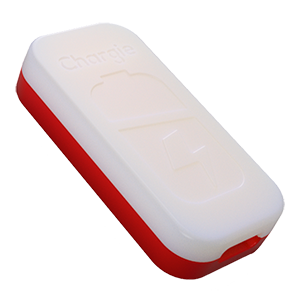
USB-C charge limiter that stops at your set battery level, so your battery never sits at 100% overnight. Extends battery lifespan by years. Works with any USB-C charger.
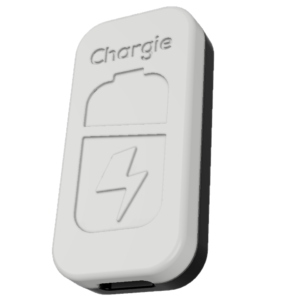
Limit your laptop charge to 80% via USB-C. Works with MacBooks, Dell, HP, Lenovo and most USB-C laptops up to 100W.
Protect Your Battery with Chargie
The world's first hardware charge limiter. Set a charge limit on any phone, tablet, or laptop — extend battery life by up to 4x.