12 min read 0 views

Cordless Hair Dryer Battery Health: Why Your Portable Dryer Dies in the Drawer

Ovidiu Sandru by Ovidiu Sandru, Founder & CEO

TL;DR — Your cordless hair dryer battery dies faster than the marketing claims suggest because two stressors stack: it sits at 100% state-of-charge (SoC) on its dock for days between uses, and that dock is usually in a hot, steamy bathroom. Battery University shows a Li-ion cell at 100% SoC and 40°C drops to 65% capacity in one year; the same cell at 40% SoC and 25°C retains 96%. A USB charge limiter like Chargie — capping charge around 80% — roughly doubles calendar life for a device you only reach for a few times a week.

Why Your Cordless Hair Dryer Battery Dies So Fast

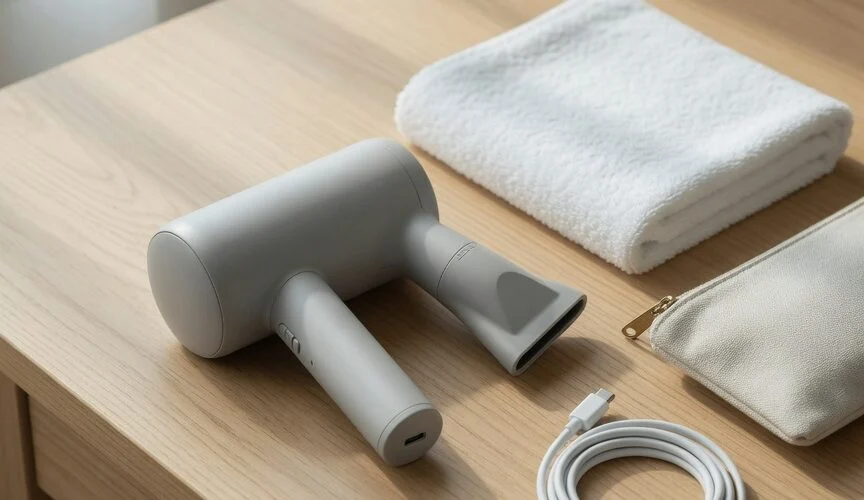
Cordless hair dryers sound like the perfect travel and dorm-room tool. No hunting for an outlet, no dragging a cord across a hotel bathroom. Most modern models include ionic, ceramic, and even infrared heat. The trade-off is hidden: every cordless dryer runs on a sealed lithium-ion (or lithium-polymer) pack, and that pack is the first component to fail.

Industry sources describe cordless dryers as offering “10-40 minutes of hot air drying and 2-3.5 hours of cold air usage per charge,” with most models landing closer to “15-20 minutes during continuous hot air use.” Larger packs like the popular 15,000 mAh USB-C units stretch hot-air runtime to 40 minutes on low but only 15 minutes on the highest heat setting. Whether your specific dryer advertises 15 minutes or 40, the cell inside is the same chemistry used in smartphones, vacuums, and toothbrushes — and it ages on the same calendar.

The IEEE standard 1188-1996 defines end-of-life for a Li-ion cell as the moment its capacity drops to 80% of the original rated capacity. Once you cross that line, the runtime you bought the dryer for is gone. With normal use, the cell should last 3-5 years or 1,000-2,000 full cycles at 25°C. Most users see meaningful runtime shrinkage well before that — not because the cells are bad, but because of how the dryer is stored.

The Calendar Aging Problem: Heat + 100% SoC

Two stressors stack against a cordless hair dryer even when it sits unused.

Stressor #1 — Storage state-of-charge. Battery University BU-808 puts it bluntly: “Exposing the battery to high temperature and dwelling in a full state-of-charge for an extended time can be more stressful than cycling.” The reference data, Table 3 of that article, shows a cobalt-based Li-ion cell held at 100% SoC and 40°C falls to 65% recoverable capacity after one year. The same cell at 40% SoC and 25°C keeps 96%. A cordless dryer that lives on its dock between trips is essentially parked at 100% in scenario one.

Stressor #2 — Bathroom heat. A cordless hair dryer almost never sits in a climate-controlled living room. It lives on the bathroom counter, where post-shower humidity and ambient temperatures regularly exceed 30°C. Wikipedia notes that Li-ion self-discharge roughly doubles every 10°C in the relevant range — 8% per month at 21°C, 15% per month at 40°C. Pair that with the slow float charge the dock applies to keep the pack at 100%, and the cell is working against itself 24 hours a day.

BU-808 flags the charging-voltage problem: most consumer Li-ion cells charge to 4.20 V per cell, and “every reduction in peak charge voltage of 0.10 V/cell is said to double the cycle life.” Dropping the ceiling from 4.20 V to 4.10 V pushes cycle life from 300-500 to 600-1,000; to 4.00 V hits 850-1,500 cycles. In practical terms, that 4.20 V ceiling is roughly 100% SoC; capping at 80% doubles or triples cycle life while keeping ~90% of usable capacity.

The charging protocol itself is well understood: Li-ion charges with constant current until the cell hits the voltage ceiling, then holds at constant voltage until current tapers to roughly 3% of the initial rate. Once full, the charger should stop drawing — but most dryers sit on a dock that resumes every time voltage drops a few percent from self-discharge. That “topping up” against an already-full cell is what causes the damage.

The Runtime Truth: Why Even Big Battery Models Run 15-30 Minutes

The capacity claim on the box is rarely the capacity you feel in the bathroom. A 15,000 mAh pack at the cell’s nominal 3.7 V stores about 55 watt-hours (Wh = mAh × V ÷ 1,000). A dryer pulling 200 W on high can, in theory, run that pack down in under 17 minutes. In practice, the BMS cuts off at the cell’s safe minimum (typically 3.0 V per cell for 18650-format packs), heat losses subtract another 10-15%, and the element is often pulsed rather than run continuously. The result is the 15-30 minute real-world number.

The practical takeaway: runtime is hardware-bound. You cannot make a 1.2-pound cordless dryer run an hour on high without making it heavier or hotter. What you can control is how much original capacity is still on the table 18 months from now.

Charging Best Practices: Stop at 80%, Store at 50-60%

Five habits extend the life of the cell inside any cordless dryer you own.

  • Cap charge at 80%. This corresponds to roughly 4.05-4.10 V per cell, the “Long Life” mode BU-808 recommends for laptops. The runtime penalty is around 10-15%, but cycle life roughly doubles.
  • Store the dryer at 40-60% SoC if you will not use it for more than two weeks. BU-808’s storage table shows 25°C at 40% charge holds 96% capacity after a year. Full-charge storage at the same temperature drops to 80%.
  • Move the dock out of the bathroom. A drawer in the bedroom or a closet shelf drops the ambient temperature 5-10°C and removes humidity swings. That single change alone extends calendar life by a measurable margin.
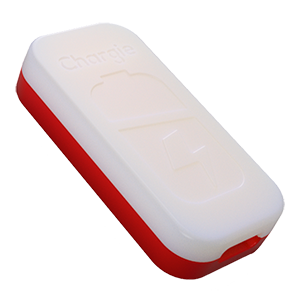
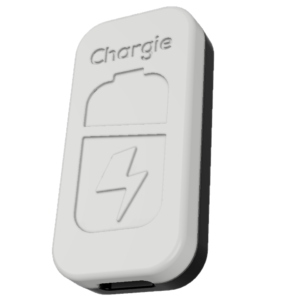
  • Use a USB charge limiter between the wall charger and the dryer’s USB-C port. A device like Chargie sits inline on the USB cable, monitors voltage, and cuts power at your chosen target SoC. For a Li-ion dryer, set the cap at 80% and the limiter handles the float-charge problem automatically.
  • Avoid deep discharges below 20% when you can. BU-808 Table 2 shows 100% depth-of-discharge cycles give ~300 cycles for NMC and ~600 for LiPo; 40% depth-of-discharge pushes those numbers to ~1,000 and ~3,000 respectively. Partial top-ups between sessions are ideal.

For more on the science behind the 80% rule, see why charging to 80% extends battery life and how to limit a device’s charge to 80%. The general principle is the same whether the device is a laptop, a vacuum, or a hair dryer — heat and SoC are the two big knobs you can turn down.

Comparing Popular Cordless Hair Dryers

The table below compares five real cordless and battery-capable models. Battery capacity is the manufacturer-stated value at the cell’s nominal 3.7 V; runtime is the vendor’s published hot-mode maximum; charge time is from empty to full. Where vendors publish only “up to” figures, the lower real-world number from independent reviews is used.

ModelBattery (capacity, type)Motor / heatingHot-air runtimeCold-air runtimeCharge timeNotable battery health feature
VOLO Go (cordless infrared)~57 Wh Li-ion, USB-CInfrared + brushless DC~15 min (high)~3 hr~3 hrReplaceable battery pack
AER Dryer (hybrid cordless)~44 Wh Li-ion (4 × 18650)Brushless DC, ceramic~4 hr (eco) / ~30 min (high)~4 hr~2.5 hrPlug-in fallback extends runtime
15,000 mAh travel dryer (USB-C, generic)~57 Wh Li-ion (2-3 × 18650 / LiPo)~200 W brushed DC~15-40 min~3.5 hr~4 hrUSB-C PD input (limiter-compatible)
Conason portable cordless~30-40 Wh Li-ion~150-180 W~15-20 min~2 hr~3 hrBMS overcharge protection
MANLI child-safe cordless~22-30 Wh LiPo~120 W (lower heat)~20 min~2 hr~3 hrAuto-shutoff at overheating

Note: Battery capacities are derived from stated mAh at the Li-ion nominal 3.7 V. Real-world runtime is lower than the cell’s calculated Wh because of inverter losses and heat-pulse duty cycles.

When the Battery Quits: Repair or Replace?

Most cordless dryers use a sealed pack — either a pouch LiPo or a small 18650 cluster wrapped in a plastic housing. Once the cell drops below the IEEE end-of-life threshold of 80% original capacity, the runtime loss becomes obvious: the dryer used to give you 25 minutes, now it gives you 12, and the lowest setting barely blows warm air.

Repair is worth considering only on units with a replaceable battery. The VOLO Go, the AER Dryer, and a few pro-grade salon models have user-swappable packs. A new OEM pack typically costs $25-50 and is rated for the same 300-500 full cycles as the original. Aftermarket packs are widely available but BU-810 warns that “aftermarket batteries may lack the protection circuits” and “do not deliver the expected performance” — stick with OEM or a known-good third party that uses a real BMS.

Replacement makes more sense on sealed units where the dryer was less than $80 to begin with. Swelling is a hard stop on any device: if the body bulges, the cell has begun gas-generating decomposition and should be taken to a recycling drop-off immediately. Wikipedia’s recycling data notes the EU collected about 49% of portable Li-ion batteries in 2023, so disposal infrastructure exists in most markets — see where to dispose of old batteries for guidance.

How Chargie Stops This From Happening

A USB charge limiter is a small inline device that sits between your USB wall adapter and the dryer’s USB-C charging cable. It monitors the voltage the BMS is requesting and cuts power once the pack reaches your target SoC. For a cordless hair dryer, the right setup is:

  • Set the cap at 80% (Chargie’s default “Long Life” profile).
  • Plug the dryer in only when you actually want to charge. Limiter does the rest.
  • Pair the limiter with a timer or schedule if your model charges slowly — a 4-hour charge can sit on the dock at 100% for another 8 hours waiting for you to use it. With the limiter cutting at 80%, the dock simply has no power to float the pack.
  • Charge in a cool room. Move the wall adapter and dock to a bedroom shelf, not the bathroom counter.

Compared to other dock-charged household devices we’ve covered — electric toothbrushes, stick vacuums, hearing aids, flashlights, jump starters — cordless hair dryers are the worst case for the bathroom-heat problem. They’re the device where moving the dock out of the humidity is most valuable.

Frequently Asked Questions

Can I replace the battery in my cordless hair dryer?

Some models yes, most no. The VOLO Go and AER Dryer have user-replaceable packs. Most consumer dryers in the $40-80 range are sealed and not designed for cell replacement — when the cell dies, you replace the whole unit. For repairable units, OEM packs are available from the manufacturer and typically cost $25-50.

Why does my dryer’s runtime keep dropping every month?

Calendar aging. Each month the cell sits at 100% SoC on its dock, it loses a measurable fraction of capacity — fastest at high temperature, slowest in a cool drawer. BU-808 shows a 100% SoC cell at 40°C falls to 65% capacity in one year. The cell is not defective; it is following the same degradation curve as every other Li-ion pack you own.

When is the best time to charge a cordless hair dryer?

Right before you plan to use it, not the moment you put it back on the dock. If you use the dryer once a week, charge it the morning of. If you use it daily, top it up after each use but stop the charge at 80% with a USB charge limiter. The general principle from Battery University is “partial discharge reduces stress and prolongs battery life” — short, shallow top-ups beat long, full cycles.

Does leaving my dryer at 100% charge really damage the battery?

Yes — measured, repeatable, and well-documented. Battery University Table 3 shows a Li-ion cell stored at 100% SoC and 25°C falls to 80% recoverable capacity after one year. At 40°C the same cell drops to 65% in the same period. Dropping storage SoC to 40% keeps the cell at 96% after a year at 25°C and 85% at 40°C. SoC is one of the two dominant variables in calendar aging, alongside temperature.

What battery chemistry is inside a cordless hair dryer?

Most are lithium-ion with a graphite anode and either LCO or NMC cathode — the same chemistry as a smartphone. Wikipedia puts the nominal cell voltage at 3.6 V (LCO with hard-carbon anode) or 3.7 V (LCO or NMC with graphite anode), and the maximum charging voltage at 4.20 V per cell. A few travel-grade models use a lithium-polymer (LiPo) pouch cell; LiPo stores more energy per gram but is more sensitive to swelling if over-discharged or punctured.

Will a USB charge limiter work with any cordless hair dryer?

Only on dryers that charge via a USB-C (or USB Micro-B) cable. The vast majority of modern travel-friendly dryers do. Models that use a proprietary magnetic dock or a non-USB barrel jack cannot use a USB charge limiter directly — though you can still apply the same principles by physically unplugging the charger once the indicator light turns green, or by using a smart plug with a timer. See how battery charge limiters work for the hardware overview.

Sources

  • Battery University, BU-808: How to Prolong Lithium-based Batteries — Tables 2-4 (DoD, temperature, charge voltage). https://batteryuniversity.com/article/bu-808-how-to-prolong-lithium-based-batteries
  • Wikipedia, “Lithium-ion battery” — chemistry, voltage ranges, self-discharge, end-of-life definition (IEEE 1188-1996). https://en.wikipedia.org/wiki/Lithium-ion_battery
  • Wikipedia, “Hair dryer” — power consumption, ceramic heating, ionic technology. https://en.wikipedia.org/wiki/Hair_dryer
  • Wikipedia, “Dyson (company)” — first cordless Dyson dryer manufactured by SKP. https://en.wikipedia.org/wiki/Dyson_(company)
  • Conason, “Are Battery-Powered Hair Dryers Practical for Daily Use?” — runtime 10-40 minutes hot, 2-3.5 hours cold. https://conason.com/are-battery-powered-hair-dryers-practical-for-daily-use/
  • Songye Hair Tools, “Guide to using cordless hair dryers for camping and travel” — Wh calculation, 15-30 min typical runtime. https://songyehairtools.com/blog/guide-to-using-cordless-hair-dryers-for-camping-travel/

Internal cross-references: What is a USB charge limiter? · Why charging to 80% extends battery life (the science) · How to limit battery charge to 80% · Electric toothbrush battery health · Cordless stick vacuum battery health · Hearing aid battery health · Flashlight battery health · Jump starter battery health · Where to dispose of old batteries

Recommended for you
Chargie C Basic - USB-C low power charging limiter

USB-C charge limiter that stops at your set battery level. Prevents overnight overcharging to extend battery lifespan by years. Works with any USB-C charger.
RON184.99 RON160.99
View product
Chargie for Laptops — 100W USB-C charging limiter

Limit your laptop charge to 80% via USB-C. Works with MacBooks, Dell, HP, Lenovo and most USB-C laptops up to 100W.

RON322.99 RON230.99
View product

Protect Your Battery with Chargie

The world's first hardware charge limiter. Set a charge limit on any phone, tablet, or laptop — extend battery life by up to 4x.

Ovidiu Sandru

Founder & CEO, Lighty Electronics

Ovidiu Sandru is the founder and CEO of Lighty Electronics, the company behind Chargie — the world's first hardware USB charge limiter. With a background in electronics engineering from Politehnica University of Timișoara, he has spent over a decade working on battery technology, Android development, and hardware design. Since launching Chargie in 2019, over 60,000 customers worldwide rely on his technology to extend their device battery lifespan.

🔍

Which Chargie?

Not sure which Chargie fits your device? Take our quick quiz.

Find Out →
📱

Get the App

Control your charging with our free app

Download →
🛒

Ready to Buy?

Free shipping on qualifying orders

Shop Now
Which one? Shop · from RON 137.99
Protect your battery automaticallyChargie limits charging to extend battery lifespan by up to 4x
Find your Chargie →