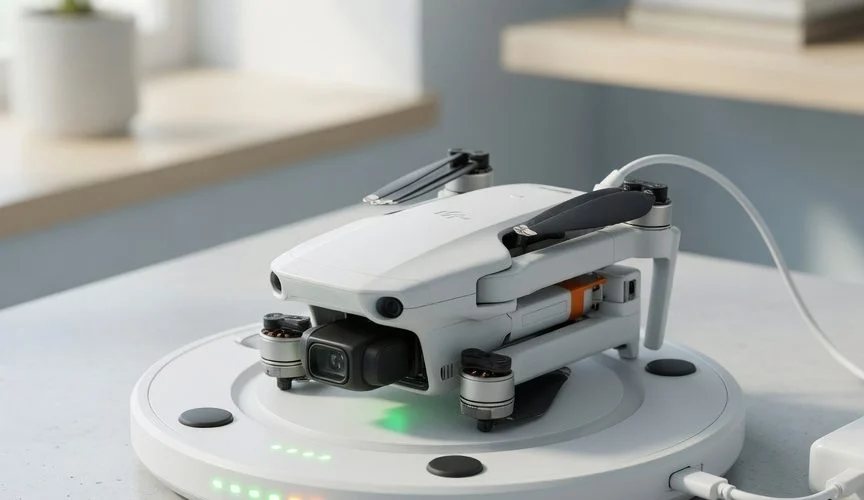

Why Drone Batteries Die Faster Than Phone Batteries
Open any drone pilot forum and you’ll find the same complaint within a season or two: a battery that used to give 25-30 minutes of flight time now barely clears 15, and the pack has started to visibly puff at the seams. That’s not bad luck — it’s the predictable result of how these batteries are built and used.
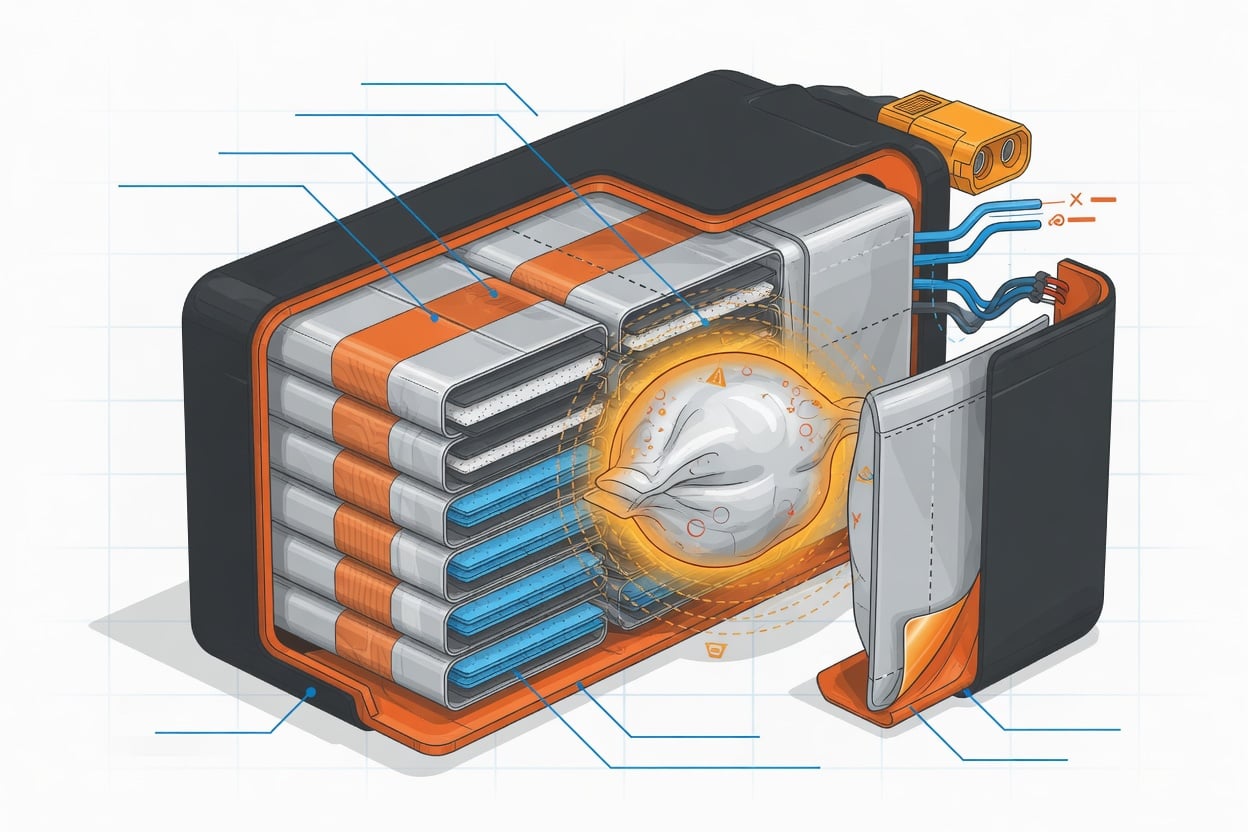
Almost every consumer and hobby drone — DJI’s Mini, Air, and Mavic lines, FPV racing quads, and agricultural platforms like the DJI Agras — runs on lithium polymer (LiPo) cells rather than the rigid cylindrical lithium-ion cells found in phones and laptops. LiPo cells pack a gel electrolyte into a flexible foil pouch instead of a hard metal can. That pouch is what makes drone batteries light enough to fly, but it’s also why they inflate visibly the moment gas builds up inside from degradation — there’s no rigid case holding the swelling in.
On top of that, drone batteries are worked far harder than a phone battery ever is. A quadcopter pulls near-constant current every flight — full-throttle climbs, aggressive maneuvers, and hovering all draw multiple times the battery’s rated capacity in amps. FPV racing drones push this to the extreme, redlining the pack on every lap. Phones, by comparison, sip current in small bursts across a whole day. More current per cycle means more heat and more stress on the electrodes, which shortens the pack’s usable life regardless of cycle count.
The Physics: Depth of Discharge and Voltage Stress
Battery University’s research on lithium-ion aging (BU-808 and BU-808b) identifies the same stress factors across every lithium chemistry, drone packs included: how deep each discharge goes, how high the charge voltage sits, and how much heat the cell sees while at that voltage.
Depth of discharge (DoD) is the big one for drones, because most pilots fly a pack down close to empty every flight — a 100% DoD cycle, the hardest a battery can be worked. Battery University’s cycle-life testing shows just how much this matters:
| Depth of Discharge per Flight | Approx. Cycles to 70% Capacity (NMC-type cells) | Approx. Cycles to 70% Capacity (LiFePO4-type cells) |
|---|---|---|
| 100% (fly to empty every time) | ~300 | ~600 |
| 80% | ~400 | ~900 |
| 60% | ~600 | ~1,500 |
| 40% | ~1,000 | ~3,000 |
| 20% | ~2,000 | ~9,000 |
Most drone packs use NMC-family lithium chemistry for the energy density needed to fly — the harsher end of that scale. Landing with 20-30% left in the pack instead of flying it down to 5% roughly doubles the number of flights before the battery is worn out. Same principle as “don’t run your phone to 0%,” but with far more dramatic consequences: a dead battery mid-flight means a crash, not just an inconvenient reboot.
Charge voltage matters just as much. Battery University found that cells held above roughly 4.10V per cell degrade through “electrolyte oxidation” at the positive electrode — a chemical breakdown that can trigger sudden capacity loss rather than the slow fade you’d expect. NASA’s own satellite battery research (charging Li-ion packs meant to survive 8+ years and 40,000 cycles) found the sweet spot was about 3.92V per cell — far below the 4.20V “full charge” most consumer chargers default to — accepting a capacity trade-off for dramatically longer service life.
Storage Voltage: The RC-Pilot Best Practice Most People Ignore
Here’s where drone and RC hobbyists have an advantage most phone owners don’t: a well-established, chemistry-backed best practice called “storage voltage.” RC pilots have known for years that a LiPo pack left sitting at a full 4.20V/cell for weeks between flights degrades and puffs far faster than one left at a lower resting voltage. Most smart LiPo chargers include a dedicated “storage mode” that discharges (or tops up) a pack to roughly 3.6-3.9V per cell — right in the low-stress zone that Battery University and NASA’s own data point to for long-term lithium storage.
The problem is adoption, not awareness. Storage mode takes an extra step after every flying session, and it’s the first habit that gets skipped when you’re packing up gear in a hurry. The result: batteries sit fully charged in a garage or gear bag for weeks between flights — the highest-stress condition for the cell. If you fly semi-regularly, get in the habit of storage-charging any pack that won’t be flown again within a few days. No other single habit adds more flights to a pack’s lifespan for less effort.
Heat Is the Second Killer
Temperature compounds every other stress factor. Battery University’s data shows self-discharge and internal degradation both accelerate sharply with heat — a fully charged lithium cell can lose several times more capacity per month at 60°C than at 0°C. Drone batteries are particularly exposed because they sit in a tight bay next to motors, electronic speed controllers (ESCs), and flight controllers that generate heat during flight, and because summer flying sessions routinely bake a pack in direct sun before and after use.
Commercial and agricultural operators — like the DJI Agras platforms used for crop spraying — see this in compressed form: batteries cycled multiple times a day in full field heat wear out visibly faster than the same packs in occasional recreational use. If you fly in hot climates or right after a hard session where the pack feels warm, let it cool to room temperature before recharging, and avoid leaving packs in a hot car or direct sun between flights.
Popular Drone Battery Specs Compared
| Drone | Battery Capacity | Rated Flight Time | Notes |
|---|---|---|---|
| DJI Mavic Mini / Mini series | ~2,400 mAh | ~30 min | Sub-250g class, no obstacle-avoidance draw |
| DJI Mavic Air series | ~2,375-3,500 mAh | ~20-34 min | Portable folding design, ~430g+ |
| DJI Mavic Pro (original) | 3,830 mAh | 27 min | Platinum variant improved to 30 min via battery/ESC tuning |
| FPV racing quads | Varies (typically 4-6S LiPo) | ~3-7 min | Full-throttle discharge every flight — hardest-cycled category |
Flight time figures are manufacturer-rated under ideal conditions. Real-world time drops with wind, cold, and — as the pack ages — cycle count. A pack rated for 30 minutes new commonly drops to 20-22 minutes after a season of hard, full-discharge flying with no storage-voltage discipline.
How to Actually Extend Drone Battery Life
- Land with charge left. Treat 20-30% remaining as your real “empty,” not 0%. This alone can roughly double cycle life versus flying every pack to depletion.
- Storage-charge anything not flying within a few days. Use your charger’s storage mode (typically ~3.6-3.9V/cell) instead of leaving packs at a full 4.20V/cell.
- Let hot packs cool before recharging. Charging a warm-from-flight battery compounds heat stress at the worst possible moment.
- Balance-charge every time. Uneven cell voltages inside a multi-cell pack accelerate the weakest cell’s degradation and are the most common cause of early puffing.
- Retire a visibly puffed pack. Swelling means gas has already built up inside the pouch — a mechanical failure mode, not just reduced capacity, and a real fire risk if punctured or crushed.
- Track cycles per pack. Most flight-controller apps log this automatically — use it to retire packs proactively rather than waiting for a mid-flight failure.
If you’re weighing hardware vs. software approaches to enforcing these habits across your whole gear bag, this mirrors the same trade-off covered in our USB-C charge limiters compared roundup, and in the broader debate over hardware vs. software battery charge limiters. The wear patterns on an e-bike or gaming handheld battery also follow the same depth-of-discharge and heat rules.
Where a USB-C Charge Limiter Fits In
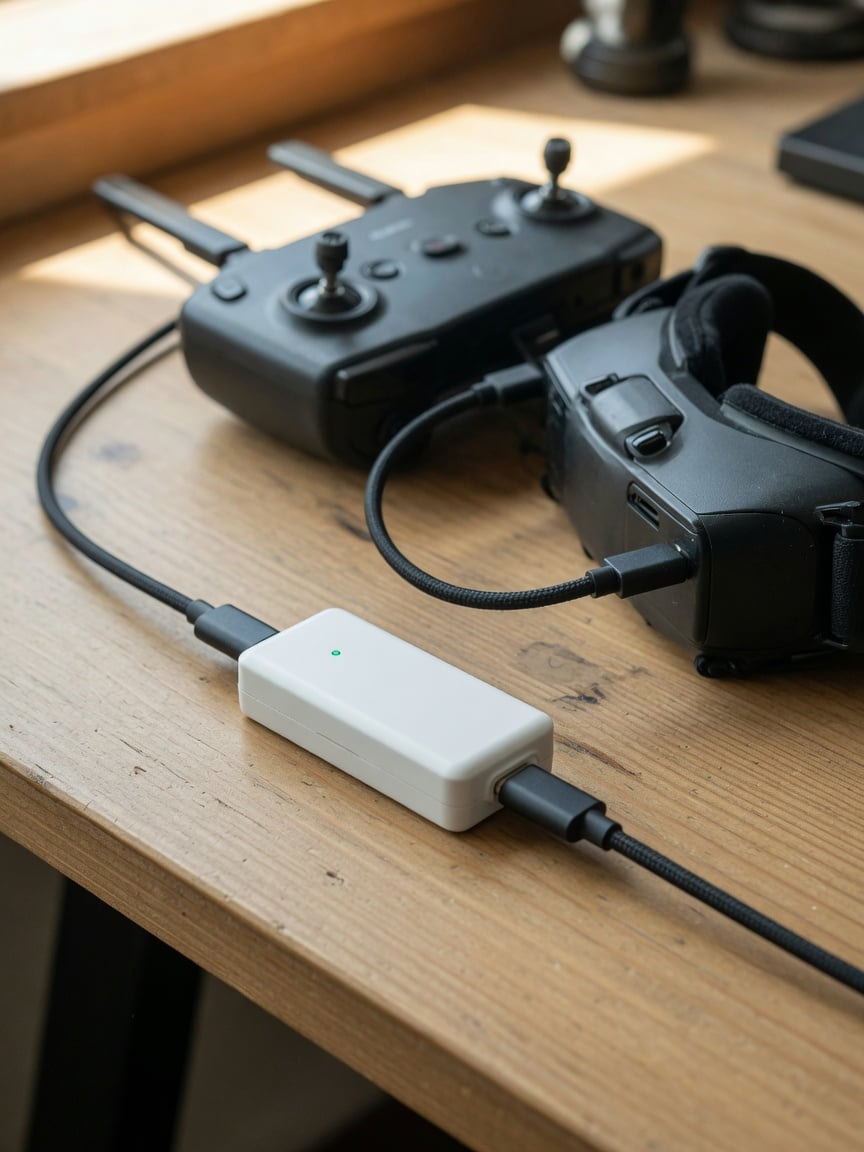
Chargie doesn’t wire into a LiPo flight pack’s balance leads — that’s specialized RC-charger territory. But every drone pilot’s kit is full of other lithium batteries charging over plain USB-C every single day: the remote controller, FPV goggles, and the phone or tablet running the flight app. Those batteries follow exactly the same voltage-stress rules covered above — sitting at 100% on a charger overnight does the same slow damage to a controller’s internal cell as it does to a phone.
That’s the gap a hardware USB charge limiter closes: plug it inline on the USB-C cable charging your goggles, transmitter, or phone, and it automatically cuts the charge at a safer level instead of letting the device sit topped off at full voltage for hours. Same storage-voltage principle RC pilots already use with dedicated LiPo chargers, applied automatically to the rest of the gear that doesn’t have a “storage mode” button.
FAQ
Why do drone batteries puff up more than phone batteries?
Drone batteries use lithium polymer (LiPo) cells with a flexible foil pouch instead of the rigid metal case used in most phone batteries. When internal gas builds up from degradation, a LiPo pack has nothing rigid holding it in shape, so it visibly swells. A phone battery degrades through the same chemistry, but the hard case masks the swelling until it’s severe.
Is it safe to fly a swollen or puffy LiPo battery?
No. Swelling means gas has already built up inside the cell — a mechanical failure mode that increases fire risk, especially if the pack is punctured, crushed, or over-discharged further. The same battery swelling causes and prevention logic applies here — retire and properly dispose of any visibly puffed pack rather than flying it.
What is “storage voltage” and why does it matter?
Storage voltage is roughly 3.6-3.9V per cell — well below a full 4.20V charge. Lithium cells held at high voltage for extended periods degrade faster through electrolyte breakdown at the positive electrode. Most smart LiPo chargers have a dedicated storage mode for exactly this reason; using it for any pack not flying within a few days meaningfully extends its lifespan.
How many charge cycles does a typical drone battery last?
It depends heavily on depth of discharge. Flying a pack to near-empty every time (100% depth of discharge) typically yields a few hundred cycles before capacity drops to around 70%. Landing consistently with 20-30% remaining can roughly double or triple that number, according to Battery University’s cycle-life testing.
Does cold weather affect drone battery performance?
Yes — cold temporarily reduces a lithium battery’s usable capacity and voltage output, which is why manufacturers recommend warming packs to near room temperature before flying in cold conditions. This is a temporary performance effect rather than permanent degradation, unlike the damage caused by heat, high voltage, or deep discharge cycling.
Can a USB charge limiter protect my drone’s flight battery directly?
Not the flight pack itself — that charges through a dedicated balance charger, not USB-C. A hardware USB charge limiter is most useful on the other lithium batteries in a pilot’s kit that do charge over USB-C: the controller, FPV goggles, and phone or tablet running the flight app.
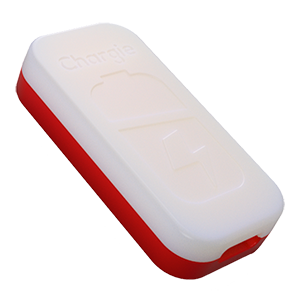
USB-C charge limiter that stops at your set battery level, so your battery never sits at 100% overnight. Extends battery lifespan by years. Works with any USB-C charger.
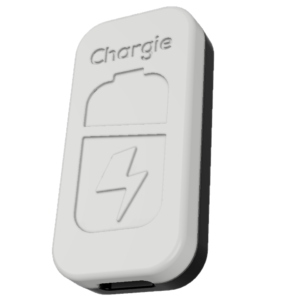
Limit your laptop charge to 80% via USB-C. Works with MacBooks, Dell, HP, Lenovo and most USB-C laptops up to 100W.
Protect Your Battery with Chargie
The world's first hardware charge limiter. Set a charge limit on any phone, tablet, or laptop — extend battery life by up to 4x.