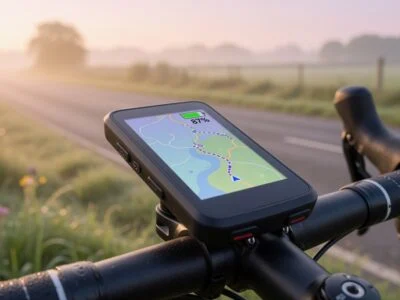
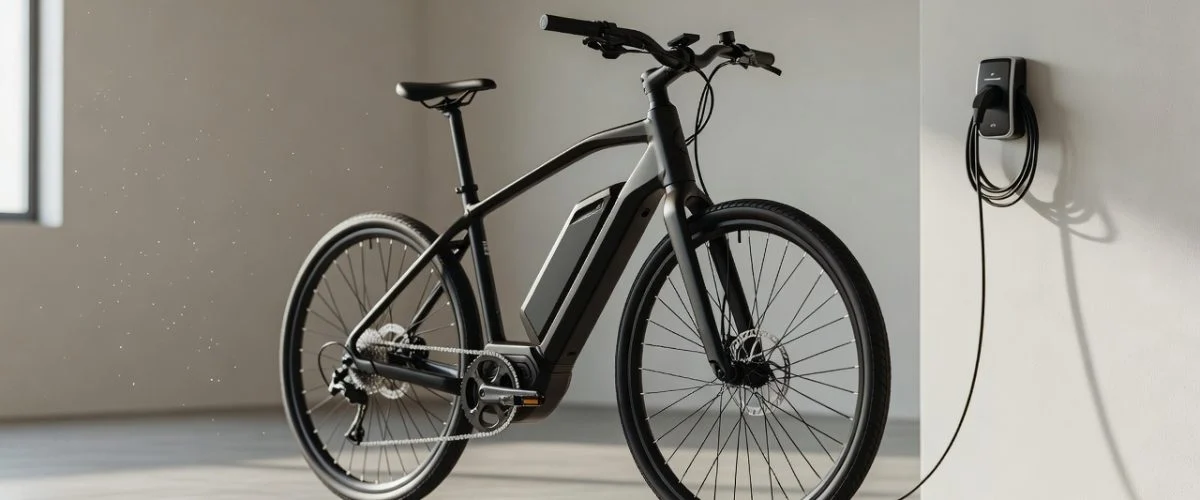

The battery is the most expensive part of your e-bike — and most riders unknowingly wear it out years early. The good news: the habits that protect it are simple, free, and backed by the same lithium-ion science that governs your phone and electric cars. This guide explains why e-bike batteries degrade, the handful of charging and storage habits that matter most, and how a hardware charge limiter like the Chargie USB charge limiter takes the most damaging habit off your plate automatically.
Why e-bike batteries wear out faster than you’d expect
An e-bike battery is a large lithium-ion pack — the same chemistry used in phones, laptops, and EVs, just scaled up to about 300–700 watt-hours so it can move a bike and rider. Lithium-ion is the most-used e-bike battery type because it’s lighter, charges faster, and delivers more range than older sealed-lead-acid or nickel packs, according to Wikipedia’s overview of electric bicycles.
But that chemistry has a built-in clock. Manufacturers conservatively rate consumer lithium-ion cells at roughly 300–500 full charge cycles before noticeable capacity loss, per Battery University’s BU-808 reference. “Cycle life” is the number of cycles a pack can do before it drops to about 80% of its original capacity. After that, your range quietly shrinks — the same 20-mile commute starts cutting it close, then needs a mid-day top-up.
Three forces drive that decline, and all three are partly in your control:
- How full you keep it. High charge levels hasten capacity loss. Storing a cell in the fully charged state continuously grows the internal film (the “SEI” layer) that eats usable capacity and raises resistance.
- How deeply you drain it. Depth of discharge directly determines cycle count — the smaller the discharge, the longer the battery lasts. Battery University is blunt: “Avoid full discharges and charge the battery more often between uses.”
- Heat. Prolonged heat reduces battery life, and a combination of full charge plus high temperature (above ~50 °C / 122 °F) can cause a sharp capacity drop. Degradation at 25 °C runs at roughly half the speed it does at 50 °C.
If those three factors sound familiar, that’s because they’re the exact same levers behind EV battery health and the “charge to 80%” rule — and the same physics covered in our lithium-ion battery degradation guide. An e-bike pack is just a bigger version of the cell in your pocket.
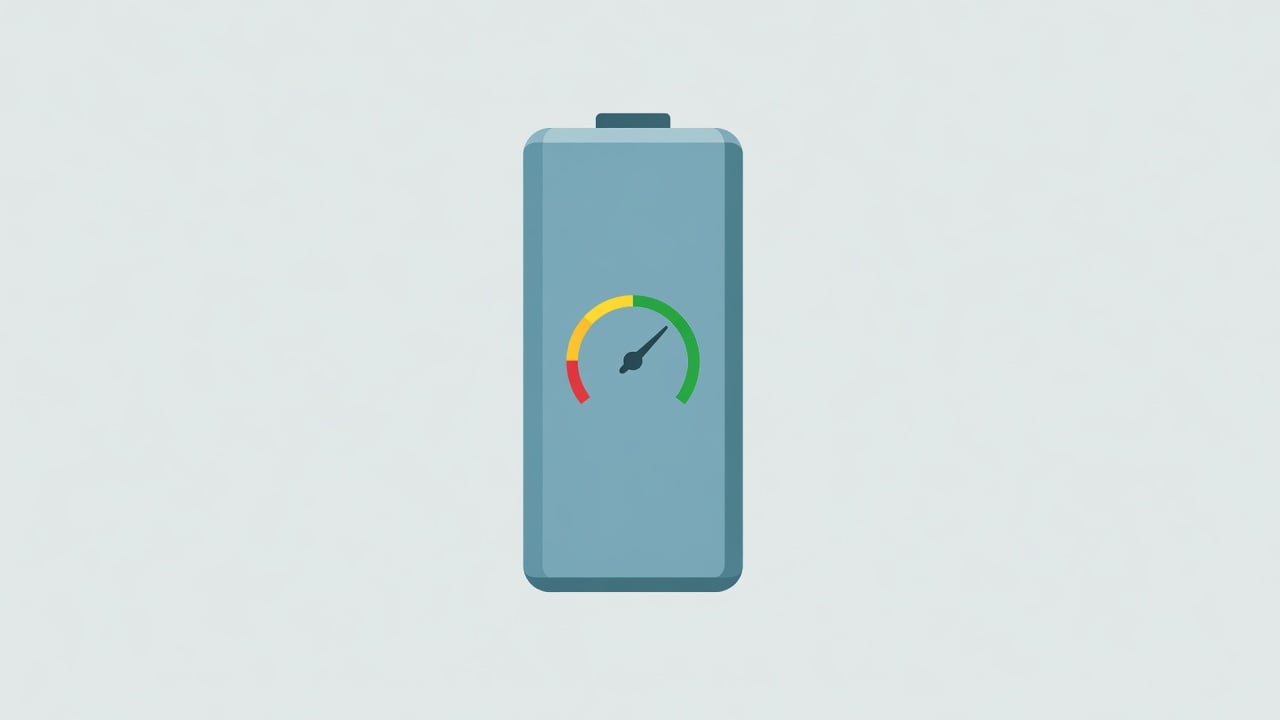
The single biggest mistake: charging to 100% and leaving it plugged in
Most riders do two things on autopilot: they charge to a full 100% every time, and they leave the battery on the charger overnight or for days between rides. Both quietly accelerate aging.
Here’s the chemistry. The damage from sitting at a high state of charge isn’t about charge cycles — it’s about time spent full. The capacity-eating SEI film grows in proportion to the square root of the time the cell spends in the charged state. In plain terms: a pack that lives at 100% on the charger ages faster than one parked at a partial charge, even if you never ride it. That’s why “calendar aging” can matter as much as how many miles you log.
Storing lithium-ion at roughly 60–80% reduces capacity loss compared with storing it full, and the general guidance for rechargeable batteries in long-term storage is even lower — around 30–70%. The takeaway is the same one we give phone owners in our guide on how to limit battery charge to 80%: a battery that rarely sees a full 100% and rarely sits there simply lasts longer.
“But doesn’t my e-bike already manage this?”
Some premium systems include a charge-limit or eco-charge setting in their app — but coverage is patchy. Plenty of mid-range and budget e-bikes, and nearly every conversion kit, ship with a dumb charger that drives the pack to 100% and stops there with no option to cap it lower. And even where an app limit exists, it depends on you opening the app and remembering to set it. A simple inline hardware limiter like Chargie removes that dependency entirely for your USB-charged devices — set it once and it caps every charge automatically.
Heat and cold: the temperature rules that protect your pack
Temperature is the most underrated killer of e-bike batteries. “Room-temperature charging and shallow discharge/recharge cycles help extend overall battery life,” notes the electric-bicycle reference. The lithium-ion specifics:
- Charge between 5°C and 45°C (41–113°F). Above 45°C, charging degrades performance; below 5°C, internal resistance rises and charging too fast or too cold can plate lithium metal into dendrites that can short the cell.
- Don’t charge a battery that’s just come in from a hot ride or a freezing garage. Let it return to room temperature first.
- Store cool, never hot. Degradation is minimal at room temperature and climbs sharply above ~35°C. A pack baking in a sunny shed or a car trunk in summer ages far faster than one on a shelf indoors.
The rule of thumb: charge and store the pack somewhere you’d be comfortable sitting yourself.

Do’s and don’ts at a glance
| Habit | Why it matters | What to do instead |
|---|---|---|
| Everyday charge level | Sitting at 100% accelerates chemical aging | Charge to ~80–90%; save 100% for max-range days |
| Leaving it on the charger | Days at full charge = faster capacity loss | Unplug once charged |
| Deep discharges | Draining to 0% stresses the cells | Recharge before empty; partial drains are fine |
| Charging temperature | Heat and cold both damage lithium-ion | Charge between 5–45°C, ideally at room temperature |
| Storage charge | Full or empty both degrade the pack over months | Store at ~30–70% for long periods |
| Storage temperature | Heat is the fastest killer of stored batteries | Cool, dry, indoors — never a hot shed or garage |
| Charger quality | Cheap chargers can overcharge or overheat the pack | Use the manufacturer’s charger or a quality replacement |
How to tell your battery is declining
Capacity is the leading indicator of battery health, and it fades gradually. Watch for these signs:
- Shrinking range. The same ride that used to take 40% now takes 55%. This is the clearest signal.
- Faster percentage drops under load. The battery gauge falls more quickly than it used to on hills — a sign of rising internal resistance.
- Longer or more erratic charge times. A pack that used to take three hours now takes four, or the charger cuts off early.
- Physical changes. Swelling, bulging, or excessive heat during use or charging — stop using the pack immediately and contact your dealer.
The cycle math: why small habits compound
Assume one full cycle every two days — roughly 180 cycles a year for a regular commuter. At a conservative 400-cycle rating, a pack charged to 100% and stored full could hit 80% capacity in about two years. But shift to charging to ~85% for daily rides, avoid deep discharges, and store cool — and you’re turning a two-to-three-year pack into a five-year-plus one.
What this saves you
The battery is the priciest component on an e-bike, and out-of-warranty replacement costs run into the hundreds. Wikipedia notes “considerable battery replacement costs, particularly in cases of premature failure.” Beyond the money, every pack you keep in service longer is one less in the e-waste stream. The difference between a pack that fades in three years and one that’s still strong in six is mostly a handful of free habits — and one piece of inexpensive hardware.
The easy fix: cap the charge automatically with hardware
The hardest habit to keep is the most important one: stopping the charge before 100%. Willpower fails — you plug in, walk away, and the charger does what it always does. That’s exactly the gap the Chargie USB charge limiter closes for USB-charged devices like your phone, laptop, and accessories. It sits inline, cuts power at your target level, and needs no app or firmware — set it once and it caps every charge automatically.
The honest caveat: most e-bike chargers use barrel or proprietary plugs, not USB. So Chargie’s principle applies directly to your e-bike — but the product itself fits USB-charged devices. For your phone, laptop, and accessories that live on the charger, it’s a simple add-on that pays for itself in battery life. For the e-bike itself, the free habit does the job: set a charge timer or unplug at ~85–90%. Hardware just makes it automatic.
Frequently asked questions
Should I charge to 100% every time?
No. Charge to 80–90% for everyday rides and save 100% for days you need maximum range. Daily 100% top-ups accelerate capacity loss.
Is it bad to leave my e-bike on the charger overnight?
Not ideal. Once the pack is full, unplug it. Days spent at 100% speed up aging even if you never ride.
How many cycles will an e-bike battery last?
Most consumer lithium-ion packs are rated for 300–500 cycles to 80% capacity. Your actual lifespan depends heavily on charging habits, depth of discharge, and temperature.
How should I store my e-bike battery in winter?
Store it at 30–70% charge, indoors, in a cool, dry place. Check it every couple of months — self-discharge runs about 1.5–2% per month. Never store a fully charged or fully drained pack for long periods.
Should I run the battery to zero before charging?
Better not. Lithium-ion has no memory effect, so there’s no benefit to draining it. Partial discharges are easier on the cells.
Does cold weather damage e-bike batteries?
Cold reduces range temporarily — you’ll get fewer miles per charge in winter. But charging below ~5°C can cause permanent damage through lithium plating. Always let a freezing battery warm to room temperature before charging.
Sources
Battery University, BU-808: How to Prolong Lithium-based Batteries. Wikipedia, Electric bicycle, Lithium-ion battery, and Rechargeable battery.
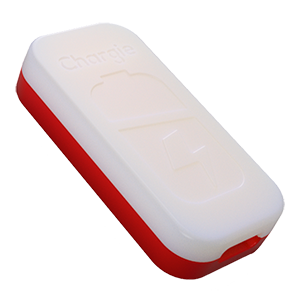
USB-C charge limiter that stops at your set battery level, so your battery never sits at 100% overnight. Extends battery lifespan by years. Works with any USB-C charger.
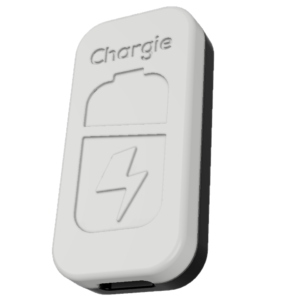
Limit your laptop charge to 80% via USB-C. Works with MacBooks, Dell, HP, Lenovo and most USB-C laptops up to 100W.
Protect Your Battery with Chargie
The world's first hardware charge limiter. Set a charge limit on any phone, tablet, or laptop — extend battery life by up to 4x.