
Heated Vest Battery Health: Why Your Warming Pack Dies By Year Two
How Heated Clothing Actually Gets Its Power
Heated clothing is built for cold-weather sports and outdoor work — motorcycle riding, downhill skiing, winter biking, snowmobiling, trekking, and for tradespeople who stand outside all day. Since the London Olympics it has also been used by athletes to keep muscles warm between a warm-up and a race.
The heating itself is simple. Tiny conductive wires — carbon fibre or a nickel-chromium metal composite chosen for how well it survives repeated heating and cooling — are sewn into a layer of the fabric. Run current through those wires and they warm up. The interesting part, for battery health, is where that current comes from, because heated garments are split across three very different power systems:
- 12 V systems designed for motorcycles, ATVs and snowmobiles, which draw power from the vehicle’s own battery rather than a worn pack. A single garment usually won’t trouble the vehicle battery, but riders are warned to be careful when powering several heated garments at once.
- 7.4 V packs — the most common type of heated-clothing battery system, and rechargeable. For downhill skiing and winter biking, rechargeable nickel-metal-hydride or lithium batteries are the norm. A 7.4 V garment typically runs for around 2–8 hours depending on the heat setting and outside conditions, and many jackets and vests can be powered for almost double that with an extended-life battery bought separately.
- 5 V USB power banks — the newest option, and the one that matters most for battery care. A 5 V garment lets you use a common, everyday power bank for both heating apparel and charging your personal electronics.
Real packs are small but not trivial. Retailer listings for mainstream heated vests and jackets commonly quote capacities from around 4,800 mAh up to roughly 10,000 mAh, charging in about two to four hours; at a 7.4 V system voltage that works out to roughly 35–75 Wh. Figures like these are typical of the category, not universal, so check your own pack.
Two of those three systems are irrelevant to a charge limiter: a 12 V system runs off the vehicle battery and doesn’t care. The other two are lithium packs that you charge yourself — and those are the ones that die early.
Why A Heated-Vest Pack Ages Faster Than A Phone Battery
Batteries don’t just wear out when you use them. Engineers separate cycle life, which counts how many charge-discharge cycles a cell survives, from calendar life, which describes degradation during storage as well as cycling. A battery can sit untouched on a shelf and still lose capacity.
What drives calendar aging is temperature and state of charge. As the lithium-ion literature puts it plainly, batteries stored at a high temperature or a high state of charge often lose their capacities more quickly, and the rate of that loss increases with temperature and state of charge. Those two variables multiply. A full pack in a warm place is the worst case, and it is precisely the state most heated-vest packs are left in.
Now compare the duty cycle with your phone. A phone is used daily, so its charge level moves, and it’s usually charged and discharged in a normal-temperature room. A heated-vest pack is used intensely for a season and then abandoned. That imbalance — months of storage at full charge — dominates everything else.
The Nine Months At 100%
Think through a typical year. You buy the vest in October, charge the pack to 100%, and wear it through the winter. Each evening you plug the pack back in so it’s “ready”. When spring arrives you take the pack out, put it in a drawer or a closet shelf, and leave it there — still full from the last charge — until the cold returns. For most owners, that’s eight to nine months sitting at 100% state of charge, often in a bedroom closet or a garage that swings through summer heat.
That is the single most damaging thing you can do to a lithium cell, and it is the default behaviour of almost every heated-vest owner.
Heat Is Counted Twice Here
Heated-apparel packs run hotter than a phone battery for two separate reasons. First, discharging into a resistive heating element draws real current, and the cell warms while you wear it — and it’s pressed against your body or under insulation, so that heat has nowhere to go. Second, charging adds its own heat on top of that. By the time you plug the pack in after a day outside, the cell is already warm and you’re warming it further.
Self-discharge is temperature-sensitive too: it tends to occur more quickly at higher temperatures, which matters because a pack left in a hot garage drifts further from where you left it. For the nickel-metal-hydride packs used in some winter garments, the effect is larger — their self-discharge rate varies greatly with temperature, with lower storage temperatures leading to slower discharge and longer life.
Why Pouch Packs Swell
Pouch-format cells — the flat, foil-wrapped kind that pack the most energy into the least space — are common across lithium-ion devices. The lithium-ion literature notes that pouch cells need containment to prevent expansion when their state of charge is high. As a pouch cell ages and gases accumulate, it physically inflates. In an enclosed pack shell, that swelling stays invisible until the shell bulges or the pack no longer seats properly in its pocket.
Swelling is not reversible. Once a pack has visibly puffed, it should be retired and disposed of safely, not stored in a drawer next to the coat you plan to wear.
Pack Types Compared
| Pack type | Typical charging | Main aging enemy | Best storage SoC | Charge limiter fits? |
|---|---|---|---|---|
| 7.4 V rechargeable Li-ion pack | Barrel or USB, 2–4 h | Off-season time at 100% + heat | 50–60% | Only if it charges over USB |
| 5 V USB power bank | USB-C, 2–4 h | Same, plus always-on top-ups | 50–60% | Yes — inline on the USB cable |
| 12 V vehicle-powered | Vehicle battery | Vehicle battery, not the garment | N/A | No |
| NiMH winter-biking packs | Wall or USB | High self-discharge + overcharge | N/A | Yes, if 5 V USB |
The Routine That Doubles Pack Life
You can’t change the fact that the pack spends half its life idle. You can change the state it’s idle in.
During The Season
- Charge after the pack has cooled, not straight off your back. Let it reach room temperature first — a warm cell takes charging stress worse.
- Don’t store it on the charger. Simple chargers can keep pushing current after the cell is full; only chargers with proper sensing cut off at the end of charge. A pack left on the cable for twelve hours is being held at full voltage for twelve hours.
- Top up to 80%, not 100%. The last 20% of charge is where the cell sits at its highest voltage — and it’s the part you rarely need, because you’re indoors within a couple of hours anyway.
Off-Season
- A good off-season target is 50–60% — discharge or charge the pack to about that level before putting it away. That’s the middle of the range where calendar aging slows down most; the lithium-ion literature’s nearest documented band is 60–80%, and this target is deliberately lower.
- Store it cool and dry — a closet rather than a garage or an attic. Cool is the point; don’t freeze it, and don’t leave it in a car.
- Recharge to 50–60% once a season. Self-discharge will slowly pull the level down, and you don’t want it to slump toward empty over the summer.
- Check it over before the next season. If it feels weak, check its health; if it has puffed while stored, that is a pack you replace, not one you recharge.
The 80% Rule — And The Gear That Enforces It
Everything above runs into the same obstacle: heated clothing has no battery-80% setting. There is no firmware toggle, no app, no charge-limit menu — not in the garment, and generally not in the little pack or its charger. Unlike a phone or a laptop, there is no built-in software limit to reach for, so you’re left to guess when to unplug — which nobody does reliably.
A USB charge limiter solves that for the 5 V side of the category. It sits inline on the USB cable between the charger and the pack or power bank and physically cuts the current when the battery reaches the level you set — so “charge to 80%” becomes automatic instead of a thing you have to remember. For a 5 V heated vest running off a standard USB power bank, the limiter caps the bank at 80% every time, whether or not you’re paying attention.
If your pack charges through a proprietary barrel connector rather than USB, a USB limiter can’t sit in that path — you’re down to manual discipline and the storage rules above. If it charges over USB-C, you’re covered. Either way, understanding why 80% matters is the first step, and putting the habit into practice is the second.
Do this and the math changes. A pack that spends the off-season at 50–60% instead of 100% is simply exposed to far less calendar-aging stress, and a pack that never charges past 80% spends less time at its highest, most reactive voltage. The pack still ages — every battery does — but it can plausibly last several seasons instead of one or two — often the difference between a $30–$50 replacement pack every winter and one every three or four years.
FAQ
Should I Store My Heated Vest Battery Fully Charged?
No. Store it at roughly 50–60% state of charge, cool and dry. A lithium pack left at 100% for the off-season ages faster because capacity loss increases with both temperature and state of charge. Full charge is for the days you’re actually wearing the vest.
Can I Use A Regular USB Power Bank With A Heated Vest?
Many 5 V heated garments are designed for exactly that — the low-voltage option exists so you can use a common power bank for heating and for charging your phone. If your vest runs on a 5 V USB bank, you can put a charge limiter inline on the cable and cap that bank at 80%.
Why Does My Heated Vest Battery Swell Up?
Pouch-format cells need containment to keep from expanding when their state of charge is high, and as the cell ages, internal gas pressure can inflate it. Swelling is permanent and a safety red flag. Retire and recycle the pack — don’t keep using it or leave it in a drawer.
How Long Should A Heated Vest Battery Last?
That depends heavily on how it’s stored. A pack charged to full and left warm through the off-season will fade noticeably within a season or two. Stored at 50–60% in a cool place and capped at 80% while charging, it should manage several seasons. Vendor packs are typically rated in the low thousands of milliamp-hours and charge in 2–4 hours.
Is It Bad To Leave My Heated Vest Battery On The Charger Overnight?
Generally yes. Simple chargers must be manually disconnected once the charge cycle ends, and holding a cell at full voltage for hours adds stress with no benefit. Charge it, then unplug. A limiter that stops the current at 80% removes the problem for USB-charged packs.
Do 12 V Heated Jackets Have The Same Battery Problem?
No. A 12 V garment draws from the vehicle’s battery — motorcycle, ATV or snowmobile — rather than a worn pack, so there is no off-season pack to store. The wear concern shifts to the vehicle battery itself, and to not overloading it if you power several heated garments at once.
Sources
- Wikipedia — Heated clothing (voltage systems, heating-element construction, runtime, winter-biking chemistries)
- Wikipedia — Lithium-ion battery (calendar life, state-of-charge and temperature effects, pouch-cell expansion)
- Wikipedia — Lithium polymer battery (pouch-format construction)
- Wikipedia — Nickel–metal hydride battery (self-discharge behaviour versus temperature)
- Wikipedia — Self-discharge (mechanism and temperature dependence)
- Wikipedia — Battery charger (charge termination, manual disconnection)
- Retailer listings for mainstream heated-vest packs — Venustas 7.4 V / 4,800 mAh replacement battery and ORORO 7.38 V / 4,800 mAh pack (voltage and capacity figures; charge-time range as quoted)
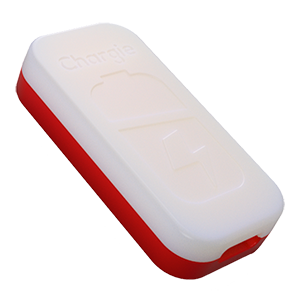
USB-C charge limiter that stops at your set battery level, so your battery never sits at 100% overnight. Extends battery lifespan by years. Works with any USB-C charger.
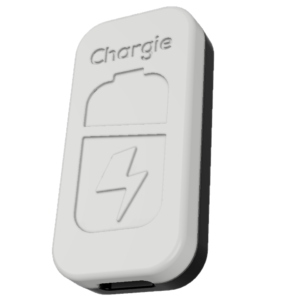
Limit your laptop charge to 80% via USB-C. Works with MacBooks, Dell, HP, Lenovo and most USB-C laptops up to 100W.
Protect Your Battery with Chargie
The world's first hardware charge limiter. Set a charge limit on any phone, tablet, or laptop — extend battery life by up to 4x.