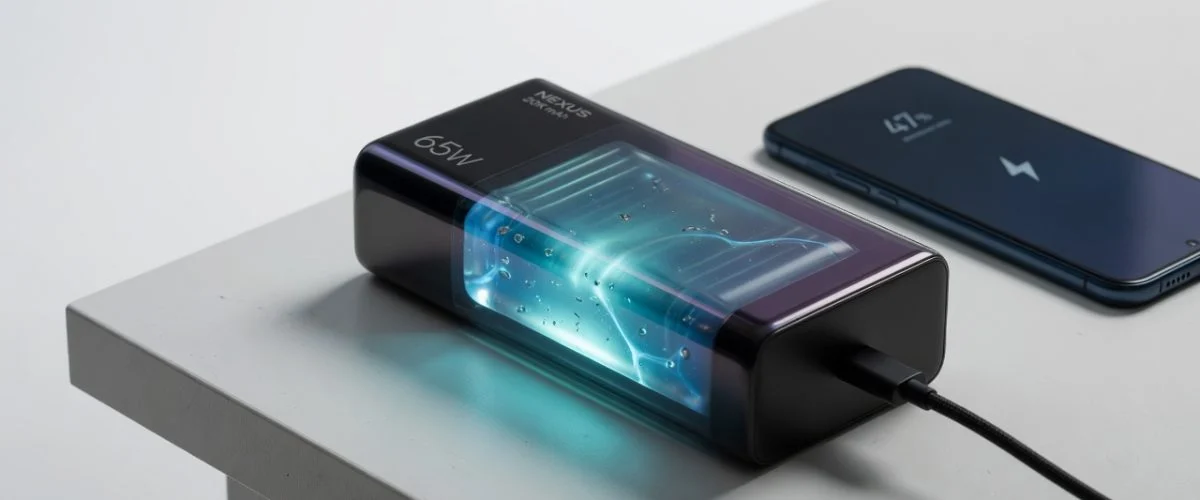

Every power bank you’ve ever owned uses the same basic chemistry: two electrodes separated by a liquid electrolyte, the stuff that actually catches fire when a cell gets punctured, overcharged, or crushed. In 2026, that’s starting to change. A wave of “semi-solid-state” power banks — from BMX’s SolidSafe line to Japanese brands like Elecom, Buffalo, CIO, and cheero — replaced most of that flammable liquid with a gel-like electrolyte, and they’re now sitting on real shelves at real prices, not just CES demo tables.
This is a genuinely different situation from the “solid-state battery phone” hype cycle we’ve covered before. Full solid-state cells for phones are still years away and repeatedly delayed — the manufacturing problem is too hard to solve cheaply at phone scale. Semi-solid-state power banks are a different, much smaller engineering problem, and companies have already solved it well enough to ship. Here’s what the chemistry actually changes, what it doesn’t, and whether it affects how you should charge and travel with a power bank.
What “semi-solid-state” actually means
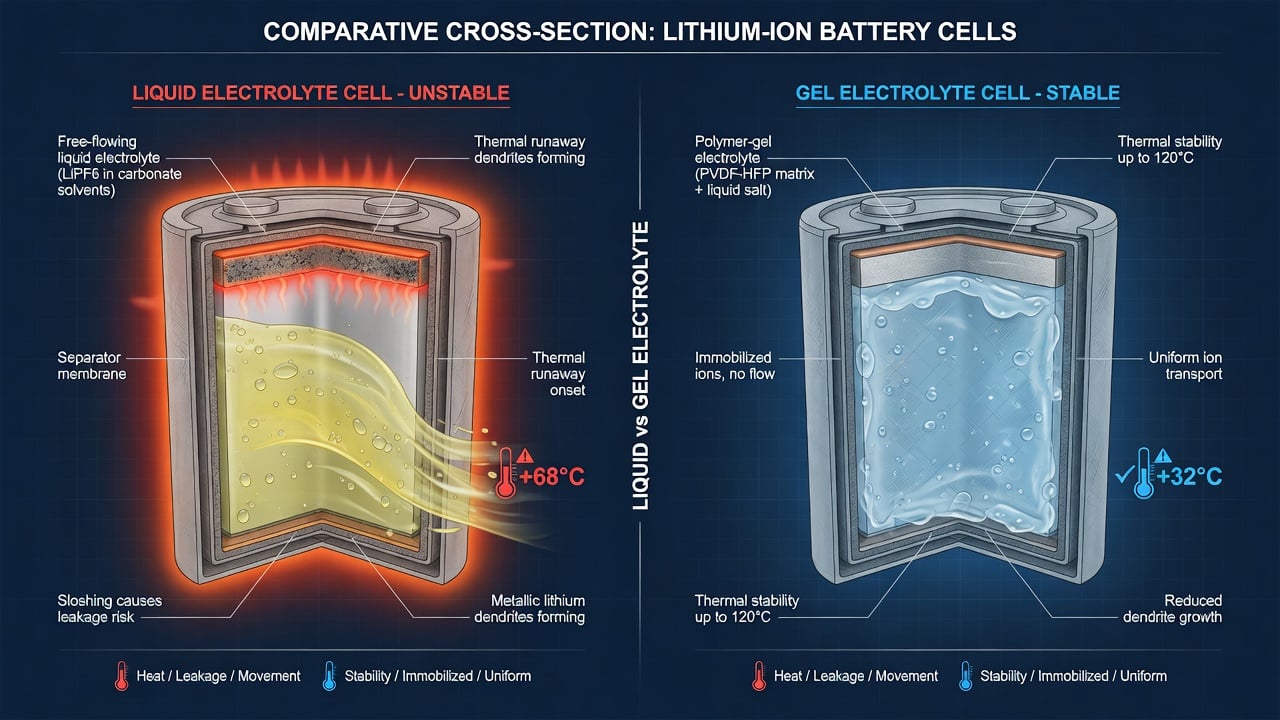
A conventional lithium-ion or lithium-polymer power bank moves lithium ions between the anode and cathode through a liquid organic electrolyte — typically a carbonate-based solvent. That liquid is flammable and is the fuel source in a thermal runaway fire: when a cell shorts internally or gets damaged, the liquid electrolyte ignites and burns fast, which is why a swollen or punctured power bank is treated as a genuine hazard.
A semi-solid-state (sometimes called “quasi-solid-state”) cell replaces most of that liquid with a gel polymer electrolyte — a substance with far less free liquid solvent to burn. It’s not the same as a true solid-state battery, which uses a fully solid ceramic or polymer electrolyte with zero liquid component. Semi-solid-state sits in between: still lithium-ion at heart, still uses some liquid, but dramatically less of it, distributed in a gel matrix that doesn’t flow or leak the way a pure liquid does.
BMX describes its SolidSafe cells as using “significantly less flammable liquid electrolyte to improve thermal stability and reduce fire risk,” and that’s the accurate framing — not “fireproof,” not “solid-state” in the strict EV-battery sense, but meaningfully safer than a standard Li-ion pouch cell of the same capacity.
The safety case: what the research actually shows
This isn’t just marketing language. Peer-reviewed thermal runaway research comparing liquid-electrolyte and semi-solid-electrolyte lithium iron phosphate cells under identical abuse conditions found that semi-solid-electrolyte cells showed measurably different — and generally less severe — thermal runaway and gas production behavior than their liquid-electrolyte counterparts under the same states of charge and environmental stress. The mechanism lines up with basic battery chemistry: thermal runaway is a self-sustaining chain reaction that starts when the SEI (solid electrolyte interphase) layer on the anode breaks down at elevated temperature, exposing reactive material directly to the electrolyte and triggering a cascade of exothermic reactions. Less free liquid electrolyte in the cell means less fuel available for that cascade once it starts, which is exactly the property gel electrolytes are designed to reduce.
That’s a real, physically grounded improvement — not a “solid-state battery, coming any day” promise. It’s shipping in cells you can order right now, at capacities and prices comparable to standard power banks.
What’s actually available in 2026
BMX’s SolidSafe lineup, first shown at CES 2026, launched at retail with prices starting around $59. The range spans 5,000mAh and 10,000mAh models with Qi2 magnetic wireless charging and USB-C fast charging in aluminum housings, plus a standout thin model — SolidSafe Air — a 5,000mAh, 18.5Wh Qi2 magnetic pack measuring just 6.8mm at its thinnest point, with a titanium-reinforced body, 15W wireless and 20W wired charging.
In Japan, semi-solid-state power banks have moved fast from novelty to mainstream: major electronics brands including Elecom and Buffalo, alongside gadget-focused brands like CIO and cheero, expanded their semi-solid-state lineups significantly through 2026, driven partly by consumer demand for packs that pass more conservative fire-safety expectations for carry-on air travel and daily commuting.
None of this makes semi-solid-state power banks “the new standard” yet — they’re still a premium tier, usually priced somewhat above equivalent-capacity conventional packs, and supply is concentrated in a handful of brands. But the direction is clear: this is the first meaningfully different power bank chemistry to reach real retail volume since lithium-polymer packs took over from the original 18650-cell bricks a decade ago.
What semi-solid-state changes — and what it doesn’t
It’s worth being precise here, because “safer battery” gets oversold constantly in gadget marketing. Here’s the honest breakdown:
| Property | Conventional Li-ion/LiPo power bank | Semi-solid-state power bank |
|---|---|---|
| Fire risk if punctured/shorted | Higher — liquid electrolyte is the fuel for thermal runaway | Lower — less free liquid electrolyte to burn, in lab comparisons |
| Charge cycle aging (100% vs. 80%) | Ages faster held at high state of charge — voltage-driven degradation | Same underlying lithium-ion voltage chemistry — same rule applies |
| Heat sensitivity | Degrades faster above ~30°C (86°F) | Still a lithium-ion cell — still heat-sensitive |
| TSA/airline watt-hour limits | Standard 100Wh / 100–160Wh rules apply | Same Wh-based rules apply — chemistry doesn’t change the limit |
| Cost per mAh | Lower — mature, high-volume manufacturing | Higher — newer process, premium pricing in 2026 |
The critical thing this table makes clear: semi-solid-state reduces catastrophic failure risk, but it does not change the everyday chemistry that governs how fast the battery’s usable capacity declines over time. It’s still a lithium-ion cell. It still ages through the same voltage-driven mechanisms as any other Li-ion pack — and the biggest lever you have over that aging is still how high you charge it and how long you leave it there.
Does semi-solid-state mean you can ignore the 80% rule?
No — and this is the point most coverage of these new power banks glosses over. Reducing the liquid electrolyte content changes the cell’s failure mode under abuse (puncture, short, extreme heat). It does not change the cell’s calendar aging mechanism under normal use. A lithium-ion cell — semi-solid-state or fully liquid — ages fastest when it’s held at high voltage for long stretches, which is exactly what happens when a power bank sits at 100% on your desk between trips.
We’ve covered the mechanism in detail in our piece on why charging to 80% extends battery life: voltage stress at the electrode-electrolyte interface drives SEI-layer growth and other permanent capacity loss, and that process cares about voltage, not electrolyte phase. Battery University’s cycling data on Li-ion pouch cells — the same cell format used in most power banks, semi-solid-state or otherwise — shows capacity dropping from roughly 88–94% down to 73–84% after 250 full discharge cycles at standard charge voltage. A semi-solid-state electrolyte doesn’t change that curve; it changes what happens if the cell is punctured or shorted while sitting at that voltage.
In practice: if you leave a semi-solid-state power bank plugged in and full for weeks between trips, it will lose capacity over time the same way a conventional one does. The safety improvement is real, but it’s orthogonal to the aging problem — you still want to stop the charge around 80% if you want the pack to hold its rated capacity years from now instead of just one summer.
Does it change the airline rules?
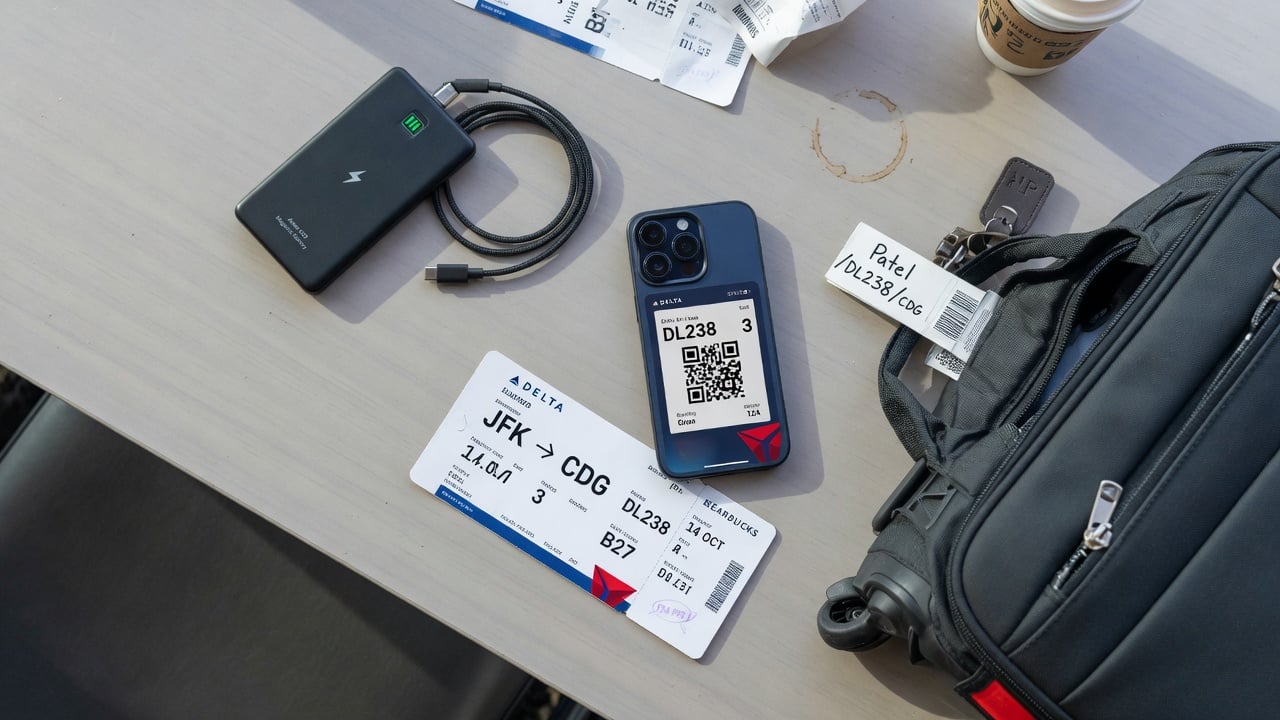
Also no, and this trips up more travelers than you’d expect. The 2026 airline power bank rules — carry-on only, 100Wh unrestricted, 100–160Wh with airline approval, over 160Wh prohibited — are based on watt-hour capacity, not electrolyte chemistry. IATA’s Dangerous Goods Regulations classify by energy content because that’s what determines how much energy a cell releases if something goes wrong, and a semi-solid-state cell at 74Wh is still governed by the same 100Wh threshold as a liquid-electrolyte cell at 74Wh.
What semi-solid-state chemistry might eventually influence is airline confidence and enforcement posture — a pack with genuinely lower fire risk is, all else equal, less likely to trigger the kind of in-flight incident that leads regulators to tighten rules further. But as of 2026 there’s no separate, looser watt-hour allowance for semi-solid-state packs, and no airline treats them differently at the gate. Do the same math you’d do for any power bank: mAh × voltage (usually 3.7V nominal) ÷ 1000 = Wh, and pack accordingly.
Should you buy one?
If you’re a frequent flyer, someone who’s had a power bank swell or get uncomfortably warm before, or someone who just wants meaningfully better failure characteristics without changing anything else about how you use a power bank, semi-solid-state is a legitimate upgrade worth the premium — especially in a thin, pocketable format like the SolidSafe Air, where you’re carrying the pack against your body for hours at a stretch during travel.
If you’re buying primarily for capacity per dollar, conventional lithium-polymer packs from established brands (Anker, UGREEN, Baseus) remain the better value in 2026 — the semi-solid-state premium is still real, and the safety benefit matters most in edge cases (physical damage, extreme heat, manufacturing defects) that a quality liquid-electrolyte cell from a reputable brand already handles reasonably well.
Either way, the habit that protects your battery’s long-term capacity is unchanged: charge in shorter windows rather than leaving it topped off indefinitely, keep it out of direct heat (a car dashboard in July does real damage regardless of electrolyte type), and if you want that discipline automated rather than remembered, a hardware USB charge limiter stops any device — power bank included, when charging it from a wall charger — at whatever percentage you set, without relying on willpower at 11pm.
Frequently asked questions
What is a semi-solid-state power bank?
A semi-solid-state power bank uses lithium-ion cells where most of the flammable liquid electrolyte is replaced with a gel-like polymer electrolyte. This significantly reduces the amount of free liquid available to fuel a thermal runaway fire if the cell is punctured, shorted, or overheated, compared to a conventional liquid-electrolyte lithium-ion or lithium-polymer cell.
Is a semi-solid-state power bank the same as a solid-state battery?
No. A true solid-state battery uses a fully solid electrolyte with no liquid component and remains largely uncommercialized for consumer electronics as of 2026. Semi-solid-state cells still contain some liquid electrolyte, just far less than conventional cells, held in a gel matrix. It’s an intermediate technology that’s already shipping, not the fully solid chemistry still stuck in development.
Are semi-solid-state power banks actually safer?
Peer-reviewed thermal runaway testing comparing semi-solid-electrolyte and liquid-electrolyte lithium iron phosphate cells under identical abuse conditions found different — generally less severe — thermal runaway and gas production behavior for the semi-solid-electrolyte cells. The improvement is real and physically grounded in reduced fuel availability for the runaway reaction, though it’s a reduction in worst-case risk, not a guarantee of zero risk.
Do semi-solid-state power banks last longer before they degrade?
Not necessarily. Electrolyte phase affects failure mode under abuse, not calendar aging under normal charge cycling. A semi-solid-state cell still ages through the same voltage-driven mechanisms as any lithium-ion cell — held at high state of charge, it loses capacity over time just like a conventional pack. Charging habits, not electrolyte chemistry, determine long-term capacity retention.
Do semi-solid-state power banks have different airline rules?
No. TSA, FAA, and IATA power bank rules are based on watt-hour capacity, not electrolyte chemistry: under 100Wh unrestricted, 100–160Wh with airline approval, over 160Wh prohibited on passenger flights, always carry-on only. A semi-solid-state pack follows the exact same Wh math and thresholds as a conventional one.
Where can I buy a semi-solid-state power bank?
BMX’s SolidSafe lineup is available through its website and Amazon starting around $59 for models from 5,000mAh to 10,000mAh. In Japan, brands including Elecom, Buffalo, CIO, and cheero significantly expanded semi-solid-state offerings through 2026. Availability outside these brands and regions remains limited as of this writing — it’s a growing but still premium category.
The bottom line
Semi-solid-state power banks are a real, shipping improvement in failure-mode safety — less flammable liquid electrolyte means genuinely lower fire risk if a cell is damaged or abused. That’s worth paying a premium for if you travel constantly or want the extra margin. What it doesn’t do is change the fundamental lithium-ion aging chemistry: the pack still degrades fastest when held at high charge for long periods, still needs to stay out of heat, and still follows the same TSA watt-hour math at the gate. Better electrolyte chemistry and better charging habits solve two different problems — you still need both.
Want the same charge-capping discipline on your power bank, phone, or laptop without thinking about it? Chargie’s hardware charge limiter stops charging at the percentage you choose, on any USB-charged device, every time.
USB-C charge limiter that stops at your set battery level, so your battery never sits at 100% overnight. Extends battery lifespan by years. Works with any USB-C charger.
Limit your laptop charge to 80% via USB-C. Works with MacBooks, Dell, HP, Lenovo and most USB-C laptops up to 100W.
Protect Your Battery with Chargie
The world's first hardware charge limiter. Set a charge limit on any phone, tablet, or laptop — extend battery life by up to 4x.