


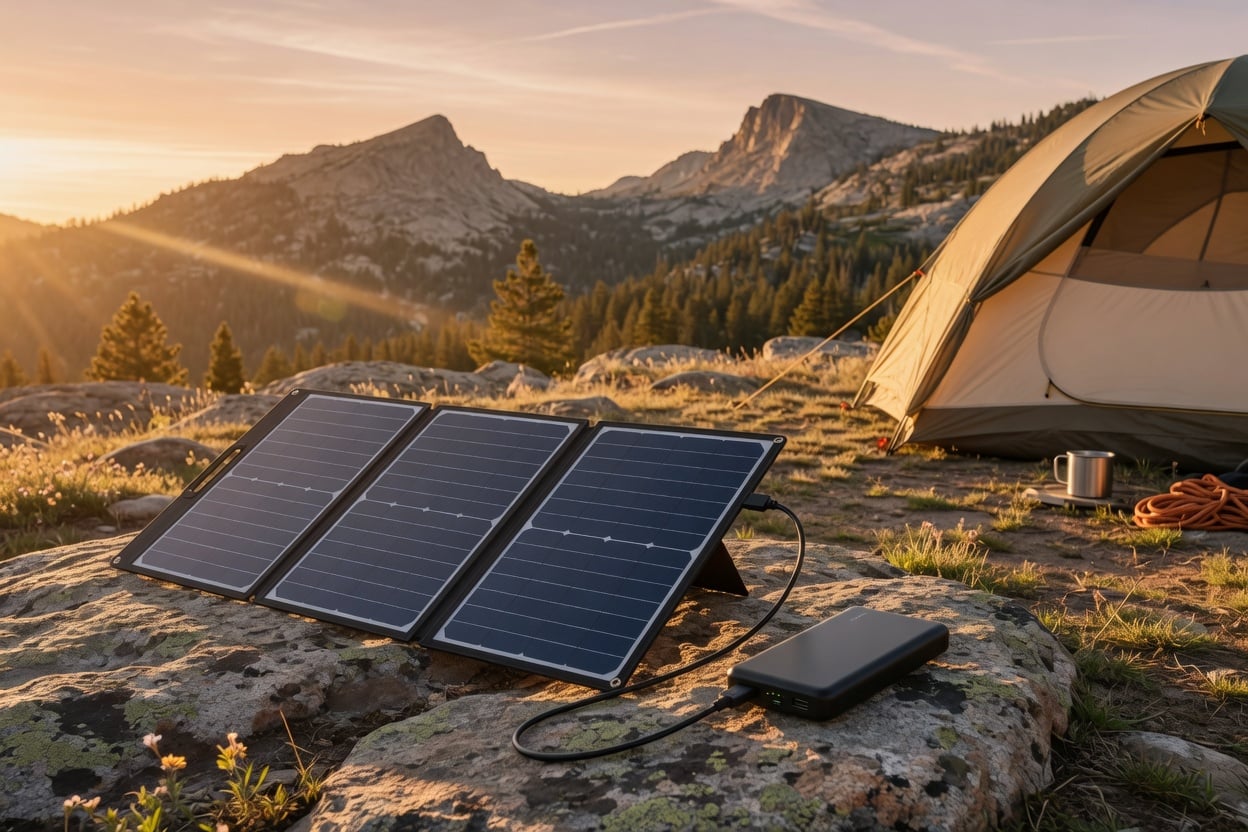
Why Solar Power Banks Die Faster Than You’d Expect
Buy a solar power bank and the pitch is intoxicating: sunlight goes in, power comes out, forever. Reality is less romantic. Most people find their solar bank holds noticeably less charge by its second camping season, and by the third it’s a shadow of what it was. That’s not because the panel wore out — solar cells last for decades. It’s because the lithium-ion battery inside it got cooked.
A solar power bank combines two components with very different lifespans. The panel is rugged and largely temperature-indifferent. The battery is delicate, and it hates exactly the environment a solar bank is designed to sit in: full, hot sun. Understanding that split is the key to making one last, and it’s the same principle behind every charge limiter we build — protect the cell from the conditions that age it.
The Two Things Inside a “Solar Power Bank” (They Age Very Differently)
Wikipedia’s Solar charger entry draws a clean line between two device types that get lumped under the same name: “Some chargers have an internal rechargeable battery which is charged in sunlight and then used to charge a phone; others charge the phone directly.” A solar power bank is the first kind — a lithium battery with a small panel bolted on, so you can store solar energy and use it “at night or when indoors.”
That built-in panel is small by necessity, and that’s the first reality check. Portable solar panels run at efficiencies “ranging from 7–15% for thin film… up to 18% for monocrystalline,” per the same source. Phone and bank charge times “vary depending on solar panel size and efficiency,” and having to fill an internal battery is described as “further extending the charge times of solar chargers.” In plain English: the little panel on a pocket solar bank trickles power in slowly. It’s a supplement, not a primary charger — which is why the smart move is often to charge the bank from the wall first and treat the sun as a top-up.
The panel doesn’t degrade in any way you’ll notice on a camping trip. The battery does — and everything below is about protecting it.
Heat Is the Real Killer — And Solar Banks Live in the Heat
Here’s the irony: to harvest sun, you leave the whole device — panel and battery — baking in direct light. But lithium-ion cells have a strict comfort zone. Wikipedia’s Lithium-ion battery article states that fast-charging should happen within a temperature range of 5 to 45 °C (41 to 113 °F), and that “charging above 45 °C will degrade battery performance.” A black power bank sitting in midday summer sun sails past 45 °C easily — asphalt and dashboards routinely hit 60–70 °C.
Charging a hot cell is doubly damaging because you’re combining the two worst stressors at once: heat and current. And even when it’s not charging, heat alone does harm. The same source notes that “batteries stored at a high temperature or a high state of charge often lose their capacities more quickly,” and that Li-ion degradation is “minimal at room temperature” but “increases for batteries stored… in high temperature (usually > 35 °C)… environments.” It’s the same summer-heat problem we cover in our summer heat battery protection guide — just aimed at the one device you deliberately leave in the sun.
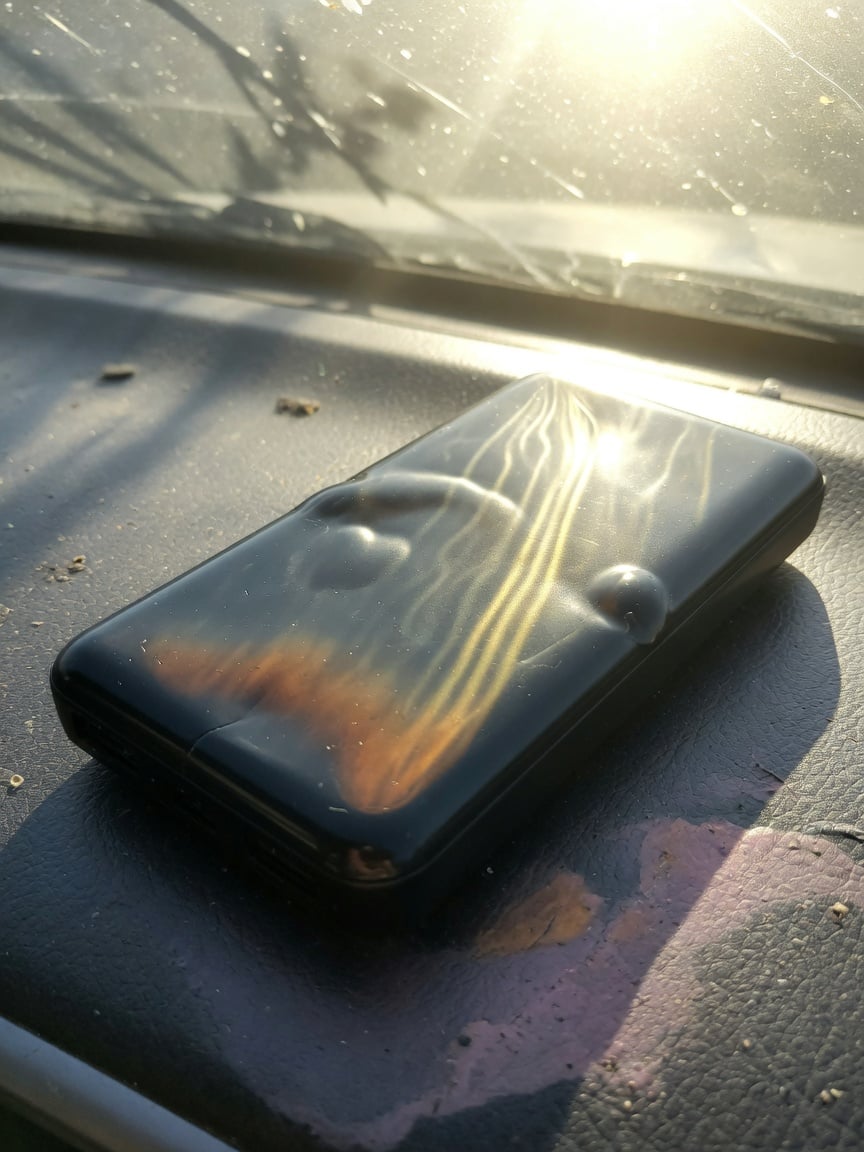
How much does heat cost you? The battery article puts real numbers on it: at 25 °C, Li-ion is expected to lose about 20% of its cyclable charge over 3–5 years. Push cells to 50–60 °C — accelerated-aging territory that a sun-baked bank flirts with — and fully charged cells can lose ~20% in just 1–2 years. Heat roughly halves the calendar life. Every hour your bank spends hot and full is time stolen from its lifespan.
The State-of-Charge Trap: Full + Hot Is the Worst Combination
There’s a second, quieter stressor that compounds the heat: keeping the battery full. Storing a lithium cell at a high state of charge accelerates a chemical process called SEI growth (a layer building up on the anode) that permanently eats capacity. The battery article is blunt: “keeping the li-ion battery status to about 60% to 80% can reduce the capacity loss,” while “frequent charge to > 90% and discharge to < 10% may also hasten capacity loss."
Now picture the typical solar-bank workflow: you top it to 100% before a trip, strap it to your pack in full sun all day, and it sits at or near full the whole time because you barely draw from it. Full + hot is precisely the combination the science flags as worst-case. This is the exact reasoning behind why charging to 80% extends battery life, and why our hardware is built to cap charging at 80% rather than let a cell marinate at 100%.
Between Trips: How to Store a Solar Power Bank
Most solar banks spend 50 weeks a year in a drawer, closet, or — worst of all — the trunk of a car. How you store it matters more than how you use it, because storage is where calendar aging silently accumulates.
Store it at a partial charge, not full and not empty. Around 60–80% is the sweet spot the research supports. Storing at a high charge level speeds capacity loss; letting it drain to zero and sit there risks over-discharge damage. Self-discharge means it will slowly drift down on its own — manufacturers typically state Li-ion self-discharge at “1.5–2% per month,” and that rate “increases with temperature and state of charge.” So a cool cupboard beats a hot garage on two fronts at once.
Give it a top-up every few months so it never crawls toward empty in long-term storage, and never leave it in a hot car between weekend trips. If you want to sanity-check how a bank (or the phone it charges) is holding up over time, our guide on how to check battery health walks through the tools. And when a bank finally gives up, don’t bin it — see where to dispose of old batteries, because lithium cells are a fire hazard in household trash.
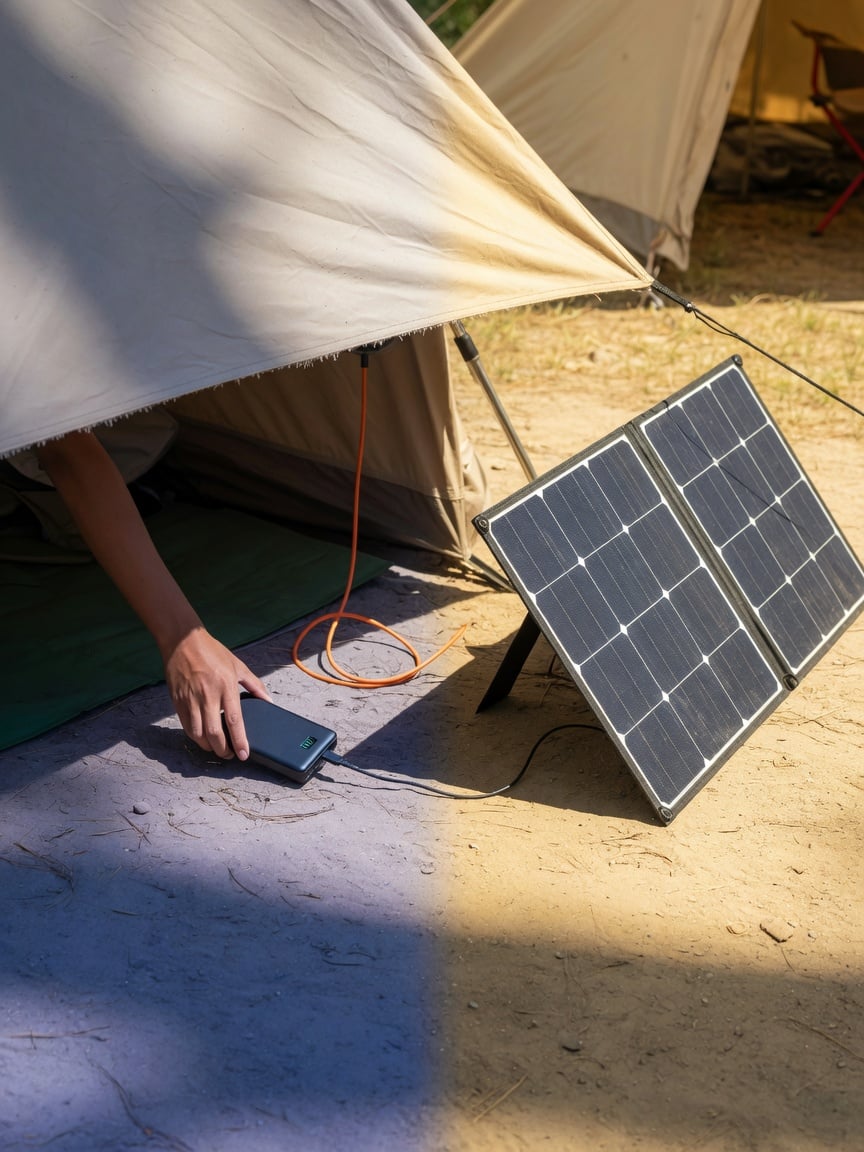
Panel in the Sun, Battery in the Shade: The One Habit That Matters Most
If you remember one thing from this article, make it this: the panel and the battery don’t have to be in the same place. On any solar bank with a decent cable — and especially on fold-out kits where “a fold-out design provides a larger panel and therefore higher charge current” — you can lay the panel out in blazing sun and tuck the actual power bank into shade under the tent flap, in your pack’s shadow, or under a hat.
You lose almost nothing in charging speed and you spare the cell the one thing that ages it fastest. It also sidesteps a genuine safety issue: the Solar charger source warns that charging a device directly from a panel “can damage a phone if the output is not well-controlled, for example by supplying excessive voltage in bright sunlight.” A good bank buffers that, but keeping the electronics cool keeps everything in its safe operating window.
Solar Power Bank vs. Regular Power Bank: What Actually Changes
The battery chemistry is identical to any other power bank — so all the usual rules from our power bank battery health guide apply. What changes with a solar model is the environment and the habits: it’s used outdoors, in heat, often left full, and stored seasonally. Here’s how the two compare on the factors that decide lifespan.
| Factor | Regular power bank | Solar power bank | What to do |
|---|---|---|---|
| Typical temperature | Indoors, room temp | Direct sun, 45 °C+ common | Keep the battery shaded; charge only when cool to the touch |
| Charge source | Wall (fast, controlled) | Small panel (slow, variable) | Wall-charge first; use sun as a top-up |
| State of charge in use | Cycled up and down | Often sits near 100% | Don’t leave it topped at full in the sun |
| Storage pattern | Grabbed often | Seasonal — months idle | Store at 60–80% in a cool place; top up quarterly |
| Main aging driver | Cycle count | Heat + high SoC (calendar aging) | Control heat and charge level, not just cycles |
A Simple Camping Routine That Keeps Your Bank Healthy
- Before the trip: charge from the wall to about 80–90%, not a screaming 100%. Faster than solar and easier on the cell.
- At camp: panel in full sun, battery in the shade, connected by cable. Harvest sun without cooking the cell.
- Midday heat: if the bank is hot to the touch, stop charging it and let it cool. Charging above 45 °C actively degrades it.
- Don’t chase 100%: a bank that lives at 60–80% will outlast one you obsessively top off — the same logic as avoiding endless trickle charging.
- Watch for swelling: a puffy or bulging bank is a heat-and-age warning sign — see battery swelling causes and prevention and retire it safely.
- After the trip: bring it down toward ~70% and store it cool. Never leave it full in a hot car.
Frequently Asked Questions
Is it bad to leave my solar power bank charging in direct sunlight all day?
For the panel, no. For the battery, yes — if the whole unit is baking in the sun. Charging above 45 °C degrades lithium cells, and heat plus a high state of charge is the fastest way to lose capacity. Keep the panel in the sun and the battery in the shade whenever you can.
Why does my solar power bank charge so slowly?
Because the built-in panel is small and portable panels run at roughly 7–18% efficiency. Filling the bank’s own internal battery further extends charge times. Treat a pocket solar bank’s panel as a top-up, not a primary charger — wall-charge it first and let the sun stretch your runtime.
What’s the best charge level to store a solar power bank between trips?
Around 60–80%. Storing a lithium cell full accelerates capacity loss, and storing it empty risks over-discharge. Because Li-ion self-discharges about 1.5–2% per month (faster when warm), top it up every few months so it never drifts toward zero.
Will heat from the sun permanently ruin the battery?
Occasional warmth won’t destroy it, but repeated heat exposure adds up. At room temperature a Li-ion cell loses about 20% of capacity over 3–5 years; at 50–60 °C that same loss can happen in 1–2 years. Every hot, full day shortens its life a little — so control the heat.
Is a solar power bank different from a real solar panel?
Yes. A solar power bank is a lithium battery with a small panel attached, storing energy for later. A dedicated solar panel or charger has no battery and charges devices directly. The bank is more convenient but adds a heat-sensitive cell you have to protect — the panel alone doesn’t have that vulnerability.
Should I charge my phone straight from the solar panel or through the bank?
Charging a phone directly from a raw panel can be risky — an unregulated panel can supply excessive voltage in bright sun. Charging through the bank buffers that. To protect your phone’s own battery too, cap its charging at 80% with a hardware limiter rather than letting it sit at 100% in the heat.
The Bottom Line
A solar power bank isn’t magic and it isn’t fragile — it’s just a normal lithium battery placed in an abnormally hostile environment, on purpose. The panel will outlive the cell every time. So protect the cell: keep it shaded while the panel drinks the sun, don’t charge it when it’s hot, avoid leaving it pinned at 100%, and store it cool at 60–80% between adventures. Manage heat and charge level — the two things that actually drive aging — and your solar bank will still deliver real power seasons after the ones people neglect have quietly died in a drawer.
USB-C charge limiter that stops at your set battery level, so your battery never sits at 100% overnight. Extends battery lifespan by years. Works with any USB-C charger.
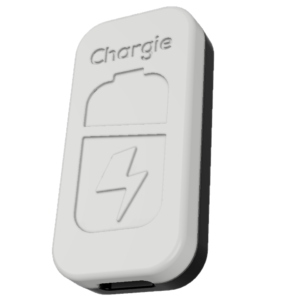
Limit your laptop charge to 80% via USB-C. Works with MacBooks, Dell, HP, Lenovo and most USB-C laptops up to 100W.
Protect Your Battery with Chargie
The world's first hardware charge limiter. Set a charge limit on any phone, tablet, or laptop — extend battery life by up to 4x.