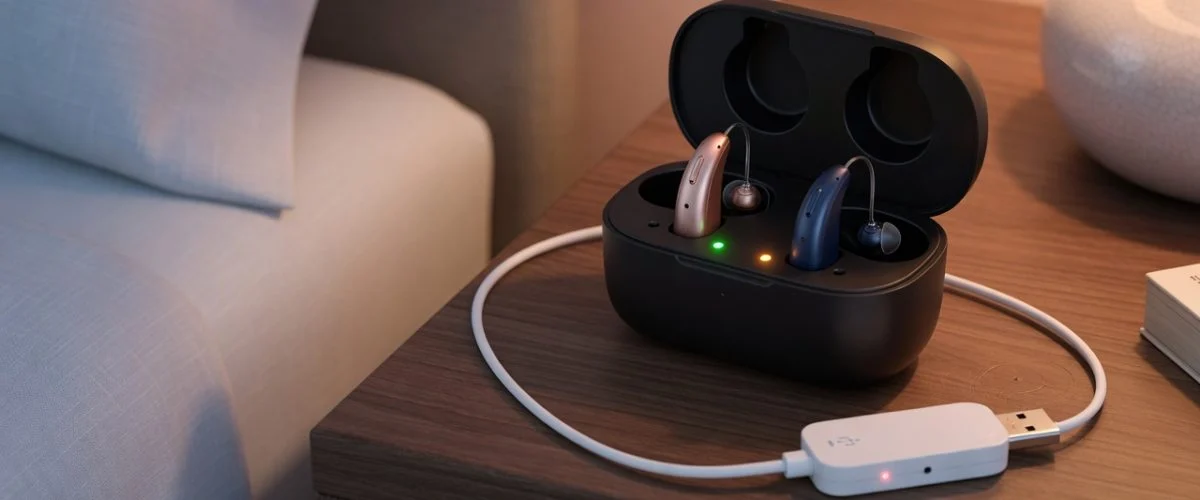

TL;DR — Rechargeable hearing aids replaced a battery you could swap in ten seconds with one sealed inside the shell for the life of the device. That cell spends roughly eight hours every night sitting at 100% in a closed charging case, and the case is usually parked somewhere warm. Heat and a high state of charge are the two things lithium-ion tolerates worst, and they are exactly the two conditions a nightly dock creates. You cannot open the aid, so the only lever you have is what happens at the wall: keep the case cool, take it off power once it is full, and cap the top-up with an inline USB charge limiter when you can.
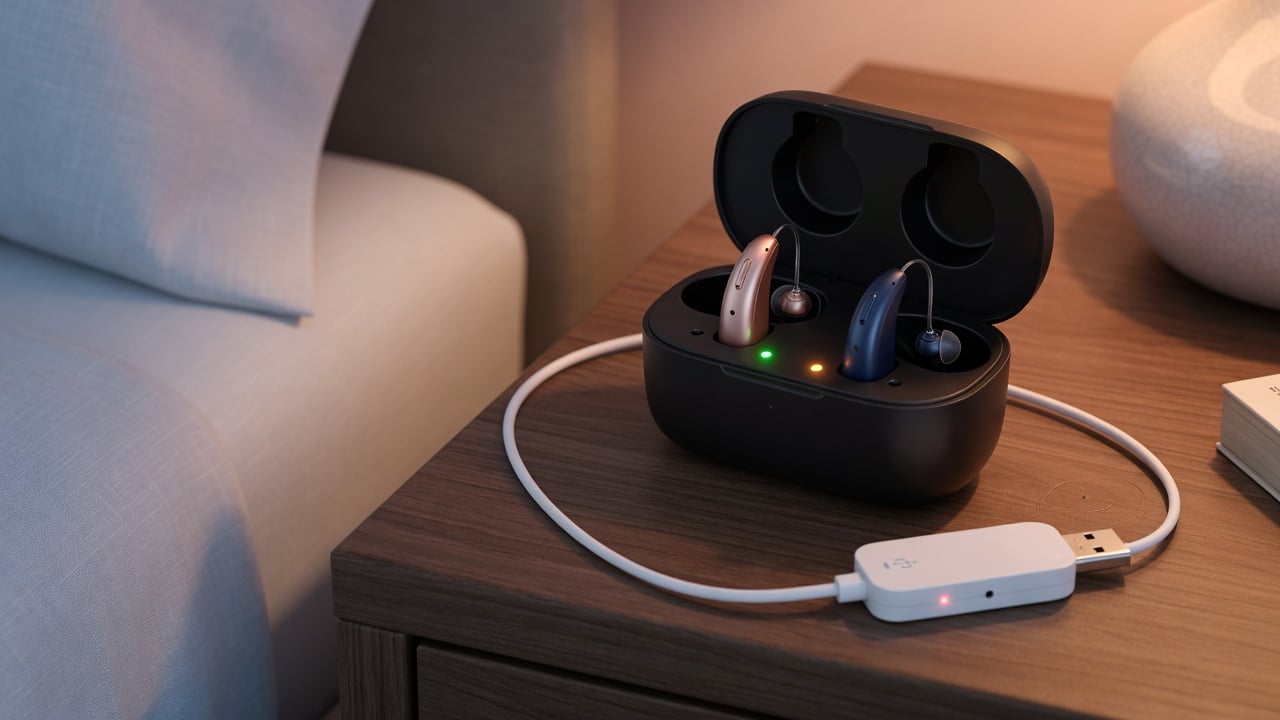
The trade you made without being told
For decades hearing aids ran on disposable button cells. Wikipedia’s overview of the category is blunt about how dominant that was: “While there are some instances that a hearing aid uses a rechargeable battery or a long-life disposable battery, the majority of modern hearing aids use one of five standard button cell zinc–air batteries.” Those cells were loaded “via a rotating battery door”, and “typical battery lifetimes run between 1 and 14 days (assuming 16-hour days)”.
Fourteen days at the top end, one day at the bottom. That is a lot of fiddling with a tab the size of a lentil, and for anyone with arthritis or low vision it was genuinely difficult. Rechargeables fixed that. The battery door disappeared, the aid became properly sealed against sweat and moisture, and the daily task became “put them in the case”.
The cost of that convenience is that the cell is no longer a consumable you control. It is a lithium-ion cell bonded inside a shell, and when it fades you are looking at a manufacturer service job or a new pair of aids. The device’s usable life is now the battery’s usable life. That makes battery care worth understanding — not as a hobby, but because it is the difference between replacing aids at year three and replacing them at year six.
Zinc-air and lithium-ion fail in completely different ways
If you have used both kinds of aid, it is worth knowing why the old advice does not carry over.
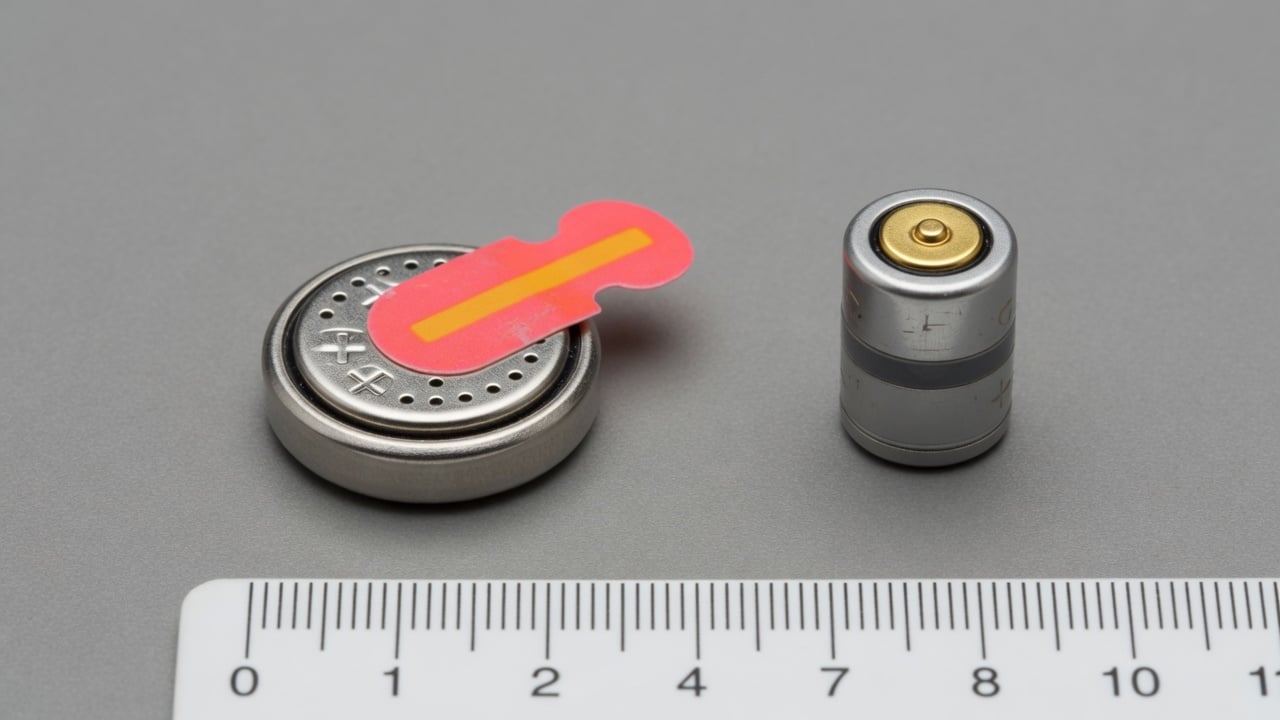
Zinc-air cells work by pulling oxygen from the air through tiny holes, sealed at the factory with a coloured sticker tab. Wikipedia’s zinc–air entry describes the consequence exactly: the cells “have a long shelf life if sealed to keep air out”, but “miniature cells have high self-discharge once opened to air, thus the cell’s capacity is intended to be used within a few weeks.” Pull the tab and the clock starts, whether you wear the aid or not. Those cells also hold their output almost flat until the end: “because the cathode does not change properties during discharge, terminal voltage is quite stable until the cell approaches exhaustion” — which is why a zinc-air aid tends to die abruptly rather than fade.
Lithium-ion has no tab and no such switch. It ages from the moment it is manufactured, and how fast depends on how you keep it. Wikipedia’s lithium-ion article separates the two clocks plainly: “Calendar life describes degradation during storage as well as cycling”, and “batteries stored at a high temperature or a high state of charge often lose their capacities more quickly.” Note the word stored. You do not have to be using the aid for the damage to accumulate. A pair sitting fully charged in a warm case is losing capacity while you sleep.
That is the whole argument for treating a hearing aid case differently from a phone charger. We wrote about the same mechanism in noise-cancelling headphones and in electric toothbrushes: any device that lives on a dock is being aged by the dock, not by the use.
The two stressors that actually matter
1. Heat
The lithium-ion literature is specific about where the damage curve bends. Degradation “is strongly temperature-dependent: degradation at room temperature is minimal but increases for batteries stored or used in high temperature (usually > 35 °C) or low temperature (usually < 5 °C) environments.” Charging is worse still: “high temperatures during charging may lead to battery degradation and charging at temperatures above 45 °C will degrade battery performance.”
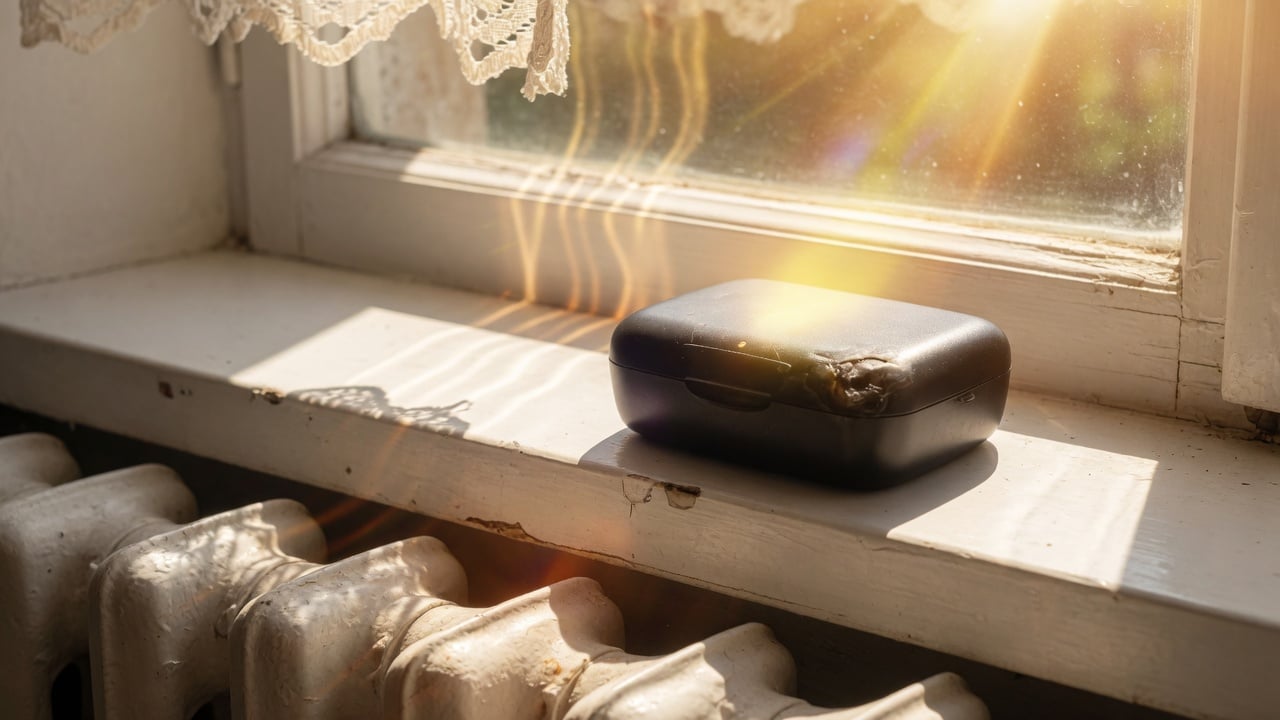
Thirty-five degrees is not exotic. A windowsill in summer sun, a shelf above a radiator, a bathroom cabinet after a hot shower, a car dashboard — all of them clear that line comfortably. And the case is a closed plastic box, which means whatever heat gets in stays in while the cell is being charged.
2. Hours parked at full charge
A typical lithium-ion hearing-aid cell runs at a 3.7 V nominal voltage with a 4.2 V maximum while charging. The standard routine is constant current until the cell reaches roughly 4.2 V, then constant voltage while the current tapers toward zero. Sitting at that upper voltage is the stressful part: batteries held at a high temperature or a high state of charge lose capacity more quickly.
Most people put their aids in the case around 22:00 and take them out around 07:00. The charge itself usually takes about three hours. That leaves roughly six hours a night at full charge, in a closed box, for every night the aids exist — two thousand hours a year of exactly the condition the chemistry likes least. Our longer explainer on why charging to 80% extends battery life covers the underlying mechanism in more depth.
Zinc-air vs rechargeable, side by side
| Property | Zinc-air button cell | Lithium-ion (sealed rechargeable) |
|---|---|---|
| Runtime per charge/cell | Typically 1–14 days at 16-hour days | Roughly one waking day; recharged nightly |
| What starts the ageing clock | Pulling the tab and admitting air | Manufacture — it never stops |
| Ageing while unused | Long shelf life while sealed | Calendar ageing continues in storage |
| How it dies | Abruptly; voltage stays flat then drops | Gradually; runtime shortens over years |
| User replaceable | Yes, in seconds | No — manufacturer service |
| What you can control | Buy fresh, keep tabs on until use | Temperature and time spent at 100% |
What you can actually do
Move the case. This is free and it is the biggest single win. Off the windowsill, away from the radiator, out of the bathroom, never on the car dashboard. A bedside drawer or a shelf on an interior wall is ideal. Cooler storage also slows self-discharge, which is “a chemical reaction… [that] tends to occur more quickly at higher temperatures”, so “storing batteries at lower temperatures thus reduces the rate of self-discharge.”
Do not leave the case on power all day. Many cases keep an internal reserve battery topped up as well as the aids. If it lives permanently plugged in, everything in it lives permanently at full charge. Unplug once the indicator says done.
Cap the charge at the wall. Hearing aids have no 80% toggle — there is no app setting, no battery-care mode, no way in. But the case is charged over USB, and that is a point you control. An inline hardware limiter cuts power at a set percentage regardless of what the device firmware wants, which is the same argument we make in built-in limits vs a hardware limiter. If you want the practical setup, see how to limit battery charge to 80%.
Charge before bed, not overnight, when your routine allows it. If your aids fully charge in three hours and your evening is predictable, running the case from 19:00 to 22:00 removes most of the idle-at-100% window without costing you any wearing time.
Watch for swelling. “All Li-ion cells expand at high levels of state of charge (SOC) or overcharge due to slight vaporisation of the electrolyte”, and in soft-cased cells this “can visibly inflate”. In a hearing aid you will not see the cell, but you may notice the shell no longer seating properly in the case, a faceplate that has lifted, or a gap along a seam. Stop using it and take it to your audiologist. Our guide to battery swelling causes and prevention explains what is happening inside.
Keep the old cells out of the bin. Zinc-air replaced mercury cells, which “have become banned in most countries today”, and lithium cells have their own disposal rules. See where to dispose of old batteries.
A note on priorities
This is battery-care guidance, not medical advice. Hearing aids are a medical device and availability beats longevity every time: if you need a full charge to get through a long day, take the full charge. Do not experiment with charging routines that risk leaving you without hearing, do not modify the aids or the case, and clear any accessory with your audiologist or the manufacturer first — some cases use proprietary charging behaviour that a third-party device can interfere with. The advice above is about the hours the aids spend idle, which is where the free wins are.
FAQ
Is it bad to leave hearing aids in the charger all night?
It is not dangerous — the charger stops when the cell is full. But the cell then sits at maximum voltage for hours, and degradation “increases with temperature and state of charge”. Over years that is the main thing shortening the battery’s life. If overnight charging fits your routine, at least make sure the case is somewhere cool.
Can I replace the battery in a rechargeable hearing aid myself?
No. The cell is sealed inside the shell as part of the moisture-proofing, and opening it typically voids the warranty and the seal. Replacement is a manufacturer or audiologist service. This is precisely why care during the first years pays off.
Why did my zinc-air batteries die in the drawer?
Almost certainly the tabs came off. Sealed, these cells “have a long shelf life”; opened to air they have “high self-discharge… the cell’s capacity is intended to be used within a few weeks.” A tab knocked loose in a bag is enough to start the reaction.
Does cold weather damage hearing aid batteries?
Cold reduces performance temporarily and, below roughly 5 °C, contributes to degradation as well. It also raises internal resistance, so charging is slower. Do not charge a case that has just come in from the cold — let it reach room temperature first.
How do I know the battery is genuinely worn out?
Runtime is the honest signal. If a pair that comfortably lasted sixteen hours now needs a midday top-up, capacity has fallen. Log it for a week before booking a service — streaming-heavy days draw far more power and can look like battery failure. Our guide on how to check battery health covers the same reasoning for devices that do report a number.
Does a charge limiter work on a hearing aid case?
It works on the USB power going into the case, which is the only access point you have. It cannot set a percentage inside the aids themselves. What it does is stop the case from holding everything at full charge indefinitely — useful mainly if your case otherwise lives plugged in around the clock. Check with your provider before adding anything to the charging path.
The short version
The sealed battery in a modern hearing aid is the part that decides when you buy your next pair. You cannot swap it, you cannot set a charge ceiling in an app, and you cannot see it degrade. What you can do is deny it the two conditions it hates: keep the case out of heat, and cut down the hours it spends sitting at 100%. Neither costs anything, and both are the difference between a device that ages on your terms and one that ages on the dock’s. If you want the background on why the ceiling matters more than the count, start with what battery cycle count actually means and what trickle charging does.
Sources
- Wikipedia — Hearing aid (battery types, zinc-air dominance, runtime ranges, mercury cell ban)
- Wikipedia — Zinc–air battery (shelf life while sealed, self-discharge once opened, flat discharge voltage)
- Wikipedia — Lithium-ion battery (calendar life, temperature thresholds, state-of-charge effects, 3.7 V / 4.2 V charging)
- Wikipedia — Lithium polymer battery (cell expansion at high state of charge)
- Wikipedia — Self-discharge (temperature dependence)
- Wikipedia — Battery charger (constant current / constant voltage behaviour)
- Wikipedia — Nickel–metal hydride battery (low-self-discharge cell background)
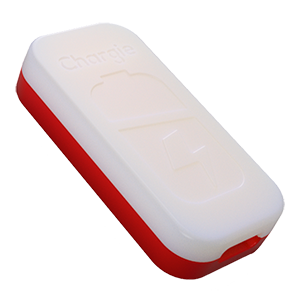
USB-C charge limiter that stops at your set battery level, so your battery never sits at 100% overnight. Extends battery lifespan by years. Works with any USB-C charger.
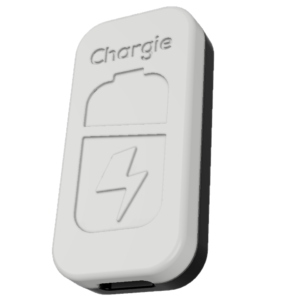
Limit your laptop charge to 80% via USB-C. Works with MacBooks, Dell, HP, Lenovo and most USB-C laptops up to 100W.
Protect Your Battery with Chargie
The world's first hardware charge limiter. Set a charge limit on any phone, tablet, or laptop — extend battery life by up to 4x.