

Battery Anxiety Is Real — New Data on Gen Z, and the Actual Fix
If you feel a small jolt of stress when your phone drops below a certain percentage, you’re not imagining it — and you’re far from alone. New 2026 research has put a number on what’s now being called battery anxiety, and the findings are striking: for a large share of young people, the fear of a dead phone outranks being stuck in traffic, running late, or losing their keys. The twist? The way most people cope with battery anxiety actively makes their battery worse. Here’s the data, and the fix that actually works.
What is battery anxiety?
Battery anxiety is the low-grade dread of your phone running out of power — the smartphone equivalent of the “range anxiety” that EV drivers feel watching their miles tick down. As phones have become the remote control for everything from payments to transit passes to door keys, a dead battery has stopped being an inconvenience and started feeling like being cut off from daily life.
The shift is worth sitting with, because it explains why the feeling has teeth. A decade ago, a dead phone meant you couldn’t make a call until you got home. Today it can mean you can’t pay for the bus, can’t show your train ticket, can’t get into your hotel room, can’t prove your identity at the airport, can’t unlock your front door. The phone didn’t just absorb our address book — it absorbed our wallet, our keys, and our boarding pass. So the dread isn’t irrational or vain; it’s a fairly accurate read of how much now depends on a single rechargeable cell. The stress is real because the stakes are real.
According to new Vodafone research (a survey of 2,000 people conducted by Walr, published June 2026), the average person starts to worry when their battery drops to just 28%. The emotional weight is heaviest for younger generations.
The 2026 data: how bad battery anxiety really is
The Vodafone figures paint a clear picture of a population organizing its day around a battery icon:
| Finding | Figure |
|---|---|
| Battery level at which people start to worry | 28% |
| Gen Z who say a flat battery is their most stressful everyday situation | 36% |
| Millennials who say the same | 34% |
| Battery level people want before heading out | 61% |
| Who stay wary of venturing far from a plug socket | 74% |
| Whose phone nearly dies at least once a week | 46% |
| Who regularly operate below 10% battery | 79% |
| Who carry a power bank | 32% |
The research also found the average UK smartphone spends about three hours a day on charge, with 73% of people keeping their phone plugged in at home and 29% doing so at work. That last detail is the key to the whole problem — because how people are charging to soothe their anxiety is quietly damaging the thing they’re anxious about.
Read the numbers together and a behavioral pattern jumps out. People want 61% in the tank before they’ll leave the house, but 79% routinely run below 10% anyway — a gap that tells you the anxiety rarely translates into a calm, planned charging routine. Instead it produces opportunistic, reactive charging: a frantic 20 minutes before walking out, a full overnight session as insurance, a power bank as a security blanket (carried by 32%), and a phone tethered to the desk all day just in case. Each of those behaviors is a response to fear, and almost every one of them is, ironically, the kind of charging that wears a battery out fastest.
The painful irony: how coping with battery anxiety destroys your battery
Look at the typical anxiety-driven charging routine: top up at every opportunity, keep the phone plugged in at the desk all day, leave it charging overnight so it’s at 100% every morning, and panic-charge whenever it dips. It feels responsible. It’s actually the recipe for faster battery degradation.
Here’s why each habit backfires:
- Living at 100%. A lithium-ion cell held at a high state of charge sits under constant voltage stress, which accelerates chemical aging. Battery University’s guidance on prolonging lithium-based batteries shows that keeping a battery at a lower average charge dramatically extends its usable life.
- All-day plugged in. Once at 100%, a desk-bound phone trickles and tops up repeatedly, and often runs warm while doing it — and heat is the number-one accelerant of degradation.
- Constant overnight full charges. Eight hours pinned at 100% every night is one of the harshest things you can do to a battery over months and years.
The result is a vicious cycle: anxiety drives over-charging → over-charging degrades the battery → the degraded battery holds less charge and dies faster → that makes the anxiety worse. Within a year or two, the battery genuinely can’t last the day, and the panic becomes self-fulfilling.
Picture how this plays out over a typical phone’s life. In month one, the battery comfortably lasts from morning to midnight, and the anxious charging feels harmless — even responsible. But every night at 100% and every warm all-day desk session is quietly subtracting from the cell’s maximum capacity. By the end of year one, the phone that used to reach bedtime now needs a top-up at 6 p.m. The owner reads that as a reason to charge more aggressively — more overnight full charges, more panic top-ups — which accelerates the very decline that triggered the worry. By year two, the battery genuinely struggles to last a working day, the anxiety is now fully justified, and the only obvious escape looks like buying a new phone. The cruel part is that the original instinct — “charge it whenever I can so it never dies” — is precisely what guaranteed it would die sooner.
This is what makes battery anxiety different from ordinary worry: the coping mechanism is the cause. With most anxieties, doing something to feel safer at least doesn’t make the underlying problem worse. Here it does. The reassurance of seeing 100% every morning is bought with months of the cell’s future life. Breaking the loop means resisting the one thing the anxiety most wants you to do.
The real fix: protect capacity, don’t chase 100%
The way out of the cycle isn’t more charging — it’s smarter charging that preserves your battery’s long-term capacity, so it actually holds a full day’s power for years instead of months.
The single most effective move is counterintuitive to an anxious mind: stop charging to 100%. Keeping your battery capped around 80% sharply reduces the voltage stress that ages the cell. The science is laid out in our explainer on why charging to 80% extends battery life. Counterintuitively, a battery that’s cared for this way will outlast — and out-endure — one that’s anxiously topped to 100% every chance you get.
A practical anti-anxiety battery routine looks like this:
- Cap your charge around 80% for daily use. You lose a little headroom today and keep your full capacity for years. See how to limit charging to 80%.
- Stop the all-day desk trickle. Charge in a window, then unplug — your battery doesn’t need to live on the cable.
- Fix overnight charging first. It’s the longest, most damaging stretch at 100%, and the easiest to automate.
- Keep it cool — in any season. Don’t charge a hot phone or leave it baking; heat compounds every other stressor. The cold matters too: charging a phone that’s below freezing can do permanent damage, as our cold weather battery guide explains.
- Stop chasing the percentage. A healthy battery capped at 80% gives you more real all-day endurance than a worn-out one that nominally hits 100%.
Why willpower isn’t enough — and what to do instead
The hard part is that the most damaging charge happens while you’re asleep. You can’t manually unplug at 80% at 3 a.m., and the anxiety that drives over-charging is exactly what makes “just unplug it” unrealistic. Some phones include software charge limits, but they’re inconsistent across brands and easy to forget or lose to an update — as we cover when comparing options like the built-in OS charge limits versus hardware.
This is exactly the problem a hardware USB charge limiter solves. Chargie sits between your charger and your phone and physically stops the charge at the level you choose — every night, on any phone, without an app or any willpower required. You set it once, and the most damaging charging habit fixes itself while you sleep. Over time, that’s what keeps your battery genuinely lasting a full day — which is the only real cure for battery anxiety.
If your battery is already struggling, our guides on iPhone battery health and Android battery health walk through checking and preserving what you’ve got. And if you’ve been holding out for a battery that never makes you anxious, it’s worth knowing why solid-state battery phones still aren’t a reason to wait — the cell in your pocket is the one you have to protect.
The anxiety doesn’t disappear — it gets a real answer
There’s a psychological subtlety here worth naming. Battery anxiety thrives on uncertainty: you don’t know whether your phone will make it through the evening, so your brain stays on alert. The instinctive fix — keep it topped up — buys a few hours of certainty today while quietly eroding the capacity that would give you certainty for years. The durable fix flips that trade: you give up the comfort of a 100% reading and, in exchange, you get a battery that reliably lasts the whole day, month after month. The anxiety fades not because you’ve talked yourself out of it, but because the thing you were afraid of stops happening.
That distinction matters for anyone who has tried to “just stop worrying” about their battery and found it impossible. You can’t reason your way out of a fear that keeps being confirmed by a phone dying at 4 p.m. You can remove the confirmation — by protecting the capacity that makes the phone last. Treated this way, the battery becomes boring again, which is exactly what you want from it.
Frequently asked questions
What is battery anxiety?
Battery anxiety is the stress or dread of your phone running out of power. It’s the smartphone version of EV “range anxiety.” 2026 Vodafone research found people start worrying at 28% battery, and that more than a third of Gen Z rank a flat battery as their single most stressful everyday situation.
Is constantly charging my phone bad for the battery?
Yes. Keeping your phone at or near 100% — by topping up all day and charging fully overnight — keeps the lithium-ion cell under voltage stress that accelerates aging. Charging in moderation and capping around 80% preserves capacity far better.
Does charging to 80% instead of 100% really help?
Yes. Lower maximum charge means less voltage stress on the battery, which measurably extends its lifespan. The trade-off is a little less capacity per charge today in exchange for keeping your full capacity for years.
How do I stop being anxious about my phone battery?
The durable fix is making your battery genuinely last the day — which means protecting its long-term capacity. Cap your charge around 80%, avoid heat, and don’t leave the phone at 100% for hours. A healthy battery that holds its rated capacity is the real cure for the anxiety.
Should I let my phone battery drain to 0% sometimes?
No. Deep discharges to 0% add wear, just as sitting at 100% does. Lithium-ion batteries are happiest cycling in the middle of their range — roughly 20% to 80% — rather than swinging between the extremes.
The bottom line
Battery anxiety is real, measurable, and getting worse — but the instinctive response of charging constantly to 100% only deepens the problem by wearing the battery out faster. The genuine fix is to protect your battery’s capacity: cap your charge around 80%, keep it cool, and tame the overnight full charge that does the most damage. Do that, and your phone holds a real day’s power for years — and the anxiety takes care of itself.
Tired of worrying about your battery? Chargie’s hardware charge limiter caps your charge automatically every night, on any phone — so your battery lasts for years, not months.
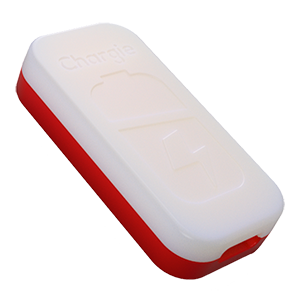
USB-C charge limiter that stops at your set battery level, so your battery never sits at 100% overnight. Extends battery lifespan by years. Works with any USB-C charger.
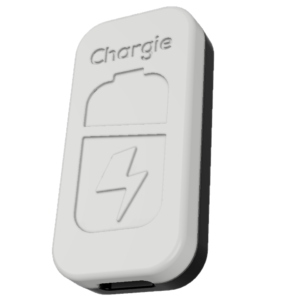
Limit your laptop charge to 80% via USB-C. Works with MacBooks, Dell, HP, Lenovo and most USB-C laptops up to 100W.
Protect Your Battery with Chargie
The world's first hardware charge limiter. Set a charge limit on any phone, tablet, or laptop — extend battery life by up to 4x.